5 Tips For Calming Bedtime Routines for Neurodivergent Kids

Calming bedtime routines for neurodivergent kids rely on sensory-friendly wind-downs, visual schedules, dim lighting, and proprioceptive deep pressure (like weighted blankets) rather than rigid, demand-heavy clocks.
Editorial Disclosure & Medical Scope: Sensory Kids Books shares neurodiversity-affirming, lived-experience insights and sensory-informed tools for parents, caregivers, and educators. This publication is for educational purposes only and does not constitute formal medical diagnosis, psychiatric evaluation, or clinical occupational therapy advice. Always consult a qualified pediatrician or licensed clinician for individual medical care. As an Amazon Associate, we earn from qualifying purchases through our independent affiliate links at zero extra cost to you.
If you are raising a neurodivergent child, you probably already know that traditional bedtime advice—"just read a book and turn off the light"—often fails spectacularly. For many families navigating autism or sensory processing differences, bedtime isn't a peaceful wind-down; it feels like a marathon you have to run at the end of an exhausting day.
When a child's nervous system is overstimulated from the sensory input of a long day, transitioning to sleep is incredibly difficult. But by shifting our approach from a "one-size-fits-all" routine to a sensory-friendly bedtime, we can help them find calm. Here are 5 OT-backed calming bedtime routines for neurodivergent kidsthat actually work.
1. The "Heavy Work" Pre-Routine (For Sensory Seekers)
This might sound counterintuitive, but if your child is bouncing off the walls right before bed, they might be a sensory seeker trying to regulate their nervous system.
Instead of forcing them to sit still, offer 10 minutes of heavy workbefore the official bedtime routine begins. Heavy work provides deep proprioceptive input to the joints, which releases calming neurotransmitters.
- Wall Pushes: Have them push against the wall as hard as they can.
- Animal Walks: Bear walks or crab walks down the hallway to the bathroom.
2. Sensory-Friendly Environmental Adjustments
To signal to the brain that it is time to sleep, the environment needs to be completely stripped of alerting sensory input.
- Lighting: Switch to warm, dim lighting at least an hour before bed. Consider a red-light nightlight, as red light does not interfere with melatonin production (unlike blue or white light).
- Tactile Defense: Many meltdowns are caused by itchy tags or bunched-up seams. Invest in seamless pajamas and super-soft, heavy bedding.
3. The Power of Visual Schedules
By the end of the day, many neurodivergent kids are experiencing cognitive fatigue. When we give verbal instructions like, "Go brush your teeth and put your pajamas on," it can feel like a massive demand. Implementing a visual schedule for bedtimeshifts the demand from you to the board.
4. Be Cautious with Bath Time
Standard advice says that a warm bath is calming. But for a child with sensory processing differences, a bathroom can be a nightmare of echoing acoustics, glaring lights, and tactile defensiveness (the transition from warm water to cold air and a scratchy towel).
If bath time causes dysregulation, move it to the morning! Bedtime should be reserved exclusively for activities that regulate your child's unique system.
5. Connection and Co-Regulation
End the night with a low-demand, connection-based activity. This is the perfect time to read a story that normalizes their feelings, like The Calm Cape. Keep your own voice low, slow, and rhythmic. Your calm nervous system will act as an anchor for theirs.
Frequently Asked Questions
Why is bedtime so hard for children with sensory processing disorder?
Children with SPD often struggle at bedtime because their nervous system is either over-aroused (too much input accumulated during the day) or under-aroused (craving movement). In both states, the brain struggles to transition into the parasympathetic "rest and digest" mode required for sleep.
How long before bed should screen time end for neurodivergent kids?
The Sleep Foundation recommends ending screen time at least 60 to 120 minutes before bedtime. The blue light from screens suppresses melatonin production, which is often already delayed or irregular in neurodivergent children.
 Instant PDF
The ADHD & PDA Anti-Planner
An Undated, Low-Demand Gamified Planner & Focus Journal for Neurodivergent Minds
Quick Answers for Parents & Educators
Recommended Sensory Products
Carefully curated products for a sensory-friendly environment.
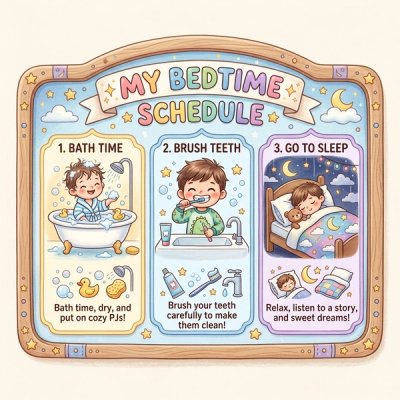
Visual Schedule Board for Kids
PREDICTABILITY
Reduces bedtime anxiety by showing exactly what comes next without needing verbal instructions.

Seamless Sensory-Friendly Pajamas
TACTILE COMFORT
Ultra-soft, tagless, and seamless pajamas that prevent tactile defensiveness and itching at night.

Hatch Rest Sound Machine
SENSORY ENVIRONMENT
Provides consistent white/brown noise and warm red lighting to preserve melatonin production.
📚 Evidence-Based Sources & Citations
Peer-reviewed literature, clinical frameworks, and foundational neurodiversity resources referenced in this guide.
- Occupational Therapy Practice Framework: Domain and Process (4th Edition) — American Occupational Therapy Association (AOTA)(2020)View Sourceopen_in_new
- The Polyvagal Theory: Neurophysiological Foundations of Emotions, Attachment, Communication, and Self-Regulation — Dr. Stephen W. Porges, PhD(2011)View Sourceopen_in_new
- Understanding Pathological Demand Avoidance (PDA): Identifying Needs & Low-Demand Approaches — PDA Society UK(2023)View Sourceopen_in_new
- Sensory Processing Issues Explained: Supporting Children with Sensory Sensitivities — Child Mind Institute(2024)View Sourceopen_in_new
Join the Conversation
Get our monthly guide on sensory-aware parenting and neuro-inclusive home design delivered straight to your sanctuary.
Respecting your inbox and your peace of mind.
Leave a Reply
Your email address will not be published. Required fields are marked *