Sponsored Content Placement
Book Recommendations
PMDD and Neurodivergence: Why the Luteal Phase Shatters ADHD & Autistic Regulation

self_improvementTake A Moment
If your ADHD medication suddenly stops working for 10 days every month, or sensory overload explodes into severe dysphoria, you aren't failing—you are likely experiencing PMDD. Here is the neurochemical connection and how to survive the luteal drop.
For three weeks out of the month, you or your teen have built a fragile but functional ecosystem. The morning routines work, executive function strategies hold up, and sensory inputs feel relatively manageable.
Then, right on schedule, the floor falls out from underneath everything.
Suddenly, ADHD stimulant medication feels like drinking tap water—it completely ceases to function. The texture of everyday clothes feels like sandpaper. The faintest hum of the refrigerator sparks violent rage or weeping despair. Paralyzing thoughts of unworthiness and catastrophic rejection flood the mind. You look at yourself in the mirror and think, "I have ruined my entire life."
Two days into menstruation, the storm breaks. Clarity returns, the fog lifts, and you are left surveying the emotional debris. As both a neurodivergent systems architect and someone who has supported families through these cyclical crises, I want to tell you clearly: this is not a personality flaw, and it is not ordinary PMS. You are navigating Premenstrual Dysphoric Disorder (PMDD).
While PMDD affects roughly 3% to 8% of the general menstruating population, clinical research reveals a dramatic vulnerability in neurodivergent nervous systems. Up to 92% of autistic women and up to 46% of women with ADHD experience severe PMDD symptoms.
Why is the overlap so profound? It isn't because neurodivergent people produce "abnormal" hormone levels. Blood tests almost always come back completely normal. The problem is a severe neurological hypersensitivity to the natural fluctuation of estrogen and progesterone.
To understand why PMDD breaks an ADHD or Autistic brain, you have to look at the chemical architecture under the hood:
Estrogen is a powerful neuromodulator that directly stimulates dopamine synthesis and slows dopamine degradation in the prefrontal cortex. In ADHD, baseline dopamine availability is already critically low. When estrogen drops sharply following ovulation (entering the luteal phase), brain dopamine levels plunge off a cliff. This is why ADHD stimulant medication suddenly feels completely ineffective for 7 to 10 days.
During the luteal phase, the body metabolizes progesterone into allopregnanolone (ALLO), a neurosteroid that normally acts on GABA-A receptors to calm the central nervous system. In autistic individuals with PMDD, GABA receptors paradoxically react with heightened agitation, alarm, and sensory hyper-reactivity rather than calm. For more on managing rapid emotional depletion, see our guide on Spoon Theory & Energy Budgeting.
One of the most dangerous aspects of neurodivergent PMDD is the amplification of Rejection Sensitive Dysphoria (RSD). During the luteal window, the emotional filter is completely dismantled. A neutral comment from a partner or parent ("Did you take out the trash?") registers not as a task reminder, but as definitive proof of personal unworthiness and imminent abandonment.
You cannot brute-force your way through a neurological hormone crisis with sheer willpower. Trying to maintain your peak follicular-phase productivity during the luteal drop will only fast-track you into severe autistic burnout. Here is how to redesign your system.
Track your cycle religiously. Seven days before menstruation begins, proactively slash executive demands by 40%. Do not schedule high-stakes social events, difficult family confrontations, or major life overhauls during this window.
Somatic grounding stimulates the vagus nerve and counteracts the loss of GABAergic inhibition. Heat therapy over the pelvis and back relaxes cramping smooth muscle and delivers constant proprioceptive reassurance.
Because auditory and visual sensory gating fails during PMDD, everyday ambient noise feels like an assault. Proactively shield your nervous system with ear protection and therapeutic ocular compression.
If your autistic or ADHD teenage daughter experiences sudden, catastrophic personality shifts every month—crying spells, school refusal, sudden hatred toward parents, or explosive meltdowns—do not immediately treat it as teenage rebellion. Check her calendar.
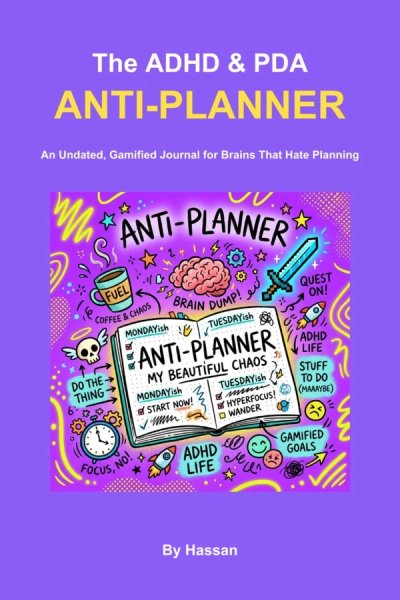
Adolescent neurodivergent brains are frequently hit hardest by the onset of PMDD during puberty. For actionable frameworks to navigate teen social overwhelm and emotional dysregulation, explore 52 Modern Manners for Today's Teens and The ADHD & PDA Anti-Planner.
Knowledge is the antidote to shame. When you understand the neurochemistry, you stop blaming yourself for a physiological storm you didn't choose.
 Instant PDF
An Undated, Low-Demand Gamified Planner & Focus Journal for Neurodivergent Minds
Carefully curated products for a sensory-friendly environment.

BEST FOR FOCUS
Providing 5lbs of gentle pressure to help children stay grounded during long reading sessions.

SENSORY FRIENDLY
Flicker-free technology with adjustable color temperatures to prevent eye strain.
Get our monthly guide on sensory-aware parenting and neuro-inclusive home design delivered straight to your sanctuary.
Respecting your inbox and your peace of mind.
No comments yet. Be the first to share your thoughts!
Your email address will not be published. Required fields are marked *