10 Must-Have 504 Plan Accommodations for ADHD Sensory Overload: Pre-Written Scripts & Legal Clauses

Turn classroom sensory overload into enforceable school support. Discover 10 clinical-grade 504 plan accommodations, pre-written legal clauses, and teacher collaboration scripts for ADHD kids.
Editorial Disclosure & Medical Scope: Sensory Kids Books shares neurodiversity-affirming, lived-experience insights and sensory-informed tools for parents, caregivers, and educators. This publication is for educational purposes only and does not constitute formal medical diagnosis, psychiatric evaluation, or clinical occupational therapy advice. Always consult a qualified pediatrician or licensed clinician for individual medical care. As an Amazon Associate, we earn from qualifying purchases through our independent affiliate links at zero extra cost to you.
⚡ Quick Takeaway & Summary for Parents: A 504 Plan is not an informal teacher courtesy—it is a federally enforceable civil rights document under Section 504 of the Rehabilitation Act of 1973 and Title II of the Americans with Disabilities Act. If your ADHD or AuDHD child experiences sensory overload, task paralysis, or explosive after-school meltdowns, vague accommodation language like "teacher will allow breaks as needed" offers zero legal protection. Effective 504 plans require objective, enforceable clauses that specify who initiates the tool, where it is used, and what boundaries protect the student from public stigma. In this guide, I share the 10 most impactful classroom sensory accommodations, clinical-grade pre-written clauses you can copy directly into your school district's draft, and our vetted four-part physical sensory toolkit.
The 504 conference room is a uniquely intimidating environment. You sit at a miniature kidney-shaped table with the school psychologist, general education teacher, assistant principal, and special education coordinator. You have stacks of neuropsychological evaluations and occupational therapy reports proving your child has ADHD and severe sensory processing differences.
Then, someone on the committee smiles warmly and delivers the classic phrase: "He is so bright and his standardized test scores are fine. He just needs to try harder and stay in his seat. We already remind him to focus, so we do not think a formal sensory accommodation is necessary."
As an engineer and neurodivergent parent, I know how devastating that moment feels. But legally, that objection collapses under federal scrutiny. The U.S. Department of Education's Office for Civil Rights (OCR) has repeatedly clarified that academic grades are not the sole determinant of Section 504 eligibility. A child who achieves straight A's while expending 100% of their cognitive bandwidth masking sensory overload and burning out into explosive tears at home is legally entitled to reasonable accommodations under federal law.
The Legal Difference: Section 504 vs. IEP
Before writing your accommodation clauses, you must understand which legal framework governs your child's school plan. Parents frequently confuse an IEP (Individualized Education Program) with a 504 Plan, leading to misdirected advocacy during committee meetings.
• Section 504 (Rehabilitation Act of 1973): A civil rights law protecting individuals from disability-based discrimination. It provides environmental and cognitive accommodations to ensure equal access to general education. It does NOT require specialized educational instruction (modified curriculum), making it ideal for students performing at grade level who need sensory, executive function, and behavioral supports.
• IEP (Individuals with Disabilities Education Act - IDEA): A specialized education statute that provides modified coursework, clinical therapies (in-school OT, Speech, PT), and individualized academic goals. An IEP is required if your child requires direct specialized instruction.
If you are mapping out measurable annual goals for a formal IEP or 504 meeting, use our free IEP SMART Goal Generator to create customized, legally defensible goal drafts in under two minutes.
Accommodation 1: Unrestricted Access to Silent, Non-Disruptive Fidget Tools
The Neurological Need: In ADHD brains, baseline dopamine and norepinephrine levels are chronically dysregulated. To sustain cognitive alertness during lengthy teacher lectures, the nervous system naturally seeks proprioceptive and tactile sensory input. Without an appropriate outlet, this manifests as pencil tapping, chair tipping, desk picking, or vocal stimming.
⚖️ Exact Legal 504 Clause — Silent Tactile Sensory Tool Clause:
"Student shall have continuous, unrestricted access to teacher-approved silent, non-clicking tactile fidget tools (specifically handheld silicone or aluminum sensory rollers) during all direct instructional periods, independent seatwork, and assessments without requiring verbal teacher prompting or prior permission. The tool must remain handheld or inside the desk space and produce zero audible noise."
Classroom Implementation Protocol: The student agrees to the "Tool vs. Toy" classroom boundary: the tool stays in the hand, below desk level, and does not make airborne contact or noise. If dropped accidentally, the student may retrieve it calmly without disciplinary comment.
Teacher Collaboration Script: "We have tested various tools at home and during homework. The ONO Roller Jr provides smooth, frictionless bilateral rolling without any clicking or springs. Here is a sample of the tool so you can see it is completely silent and fits comfortably in his palm."
⭐ Recommended Tool: ONO Roller Jr Silent Handheld Fidget Tool (Best Teacher-Approved Silent Fidget)
Engineered specifically for student desks and quiet classrooms. Made of aircraft-grade aluminum and frictionless bearings, it glides silently between fingers without clicks, snaps, or visual distraction.
shopping_cart👉 Check Price on Amazon (paid link)open_in_new
Accommodation 2: Proprioceptive Foot Resistance Bands for Under-Desk Movement
The Neurological Need: Demanding that a hyperactive or sensory-seeking child sit perfectly motionless in a hard plastic chair actively drains their working memory. Research from the Journal of Abnormal Child Psychology demonstrates that physical motor activity (fidgeting) directly facilitates cognitive performance in children with ADHD.
⚖️ Exact Legal 504 Clause — Active Foot Seating Resistance Clause:
"Student's primary classroom desk and designated testing station shall be equipped with a heavy-duty rubber foot resistance band (Bouncy Bands) or an inflatable dynamic wobble disc. The student shall be permitted to push, stretch, and bounce their feet quietly against the band throughout instructional and independent work periods to provide proprioceptive deep pressure without leaving their assigned seat."
Classroom Implementation Protocol: The band attaches securely to the two front legs of the student's standard four-legged school desk. The student can kick and bounce silently with socks or shoes on, venting excess motor energy without shaking neighboring desks.
Teacher Collaboration Script: "Rather than constantly reminding him to stop rocking his chair or swinging his legs into the aisle, the Bouncy Band channels that exact physical energy downward into silent rubber tension, keeping his attention focused forward."
⭐ Recommended Tool: The Original Bouncy Bands for Student Desks (Best Active Seating Desk Tool)
Heavy-duty commercial-grade natural latex bands that attach in seconds to elementary and middle school desks. Prevents chair tipping and provides continuous proprioceptive calming feedback without sound.
shopping_cart👉 Check Price on Amazon (paid link)open_in_new
Accommodation 3: On-Demand Trifold Desktop Privacy Shields for Testing
The Neurological Need: Children with ADHD experience impaired executive filtering in the prefrontal cortex. Peripheral visual motion—such as a classmate sharpening a pencil, someone walking in the hallway, or a bird outside the window—instantly hijacks attention, forcing the child to restart complex reading comprehension loops from scratch.
⚖️ Exact Legal 504 Clause — Desktop Visual Privacy Shield Clause:
"Student shall have immediate access to an on-demand 3-sided corrugated desktop privacy carrel (study shield) during all independent writing assignments, math seatwork, and timed quizzes/standardized tests. The student may independently choose when to deploy or fold down the shield without drawing teacher or peer attention."
Classroom Implementation Protocol: The carrel is stored flat beside the student's desk or in the classroom cubby. To avoid peer stigma, the teacher can keep several carrels available so that any student who wants a "focus office" may use one freely.
Teacher Collaboration Script: "When visual stimuli surround him, his test completion speed drops by 40%. Having a trifold desk shield gives him a low-distraction visual bubble that prevents eye wandering without isolating him in another room."
⭐ Recommended Tool: Really Good Stuff Trifold Desktop Privacy Shields (Set of 4) (Best Visual Distraction Blocker)
Durable matte corrugated privacy partitions engineered to block peripheral distractions while resting securely on student desks. Folds completely flat for easy cubby storage.
shopping_cart👉 Check Price on Amazon (paid link)open_in_new
Accommodation 4: Silent Visual Elapsed-Time Display for Executive Function Pacing
The Neurological Need: Time blindness is a clinical hallmark of ADHD executive dysfunction. Children do not intuitively feel the passage of 15 minutes; they only perceive "now" versus "not now." Verbal countdowns ("You have five minutes left!") frequently trigger acute autonomic fight-or-flight panic and task refusal.
⚖️ Exact Legal 504 Clause — Silent Visual Elapsed-Time Display Clause:
"Classroom assignments exceeding 10 minutes in duration and major schedule transitions shall incorporate a silent, visual elapsed-time countdown display (specifically a 60-minute vanishing colored disk timer). The instructor shall provide a silent 5-minute and 2-minute visual proximity prompt prior to ending tasks, avoiding abrupt auditory transition alarms."
Classroom Implementation Protocol: The timer sits on the corner of the student's desk or the teacher's podium. The fading red disc translates abstract temporal math into an intuitive concrete visual shape that the child can track at a glance without reading numbers.
Teacher Collaboration Script: "When transitions are announced suddenly, he freezes or melts down because his brain cannot sequence the shift. A visual timer makes time visible, allowing him to pace his worksheet and transition calmly."
⭐ Recommended Tool: Time Timer MOD 60-Minute Visual Countdown Timer (Best Executive Function Visual Timer)
The gold-standard classroom visual timer. Features a vanishing red disk, completely silent quartz operation (zero ticking), and a protective silicone case to withstand classroom drops.
shopping_cart👉 Check Price on Amazon (paid link)open_in_new
🎒 The 504 Plan Master Toolkit for ADHD & AuDHD (16-Page Clinical Kit)
Need complete, attorney-reviewed 504 meeting scripts, Section 504 vs IEP qualification matrices, parent opening statement templates, 4 full accommodation banks, and non-verbal printable sensory break passes? Download the complete ready-to-print PDF toolkit.
👉 Download the 504 Plan Master Toolkit ($7.99)
Accommodation 5: Non-Punitive, Stigma-Free Sensory Calm-Down Pass
The Neurological Need: When an ADHD child's sensory threshold is breached, their sympathetic nervous system floods with cortisol and adrenaline. Expecting a dysregulated child to "think through" math problems in that physiological state is neurobiologically impossible. They require 5 to 7 minutes of low-stimulus proprioceptive input to reset.
⚖️ Exact Legal 504 Clause — Non-Punitive Sensory Break Protocol Clause:
"Student shall be issued a laminated non-verbal sensory pass allowing up to two (2) five-minute regulatory breaks per school day to a designated calm-down corner, sensory room, or school nurse's station. The student initiates the break discreetly by placing the pass on the corner of the teacher's desk. The break shall be non-punitive, require zero verbal interrogation, and never result in missed recess or disciplinary categorization."
Classroom Implementation Protocol: The student does not have to raise their hand or ask "May I please go?" in front of classmates. Placing the card signals the teacher that the child's sensory gauge is near 100%. A classroom visual timer ensures the student returns independently after 5 minutes.
Teacher Collaboration Script: "A 5-minute planned reset outside the noisy room prevents a 45-minute explosive meltdown inside the room. This pass empowers him to self-advocate before behavioral crisis occurs."
Accommodation 6: Acoustic Overload Mitigation in High-Decibel Environments
The Neurological Need: Auditory processing differences are exceptionally common in ADHD and autism. School cafeterias, gymnasium assemblies, band classes, and crowded hallway passing periods easily exceed 85 to 90 decibels. For a child with auditory hypersensitivity, this creates acute physical ear discomfort and neurological fight-or-flight triggers.
⚖️ Exact Legal 504 Clause — Classroom Acoustic Protection Clause:
"Student shall be permitted to wear passive noise-dampening acoustic earplugs (e.g. Loop Engage) or over-ear protective earmuffs during school assemblies, cafeteria lunch, passing periods, and designated independent reading/writing blocks. School personnel shall not prohibit earwear or require the student to justify acoustic discomfort."
Classroom Implementation Protocol: During direct whole-group instruction, the student removes over-ear muffs or switches to acoustic filtering plugs that preserve speech frequency while suppressing background reverberation.
Teacher Collaboration Script: "He is not tuning you out; he is filtering out the air conditioner rumble and fluorescent light hum so he can actually hear your voice."
Accommodation 7: Strategic Neuro-Ergonomic Desk Placement
The Neurological Need: Where an ADHD child sits determines how much energy their brain wastes on filtering environmental noise. Placing a child beside the hallway door, pencil sharpener, or trash can guarantees constant visual interruptions every time a classmate stands up.
⚖️ Exact Legal 504 Clause — Neuro-Ergonomic Desk Placement Clause:
"Student's assigned desk shall be positioned in a low-stimulus environmental zone: near the primary instructional area, with an unobstructed view of the teacher and board, and positioned away from high-traffic distractions including pencil sharpeners, HVAC airflow vents, exterior doorways, and high-glare window reflections."
Classroom Implementation Protocol: Pair this seating with an empathetic, supportive peer buddy rather than placing the student in punitive front-row isolation, which increases anxiety and behavioral resistance.
Accommodation 8: 50% Chunked Assignment Volume with Mastery Grading
The Neurological Need: Repetitive worksheet volume triggers severe ADHD task paralysis. If a child demonstrates mastery of two-digit multiplication on 10 problems, forcing them to complete 30 identical problems does not teach math—it induces executive exhaustion, tears, and family conflict at 8:00 PM.
⚖️ Exact Legal 504 Clause — Mastery-Based Assignment Reduction Clause:
"When independent worksheets or homework assignments involve repetitive practice problems, the assignment volume shall be reduced by up to 50% (e.g., odd-numbered problems only) while preserving the same grading scale. If the student demonstrates concept mastery on the reduced set, full credit shall be awarded without penalty."
Teacher Collaboration Script: "Our goal is to verify that he understands the math concepts, not to test how many hours his nervous system can push through repetitive handwriting fatigue."
Accommodation 9: Dual-Channel Instruction (Visual Directives for All Verbal Instructions)
The Neurological Need: Working memory in ADHD operates like a whiteboard with very limited space. When a teacher announces: "Put your blue math folder away, take out your science lab sheet, open to page 42, and get your green highlighter," the first step erases the fourth step before the child can even reach their backpack.
⚖️ Exact Legal 504 Clause — Dual-Channel Visual Direction Clause:
"All instructional directives and multi-step assignment steps exceeding one action shall be concurrently displayed in visual written format (on the classroom whiteboard, a desktop index card, or student digital portal). Student shall not be penalized for inattention on directives delivered solely through verbal instruction."
For home morning and afternoon routines, pairing visual schedules with daily checklists builds self-sufficiency. Explore our free Visual Daily Routine Schedule Generator to build customized icon-based charts.
Accommodation 10: Scheduled Proactive Heavy-Work & Vestibular Breaks
The Neurological Need: Reactive breaks (waiting until the child is already melting down or shouting across the room) arrive too late. Proactive proprioceptive "heavy work" resets the nervous system before dysregulation triggers behavioral infractions.
⚖️ Exact Legal 504 Clause — Proactive Heavy-Work Movement Clause:
"Student shall be assigned scheduled, proactive functional movement responsibilities every 45 to 60 minutes throughout the school day (e.g. carrying textbook bins, delivering attendance envelopes to the office, wiping whiteboard surfaces). These tasks provide intentional proprioceptive feedback and vestibular resets prior to cognitive fatigue."
To build a clinically structured movement routine tailored to your child's sensory profile, test our free Sensory Diet Schedule Generator.
The 504 Meeting Playbook: 3 Golden Rules Every Parent Must Know
Writing great clauses is only half the battle; getting them approved and honored by the school district requires strategic parent advocacy. Here are the three non-negotiable rules I follow in every school meeting:
1. Never Sign on the Spot (The 24-Hour Review Rule): You are an equal, legally recognized member of the 504 committee. When the district hands you the completed draft at the end of a 50-minute meeting, never feel pressured to sign immediately. Politely say: "Thank you for this productive collaboration. Per my personal review practice, I am taking this draft home for a 24-hour review before submitting my signature and written notes." This prevents impulsive compromises and gives you time to verify that every accommodation is phrased enforceably.
2. Ban Subjective Teacher Discretion Phrases: Search the draft for words like "when teacher deems appropriate," "at student request," or "as needed." These words effectively make the accommodation optional. Replace them with specific triggers: "during all exams exceeding 20 minutes" or "upon student non-verbal card placement."
3. Bring an Opening Collaboration Statement: Start the meeting with a 2-minute statement that honors the teacher's hard work, highlights your child's strengths (creativity, empathy, verbal intelligence), and clearly frames your requested accommodations as tools to help the teacher succeed in the classroom.
🎒 The ADHD & PDA Anti-Planner: Visual Executive Function Workbook
Designed specifically for children and teens who freeze when facing traditional planners. Features dopamine-menu task planners, low-demand checklists, and visual emotional regulators.
👉 Explore The ADHD Anti-Planner ($8.99)
🎒 Autism & ADHD Visual Daily Routine Pack (Printable Kit)
Over 80+ visual routine cards covering morning, after-school decompression, homework stations, and bedtime regulation. Eliminates repetitive verbal prompting and builds calm executive autonomy.
👉 Get the Visual Daily Routine Pack ($7.99 / $14.99)
Advocating with Confidence and Partnership
Walking into a school meeting advocating for accommodations can make your palms sweat and your heart race. You wonder if you are asking for too much or if teachers will view your child as difficult. Please remember this: requesting sensory accommodations is not asking for special privileges or an unfair advantage.
Providing an ADHD child with a bouncy foot band, a silent fidget roller, or a desktop privacy shield is no different than providing a child with myopia a pair of eyeglasses. It levels the sensory playing field so their brilliant, creative, neurodivergent brain can focus on what school is truly about: learning, thriving, and discovering their passions.
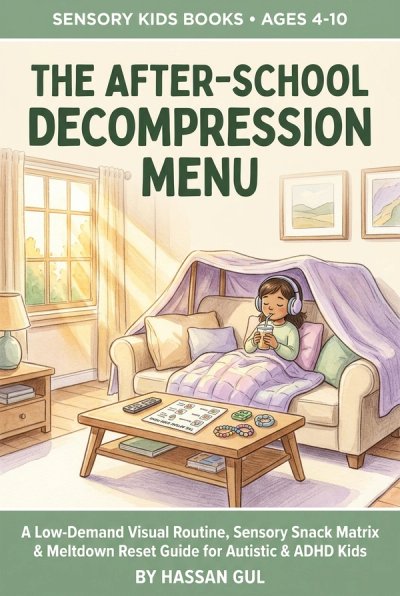 Instant PDF
The After-School Decompression Menu
A Low-Demand Visual Routine, Sensory Snack Pairing Matrix & Meltdown Reset Guide for Autistic & ADHD Kids
Recommended Sensory Products
Carefully curated products for a sensory-friendly environment.
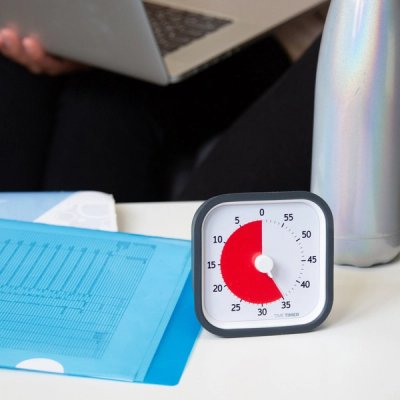
Time Timer MOD 60-Minute Visual Countdown Timer
Best Executive Function Pacing Tool
The gold-standard classroom visual timer. Features a vanishing red disk, completely silent quartz operation (zero ticking), and a protective silicone case to withstand classroom drops.
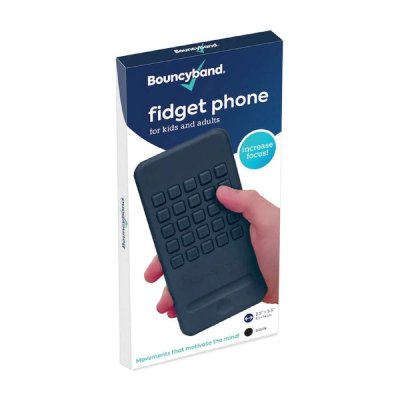
The Original Bouncy Bands for Student Desks
Best Active Seating Desk Tool
Heavy-duty commercial-grade natural latex bands that attach in seconds to elementary and middle school desks. Prevents chair tipping and provides continuous proprioceptive calming feedback without sound.
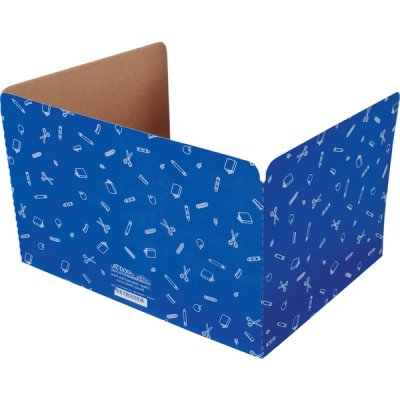
Really Good Stuff Trifold Desktop Privacy Shields (Set of 4)
Best Visual Distraction Blocker
Durable matte corrugated privacy partitions engineered to block peripheral distractions while resting securely on student desks. Folds completely flat for easy cubby storage.

ONO Roller Jr Silent Handheld Fidget Tool
Best Teacher-Approved Silent Fidget
Engineered specifically for student desks and quiet classrooms. Made of aircraft-grade aluminum and frictionless bearings, it glides silently between fingers without clicks, snaps, or visual distraction.
📚 Evidence-Based Sources & Citations
Peer-reviewed literature, clinical frameworks, and foundational neurodiversity resources referenced in this guide.
- U.S. Department of Education Office for Civil Rights (OCR) - Section 504 Regulations (34 C.F.R. Part 104)View Sourceopen_in_new
- Title II of the Americans with Disabilities Act (ADA) - School Accommodations & Access RightsView Sourceopen_in_new
- American Academy of Pediatrics (AAP) Clinical Practice Guideline for the Diagnosis, Evaluation, and Treatment of ADHD in Children and AdolescentsView Sourceopen_in_new
- CHADD (Children and Adults with Attention-Deficit/Hyperactivity Disorder) - 504 Plans and Educational RightsView Sourceopen_in_new
- Journal of Abnormal Child Psychology - "The Role of Motor Activity in Children with ADHD: Physical Movement Improves Cognitive Working Memory"View Sourceopen_in_new
- Understood.org - Section 504 Accommodations Guide for ADHD and Sensory ProcessingView Sourceopen_in_new
Join the Conversation
Get our monthly guide on sensory-aware parenting and neuro-inclusive home design delivered straight to your sanctuary.
Respecting your inbox and your peace of mind.
Leave a Reply
Your email address will not be published. Required fields are marked *