ADHD Task Paralysis Worksheet: 7 Visual Micro-Steps to Break Executive Dysfunction Freeze (Free Printable PDF)

When your brain screams 'I need to start' but your body remains frozen on the couch, standard to-do lists only deepen the shame. Here is the neuroscience behind ADHD task paralysis—and a 7-step somatic activation protocol to gently unfreeze your nervous system.
Editorial Disclosure & Medical Scope: Sensory Kids Books shares neurodiversity-affirming, lived-experience insights and sensory-informed tools for parents, caregivers, and educators. This publication is for educational purposes only and does not constitute formal medical diagnosis, psychiatric evaluation, or clinical occupational therapy advice. Always consult a qualified pediatrician or licensed clinician for individual medical care. As an Amazon Associate, we earn from qualifying purchases through our independent affiliate links at zero extra cost to you.
Have you ever sat on the edge of your bed or sofa, desperately screaming inside your own head: 'Just get up! Just open the laptop! Just put the laundry away!'—while your physical body remains completely, stubbornly paralyzed?
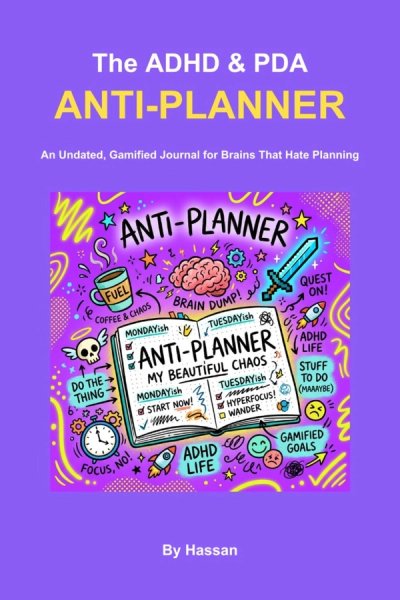
In my years designing neurodiversity-affirming sensory tools and writing The ADHD & PDA Anti-Planner, I have heard this exact agony from hundreds of parents, exhausted teens, and burnt-out neurodivergent adults. Traditional society labels this behavior 'laziness,' 'procrastination,' or 'poor discipline.' But modern neuroscience reveals the truth: ADHD task paralysis is an involuntary autonomic nervous system freeze state, driven by dopamine scarcity and prefrontal cortex exhaustion. You are not refusing to move; your nervous system is treating an overwhelming task like a physical predator.
To help you break out of this biological stalemate without shame, self-criticism, or forced willpower, our clinical team created the ADHD Task Paralysis Worksheet (Free Printable PDF). In this master guide, we will unpack the exact neurological mechanics of the ADHD freeze, explore the 3 distinct types of task paralysis, and walk you through our proven 7-step somatic activation protocol to gently thaw your brain and get moving again.
The Neuroscience of the 'ADHD Freeze': Why Willpower Can't Beat Executive Dysfunction
To understand why standard planning advice like 'just make a list' or 'just push through it' fails so miserably, we must look at the brain's executive functioning hub: the prefrontal cortex (PFC). In neurotypical brains, the PFC maintains a steady baseline of dopamine and norepinephrine, allowing smooth task initiation, prioritization, and sustained focus.
In individuals with ADHD, baseline tonic dopamine levels are chronically low. As pioneering ADHD researcher Dr. Russell Barkley has documented, ADHD is not an attention deficit—it is an executive intention deficit. When an ADHD brain encounters a task that feels ambiguous, massive, boring, or emotionally fraught, the amygdala (the brain's threat-detection center) activates. Instead of perceiving a pile of dirty dishes or a term paper, the amygdala registers a severe cognitive threat.
When the perceived cognitive cost of initiating a task exceeds the brain's available dopamine reserve, the autonomic nervous system shifts from the ventrovagal social engagement state directly into a dorsal vagal 'freeze' response. Your muscles feel heavy, your working memory empties out, and you find yourself doom-scrolling social media—not because you want to, but because your brain is desperately foraging for emergency dopamine to keep your nervous system online.
The 3 Types of ADHD Paralysis: Which One Are You Experiencing?
ADHD task paralysis is rarely uniform. Understanding which specific cognitive bottleneck you are facing is essential, because each type requires a completely different unfreezing key:
1. Choice Paralysis (The Ambiguity Freeze)
Choice paralysis occurs when your brain is faced with multiple unranked options or an open-ended assignment. When everything feels equally important (e.g., 'Clean the house,' 'Study for finals,' or 'Answer 40 emails'), the ADHD brain cannot establish an intuitive priority order. Under cognitive overload, the system simply locks up. This is closely tied to Pathological Demand Avoidance (PDA), where ambiguous demands feel like direct nervous system threats.
2. Mental Paralysis (Sensory & Cognitive Saturation)
Mental paralysis happens when sensory inputs or emotional stress flood the working memory. If you are experiencing sensory overload from fluorescent lights, visual clutter, background chatter, or impending deadlines, your brain's processing bandwidth drops to zero. You might stare at a screen or wall completely unable to string thoughts into words. In somatic psychology, this is known as cognitive saturation.
3. Task Initiation Paralysis (The 'Wall of Awful')
First coined by ADHD expert Brendan Mahan, the 'Wall of Awful' is the invisible emotional barrier erected by past shame, fear of failure, perfectionism, and sensory dread associated with a specific task. Even if opening a piece of mail takes only 10 seconds, the emotional weight of 50 previous uncompleted tasks turns that envelope into an insurmountable brick wall.
Traditional To-Do Lists vs. ADHD Activation Worksheets
Why do standard planners cause ADHD meltdowns and task freeze, while visual activation worksheets succeed? Here is the direct clinical contrast:
Traditional To-Do Lists vs. ADHD Activation Worksheets
Why standard planners cause ADHD meltdowns and task freeze, while visual activation worksheets succeed.
| Design Feature | Traditional Planners & To-Do Lists | ADHD Activation Worksheets |
|---|---|---|
Cognitive Load | High: Demands linear prioritizing, sequence planning, and time calculation. | Low: Isolates ONE single sensory micro-action; zero sequence overwhelm. |
Emotional Tone | Guilt-inducing: Constant visual reminder of all unfinished backlog. | Permissive: Celebrates "B-minus" progress, sensory wins, and momentum. |
Initiation Mechanism | Relies on internal willpower, self-control, and moral discipline. | Uses somatic resets, visual timers, and dopamine appetizer pairing. |
Time Perception | Abstract numbers ("2:00 PM - 3:00 PM") that trigger time blindness panic. | Concrete visual slices (colored timer disks that physically vanish). |
Nervous System Impact | Triggers sympathetic threat response and shameful paralysis loops. | Activates ventral vagal co-regulation and safe physical thawing. |
The 7-Step Somatic Activation Protocol: How to Unfreeze in 5 Minutes
Our printable ADHD Task Paralysis Worksheet is built around a 7-step somatic unfreezing framework that works with your neurodivergent biology rather than fighting against it:
Step 1: The Cold Somatic Shock (Mammalian Dive Reset)
You cannot think your way out of a physiological freeze state; you must physically signal safety to your nervous system. Walk to the sink, fill your hands with cold water, and press it firmly against your eyes, temples, and cheeks for 15 seconds. This stimulates the vagus nerve and activates the mammalian dive reflex, instantaneously dropping your heart rate and releasing physical muscle tension.
Step 2: Name the Invisible 'Wall of Awful'
Speak the emotional barrier aloud or scribble it on your worksheet: 'I am not lazy; I am terrified that this report won't be perfect,' or 'The sound of the vacuum cleaner feels physically painful to me today.' Naming the emotion moves brain activity from the reactive amygdala back to the conscious prefrontal cortex.
Step 3: Shrink the Target to a 'Ridiculously Micro' Action
The biggest trap in executive dysfunction is writing down macro-goals like 'Clean bedroom' or 'Write essay.' Your brain perceives those as 200 distinct sub-tasks. Shrink the target until your brain stops resisting: Do not 'clean room'—simply place one blue sock into the laundry basket. Do not 'write essay'—simply open a blank document and type the word 'Introduction.' Once initiation friction is breached, momentum takes over.
Step 4: Pair with a Dopamine Appetizer
Never start a cold, low-dopamine task in silence. Before initiating the micro-step, serve your brain a dopamine appetizer: put on your favorite noise-canceling headphones with 8D binaural beats, grab a textured handheld fidget like the ONO roller, or pour an iced sparkling beverage. Dopamine pairing lubricates the cognitive gears.
Step 5: Externalize Time with a Visual Countdown Timer
People with ADHD experience 'time blindness'—time exists only as 'NOW' or 'NOT NOW.' Using standard digital clocks creates panic. Instead, set a visual timer (like the Time Timer Mod) for strictly 15 minutes. Seeing the red visual disk physically vanish turns abstract time into a tangible, non-threatening boundary. When you know you are only obligated to work for 15 minutes, task resistance plummets.
Step 6: Leverage Low-Demand Body Doubling
The presence of another calm human nervous system in the room dramatically reduces the cognitive effort required to start. Ask a partner, friend, or child: 'Can you sit on the chair across from me for 10 minutes while I start this email?' You don't need them to help you with the work—you simply need their calm, non-judgmental presence to co-regulate your system.
Step 7: Grant Yourself a 'B-Minus' Permission Slip
Perfectionism is the #1 accelerant of ADHD paralysis. Give yourself explicit permission to produce messy, imperfect, 'B-minus' work. A messy draft exists; an unwritten masterpiece does not. Completing a task at 60% quality is 100% better than staying frozen at 0%.
Recommended Sensory & Executive Function Equipment
Over the past decade evaluating sensory tools for neurodivergent children and adults, these four items consistently deliver the highest return for breaking executive dysfunction freeze:
Replaces abstract digital clocks with a disappearing red disk. Completely silent operation (no distracting ticking) with an optional gentle alert chime. Essential for pacing 15-minute unfreezing sprints.
shopping_cart👉 Check Current Price on Amazon (paid link)open_in_new
Crafted from aircraft-grade aluminum, this frictionless rolling tool massages acupressure points in your palm while reading or listening. Keeps restless fingers engaged without breaking cognitive focus.
shopping_cart👉 Check Current Price on Amazon (paid link)open_in_new
Dampens harsh environmental decibels (fluorescent humming, refrigerator buzzing, distant traffic) by up to 16dB while keeping human voices crystal-clear. Reduces the auditory saturation that locks ADHD brains into freeze.
shopping_cart👉 Check Current Price on Amazon (paid link)open_in_new
A rugged, high-contrast mechanical visual countdown timer designed for desks and calm-down stations. Ideal for kids, teens, and classrooms requiring intuitive time-awareness.
shopping_cart👉 Check Current Price on Amazon (paid link)open_in_new
Take It Further: The ADHD & PDA Anti-Planner
If you are tired of buying beautiful 12-month planners in January only to abandon them with shame by February 3rd, you don't need another traditional organizer. You need The ADHD & PDA Anti-Planner—our 140-page, undated, gamified focus journal designed specifically for brains that resist schedules, demands, and rigid routines.
Unlike standard planners that punish you for missed days, the Anti-Planner features zero calendar dates, zero guilt, and over 45 interactive unfreezing game cards, dopamine menus, visual task-chunking maps, and low-demand reset protocols. Available as an instant digital printable PDF ($8.99) or durable Amazon paperback ($14.99).
Frequently Asked Questions About ADHD Task Paralysis
How is ADHD task paralysis different from laziness?
Laziness is a conscious, voluntary choice to rest or avoid exertion because you simply don't care about the outcome. ADHD task paralysis is an agonizing, involuntary autonomic freeze response. In task paralysis, you care intensely about the task, your anxiety is elevated, and you desperately want to start, but your prefrontal cortex lacks the neurochemical activation energy to initiate physical movement.
Can sensory overload trigger task paralysis in autistic and ADHD kids?
Yes, absolutely. When sensory environments (auditory noise, flickering lights, tactile discomfort) overwhelm the nervous system, cognitive bandwidth is diverted toward survival defense. In this saturated state, initiating a complex executive function task becomes biologically impossible until sensory input is dialed down.
What should parents say when their ADHD teen is frozen on a task?
Never say 'Just sit down and do it' or 'Why are you being so lazy?' Instead, offer low-demand declarative co-regulation: 'I notice you've been sitting with this math book for a while. It looks like your brain is frozen. Would it help if I sat beside you for 5 minutes while we just read question number one together?'
How long should an unfreezing sprint last?
We recommend setting your visual timer for strictly 10 to 15 minutes. Long time commitments trigger demand avoidance. Tell your brain: 'I only have to work for 15 minutes; when the red disk vanishes, I have full permission to stop.' Over 80% of the time, once the initiation barrier is breached, momentum will carry you forward.
 Instant PDF
The ADHD & PDA Anti-Planner
An Undated, Low-Demand Gamified Planner & Focus Journal for Neurodivergent Minds
Quick Answers for Parents & Educators
Recommended Sensory Products
Carefully curated products for a sensory-friendly environment.
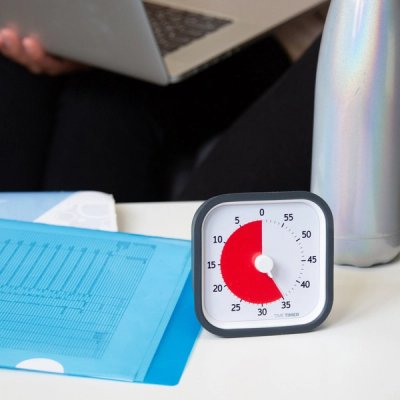
Time Timer Mod 60-Minute Visual Countdown Timer
Best Executive Function Tool
Visual disappearing red disk externalizes time for ADHD and autistic learners. Completely silent with optional alert chime.

ONO Roller Handheld Sensory Fidget
Best Tactile Focus Anchor
Frictionless aluminum hand roller that engages restless fingers and relieves anxiety without visual distraction.

Loop Engage Sensory Noise-Dampening Earplugs
Best Sensory Shield
Attenuates harsh environmental noise by 16dB while keeping conversation clear, preventing sensory cognitive overload.
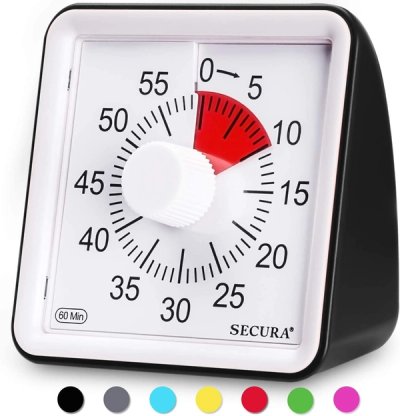
Secura 60-Minute Visual Desk Timer
Budget-Friendly Pick
Durable mechanical visual timer with clear color quadrant, perfect for kids, classrooms, and homework stations.
📚 Evidence-Based Sources & Citations
Peer-reviewed literature, clinical frameworks, and foundational neurodiversity resources referenced in this guide.
- Executive Functioning and ADHD: Nature and Assessment — Dr. Russell A. Barkley, Ph.D.(2023)View Sourceopen_in_new
- The Polyvagal Theory: Neurophysiological Foundations of Emotions, Attachment, Communication, and Self-Regulation — Dr. Stephen W. Porges, Ph.D.(2021)View Sourceopen_in_new
- ADHD and Executive Function: The Brain's Management System — Dr. Thomas E. Brown, Ph.D.(2022)View Sourceopen_in_new
- The Wall of Awful: How to Overcome ADHD Initiation Paralysis — ADDitude Magazine & Brendan Mahan, M.Ed.(2024)View Sourceopen_in_new
Join the Conversation
Get our monthly guide on sensory-aware parenting and neuro-inclusive home design delivered straight to your sanctuary.
Respecting your inbox and your peace of mind.
Leave a Reply
Your email address will not be published. Required fields are marked *