Why Does My Child Cover Their Ears? A Guide to Auditory Sensory Overload
When a child with autism covers their ears, it is rarely a behavioral choice—it is a vital coping mechanism for auditory sensory overload. Learn why unpredictable noises cause physical pain and how to support your child.
Editorial Disclosure & Medical Scope: Sensory Kids Books shares neurodiversity-affirming, lived-experience insights and sensory-informed tools for parents, caregivers, and educators. This publication is for educational purposes only and does not constitute formal medical diagnosis, psychiatric evaluation, or clinical occupational therapy advice. Always consult a qualified pediatrician or licensed clinician for individual medical care. As an Amazon Associate, we earn from qualifying purchases through our independent affiliate links at zero extra cost to you.
It’s a scenario I’ve lived through countless times with my own neurodivergent children: We walk into a grocery store, a public bathroom, or even a mildly noisy classroom, and immediately, their hands clamp tightly over their ears.
To an onlooker, it might seem like they are being dramatic or refusing to listen. But as a parent of autistic children, I quickly learned that covering ears is rarely a behavioral choice—it is an instinctual survival mechanism triggered by a nervous system in distress.
Why Do Autistic Children Cover Their Ears?
When a child with autism or sensory processing disorder (SPD) covers their ears, it is almost always a coping mechanism used to manage a sensory environment that feels profoundly overwhelming or physically painful.
Unlike neurotypical brains, which easily filter out background noise (like the hum of a refrigerator or the echo of a school hallway), an autistic brain often processes all auditory input at the exact same intensity.
Here are the four primary reasons why your child might be covering their ears:
1. Auditory Sensory Overload
This is the most common reason. Sounds that seem perfectly normal to us—like a vacuum cleaner, a hand dryer, or multiple people talking at once—can feel incredibly loud and piercing to a child with auditory hypersensitivity. Covering their ears is the fastest way to reduce the input and find immediate relief.
2. The Unpredictability of Noise
Often, it is not just the volume of the sound, but the unpredictability that triggers the need to protect their ears. A sudden alarm, a dog barking, or a younger sibling suddenly screaming can shock their nervous system. By covering their ears in environments where they anticipate these sounds (like a crowded park), they are trying to regain a sense of control.
3. Self-Soothing (Stimming)
Sometimes, ear covering is a form of 'stimming' (self-stimulatory behavior). A child might rhythmically cover and uncover their ears, or apply deep pressure to the sides of their head, to regulate their emotions. This can happen even in quiet environments, providing them with a comforting, muffled sensation that calms their nervous system.
4. Non-Verbal Communication
For children who are non-speaking or experience situational mutism when overwhelmed, covering their ears is a highly effective, non-verbal signal. It is their way of saying, "I am distressed, I am anxious, and this environment is too much for me right now."
How to Support a Child Experiencing Auditory Overload
Our job as parents is never to force our children to 'just deal with it.' Our job is to validate their sensory experience and provide accommodations that make their world feel safer.
The single most effective tool you can provide is a high-quality pair of noise-canceling headphones. These allow your child to participate in family outings, school events, and public spaces without their nervous system being constantly under attack.
If your child struggles with wearing bulky headphones, consider high-fidelity earplugs (like Loop Earplugs) that reduce decibel levels without completely muffling the world around them.
Free Resources for Sensory Support
If you are actively navigating sensory overload and meltdowns with your child, explore these free tools I've built to help our community:
- 🔋 Free Autism Burnout Visual Recovery Guide: Recognize how sensory fatigue impacts your child's capacity.
- 📅 Printable Daily Routine Schedule: Reduce transitions by anchoring outings to a visual schedule.
📚 Also check out our latest guide for late-diagnosed neurodivergent individuals: Pathological Demand Avoidance (PDA) in Adults: Signs & Recovery.
 Instant PDF
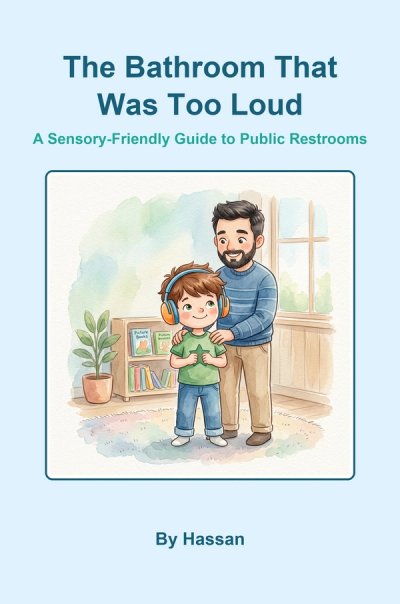
The Bathroom That Was Too Loud: Auditory Sensitivity Story
A Sensory-Friendly Story for Navigating Public Restrooms and Loud Noises for Autistic Kids
Quick Answers for Parents & Educators
Recommended Sensory Products
Carefully curated products for a sensory-friendly environment.
Puro Sound Labs PuroQuiets
TOP PICK
Volume-limited ANC headphones perfect for sensitive ears.
Loop Experience Earplugs
SENSORY FRIENDLY
High-fidelity earplugs to reduce background noise without muffling voices.
📚 Evidence-Based Sources & Citations
Peer-reviewed literature, clinical frameworks, and foundational neurodiversity resources referenced in this guide.
- Occupational Therapy Practice Framework: Domain and Process (4th Edition) — American Occupational Therapy Association (AOTA)(2020)View Sourceopen_in_new
- The Polyvagal Theory: Neurophysiological Foundations of Emotions, Attachment, Communication, and Self-Regulation — Dr. Stephen W. Porges, PhD(2011)View Sourceopen_in_new
- Understanding Pathological Demand Avoidance (PDA): Identifying Needs & Low-Demand Approaches — PDA Society UK(2023)View Sourceopen_in_new
- Sensory Processing Issues Explained: Supporting Children with Sensory Sensitivities — Child Mind Institute(2024)View Sourceopen_in_new
Join the Conversation
Get our monthly guide on sensory-aware parenting and neuro-inclusive home design delivered straight to your sanctuary.
Respecting your inbox and your peace of mind.
Leave a Reply
Your email address will not be published. Required fields are marked *