The Calm After-School Snack Station: How a Low-Demand Food Basket Prevents the 4 PM Meltdown
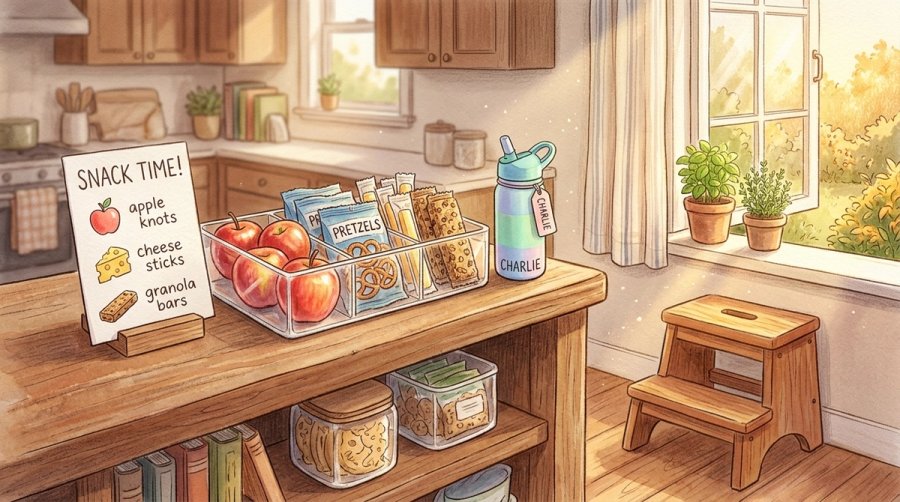
The dreaded 4 PM after-school collapse is often fueled by sensory depletion and sudden hunger. Discover how a self-serve, low-demand snack station—with crunchy, chewy, and chilled sensory textures—stops afternoon meltdowns before they start.
Editorial Disclosure & Medical Scope: Sensory Kids Books shares neurodiversity-affirming, lived-experience insights and sensory-informed tools for parents, caregivers, and educators. This publication is for educational purposes only and does not constitute formal medical diagnosis, psychiatric evaluation, or clinical occupational therapy advice. Always consult a qualified pediatrician or licensed clinician for individual medical care. As an Amazon Associate, we earn from qualifying purchases through our independent affiliate links at zero extra cost to you.
⚡ Quick Takeaway & Summary for Parents:
The dreaded 4:00 PM after-school meltdown is rarely an attitude problem—it is a physiological crash caused by 7 hours of sensory restraint meeting an empty stomach. Forcing an exhausted child to verbally answer open-ended questions like "What do you want to eat?" triggers immediate task paralysis. A self-serve, low-demand snack station—stocked with pre-portioned sensory textures (crunch, chew, chill) at child height—gives kids instant physical comfort without verbal friction or power struggles.
Why 4:00 PM Is the Danger Zone for Family Peace
It is a scene played out in millions of kitchens every weekday afternoon. The front door opens at 3:45 PM. Your child drops their backpack, kicks off their shoes in the middle of the hallway, and within five minutes, dissolves into tears or shouts over the smallest trigger imaginable.
You ask gently: "What do you want for a snack? We have apples, cheese, crackers, or yogurt." Your child glares at you, screams "I DON'T KNOW!", and collapses on the rug.
As a software engineer and a parent of neurodivergent children, I look at household friction through the lens of system resource exhaustion. During a typical school day, your child operates in a high-demand, low-control environment. They hold in fidgets, mask their sensory discomfort under bright fluorescent lights, navigate peer social dynamics, and follow rigid adult schedules. By the time they cross the front door threshold, their cognitive battery is at 1%.
At that exact moment of cognitive depletion, their blood sugar is also bottoming out. When an empty stomach meets zero executive function, asking them to make choices or ask permission creates severe decision paralysis. The solution is not scolding or insisting on table manners. The solution is removing choice friction through an autonomous snack station.
The 4 Rules of a Low-Demand Snack Station
A low-demand snack station is not just a food basket. It is a physical buffer system that protects your child’s nervous system during the rocky transition from school to home. Here are the 4 core rules that make it work seamlessly.
🍎 Snack Station Rule #1: Visual Accessibility at Child Height (Zero Asking Required) (Autonomous Access)
If a snack is hidden behind closed pantry doors or placed on a high shelf, your child must summon verbal words to ask for it. Placing a dedicated, transparent caddy at child eye level eliminates the verbal hurdle entirely.
Language processing is often the first executive function to shut down during after-school fatigue. Having to say, "Mom, can I please have a snack?" feels like climbing a mountain when a child is completely drained.
Dedicate one low pantry shelf, a low kitchen drawer, or a corner of the kitchen island to a clear, divided acrylic caddy. Use clear containers so every option is 100% visible from three feet away. When kids walk through the door, they don’t have to ask, negotiate, or open heavy cupboard doors: they see it, grab it, and begin refueling immediately.

⭐ Recommended Tool: Clear Acrylic Divided Pantry & Fridge Storage Bins with Handles (Best for Visible Organization)
Sturdy, BPA-free clear bins with built-in dividers and ergonomic handles. Perfect for organizing grab-and-go snack packs at kid height so little hands can independently choose without pulling down entire pantry shelves.
shopping_cart👉 Check Price on Amazon (paid link)open_in_new
🍎 Snack Station Rule #2: The Three Sensory Texture Zones: Crunch, Chew, and Chill (Oral Sensory Regulation)
Chewing and oral motor input provide powerful proprioceptive regulation to the jaw and cranial nerves. Stocking distinct sensory textures helps children naturally decompress physical tension after school.
Occupational therapists and parents have long observed that oral input is one of the most effective ways for a human nervous system to downshift. When school requires kids to sit still and keep quiet for hours, they build up intense motor tension. Strategic snack textures provide a constructive physical release.
• The Crunch Zone: Pretzels, crisp carrot sticks, mini pita chips, rice crackers, or sliced apples. Heavy crunching engages jaw muscles, releasing tension built up from auditory and cognitive overload.
• The Chew Zone: Low-sugar dried mango, beef sticks, mozzarella cheese sticks, or dense oat bars. Prolonged rhythmic chewing grounds the body and signals safety.
• The Chill Zone: Chilled yogurt tubes, frozen blueberries, or a cold fruit smoothie sipped through a thick silicone straw. Cold temperatures provide gentle sensory alertness without overstimulation.

⭐ Recommended Tool: Bentgo Kids Leakproof 5-Compartment Snack Box (Best for Portion-Controlled Variety)
Features 5 pre-portioned compartments ideal for staging a mix of crunchy, chewy, and chilled sensory snacks. Drop-proof rubberized edges make it durable for daily independent table use.
shopping_cart👉 Check Price on Amazon (paid link)open_in_new
🍎 Snack Station Rule #3: Pre-Portioned Containers (Eliminate the "Put It Away" Battle) (Boundary Automation)
Leaving jumbo family-sized chip bags on the counter invites power struggles over portion sizes. Pre-portioning snacks into small individual tubs or bento trays creates built-in boundaries that require zero parental intervention.
When an exhausted child opens a 16-ounce bag of chips on the sofa, telling them "Okay, that is enough, hand it over" will almost always trigger a confrontation. Their nervous system interprets the sudden removal of food as a threat, sparking a fight-or-flight reaction.
On Sunday afternoon, take ten minutes to portion crackers, nuts, and pretzels into reusable silicone pouches or divided containers. When an item is placed in the snack station, the entire portion belongs to the child. Once the container is empty, the snack is finished naturally without any parental negotiation.
📋 Autism & ADHD Visual Daily Routine Pack ($7.99 / $14.99)
Looking for visual snack menus, afternoon transition cards, and after-school visual schedules? Our printable toolkit includes over 120 visual prompt cards and customizable boards to give your children clear predictability from school pickup to dinner.
👉 Explore the Visual Routine Pack on Sensory Kids Books
🍎 Snack Station Rule #4: The "Zero Interrogation" 20-Minute Grace Period (Social Decompression)
When your child is eating their after-school snack, resist the urge to ask how their day was, what homework they have, or why their jacket is dirty. Protect this 20-minute window as a sacred, quiet decompression zone.
Parents ask questions out of love and curiosity: "How was the math quiz? Did you play with Noah? Did you finish your project?" But to a child who just survived six hours of constant social performance, questions feel like a police interrogation.
Give them 20 minutes of companionable silence. Sit near them, offer a cool drink, or play gentle background music. You can use a visual timer so they know exactly when the quiet refueling period ends and when homework or backpack unpacking begins.

⭐ Recommended Tool: Time Timer MOD 60-Minute Visual Countdown Timer (Best for Gentle Time Boundaries)
A silent visual timer with a disappearing colored disk that shows elapsed time without stressful ticking. Provides a gentle, visual boundary for after-school quiet snack time before evening routines begin.
shopping_cart👉 Check Price on Amazon (paid link)open_in_new
📋 The ADHD & PDA Anti-Planner ($8.99)
For kids and parents who shut down under high demands and rigid expectations. Packed with low-demand decompression menus, dopamine tracking sheets, and flexible afternoon reset templates.
👉 Get The Anti-Planner in Our Shop
Stocking Guide: 10 High-Comfort After-School Snacks
Keep your snack caddy stocked with foods that stabilize energy without massive sugar spikes. Here are 10 parent-tested options that require minimal preparation:
1. Apple Wedges + SunButter / Peanut Butter: The crunch of apples paired with grounding protein and healthy fats.
2. Mozzarella Cheese Sticks: High protein with a satisfying peeling, chewy sensory experience.
3. Pretzels & Hummus Cups: Heavy jaw resistance that helps decompress classroom tension.
4. Edamame Pods: Popping beans from pods combines fine motor fidgeting with protein.
5. Chilled Greek Yogurt Tubes: Cool oral temperature that calms an overstimulated palate.
6. Whole Grain Cheddar Crackers: Comforting familiar crunch in pre-portioned silicone cups.
7. Pumpkin Seeds & Sunflower Seed Trail Mix: Magnesium-rich seeds with raisins for steady physical energy.
8. Steamed Rice Cakes with Cream Cheese: Light, crispy texture for children sensitive to heavy food aromas.
9. Dried Fruit Ropes & Leather: Tough, resilient chew that provides deep oral input.
10. Thick Fruit & Oat Smoothie: Drinking through a wide silicone straw provides soothing oral resistance.
Free Interactive Tools on Sensory Kids Books
Pair your afternoon snack station with our free interactive tools to create predictable routines and calming sensory inputs for your home:
• Map out your afternoon and evening flow with our free Visual Daily Routine Schedule Generator to help kids anticipate each step of the afternoon.
• Explore tailored heavy work and oral sensory ideas with our interactive Sensory Diet Schedule Generator built for quick daily customization.
Final Thoughts: Small Environmental Shifts Create Big Peace
When after-school meltdowns occur, it is tempting to think we need a new discipline strategy or a stricter set of household rules. But in nine cases out of ten, behavior is communication.
Your child is not trying to make your evening difficult; they are telling you that their system is completely out of fuel and overloaded with inputs. By placing a basket of familiar, crunchy, and comforting snacks right at their level—and pairing it with 20 minutes of peaceful silence—you give them the dignity of refueling on their own terms. That simple, five-minute setup transforms 4:00 PM from the hardest hour of the day into the most connected.
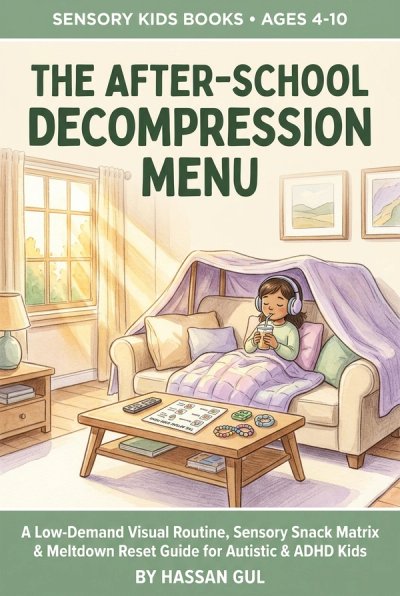 Instant PDF
The After-School Decompression Menu
A Low-Demand Visual Routine, Sensory Snack Pairing Matrix & Meltdown Reset Guide for Autistic & ADHD Kids
Recommended Sensory Products
Carefully curated products for a sensory-friendly environment.

Weighted Lap Pad
BEST FOR FOCUS
Providing 5lbs of gentle pressure to help children stay grounded during long reading sessions.

Dimmable Warm LED
SENSORY FRIENDLY
Flicker-free technology with adjustable color temperatures to prevent eye strain.
📚 Evidence-Based Sources & Citations
Peer-reviewed literature, clinical frameworks, and foundational neurodiversity resources referenced in this guide.
- Occupational Therapy Practice Framework: Domain and Process (4th Edition) — American Occupational Therapy Association (AOTA)(2020)View Sourceopen_in_new
- The Polyvagal Theory: Neurophysiological Foundations of Emotions, Attachment, Communication, and Self-Regulation — Dr. Stephen W. Porges, PhD(2011)View Sourceopen_in_new
- Understanding Pathological Demand Avoidance (PDA): Identifying Needs & Low-Demand Approaches — PDA Society UK(2023)View Sourceopen_in_new
- Sensory Processing Issues Explained: Supporting Children with Sensory Sensitivities — Child Mind Institute(2024)View Sourceopen_in_new
Join the Conversation
Get our monthly guide on sensory-aware parenting and neuro-inclusive home design delivered straight to your sanctuary.
Respecting your inbox and your peace of mind.
Leave a Reply
Your email address will not be published. Required fields are marked *