Auditory Processing Disorder (APD) in the Classroom: Acoustic Accommodations & School Strategies
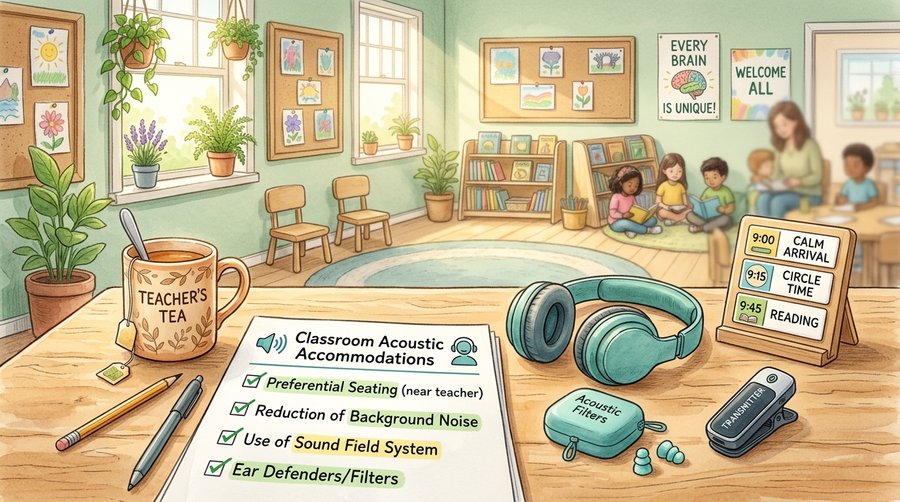
Classroom noise is an invisible barrier for children with Auditory Processing Disorder. Discover 10 clinical 504/IEP accommodations, pre-written legal clauses, and speech-clarifying acoustic tools.
Editorial Disclosure & Medical Scope: Sensory Kids Books shares neurodiversity-affirming, lived-experience insights and sensory-informed tools for parents, caregivers, and educators. This publication is for educational purposes only and does not constitute formal medical diagnosis, psychiatric evaluation, or clinical occupational therapy advice. Always consult a qualified pediatrician or licensed clinician for individual medical care. As an Amazon Associate, we earn from qualifying purchases through our independent affiliate links at zero extra cost to you.
⚡ Quick Takeaway & Summary for Parents: Auditory Processing Disorder (APD or CAPD) is not a physical hearing impairment—it is a neurological bottleneck in how the central nervous system decodes, sequences, and filters sound waves. In a typical classroom with 65 decibels of background chatter, HVAC hum, and chair scraping, a child with APD cannot separate the teacher's voice from ambient acoustic noise (a degraded signal-to-noise ratio). Without formal 504 Plan or IEP accommodations, this results in severe listening fatigue, perceived inattention, and academic task freezing. In this architectural guide, I break down the acoustic physics of the classroom, the 10 legally enforceable school accommodations every parent must secure, and the vetted acoustic tools—from speech-clarifying acoustic filters to assistive FM systems—that protect your child's neurological bandwidth.
Every school morning, parents of children with Auditory Processing Disorder send their kids into an acoustic battlefield. The school day begins with shouting in the hallways, metal lockers slamming, fluorescent ballast tubes buzzing at 120 Hz, and thirty children shifting on unpadded plastic chairs.
To an audiologist administering a standard hearing test in a soundproof booth, your child's hearing thresholds are 100% normal. They can detect a faint 10 dB pure tone beep. But an audiogram only measures peripheral ear function. It tells you that the eardrum and cochlea can register sound waves; it reveals absolutely nothing about how the brainstem and auditory cortex process complex linguistic information once background noise is introduced.
As a systems architect and neurodivergent parent, I analyze APD as an acoustic Signal-to-Noise Ratio (SNR) deficit. When a teacher speaks at 68 decibels in a room with 63 decibels of ambient reverberation, the signal-to-noise ratio is only +5 dB. A neurotypical child can mentally filter that noise without conscious effort. For a child with APD, speech arrives like a heavily scrambled radio transmission. By 1:00 PM, their working memory is completely exhausted from brute-force acoustic decoding, leading to brain fog, behavioral shutdowns, and tears.
The 4 Core Manifestations of APD in School
Auditory Processing Disorder is not one-size-fits-all. According to clinical protocols from the American Speech-Language-Hearing Association (ASHA), classroom deficits fall into four distinct neurological domains:
1. Auditory Figure-Ground Discrimination Deficit: The inability to attend to a primary speaker (the teacher) in the presence of competing background noises (pencil sharpeners, whispered peer side-conversations, air conditioning fans). The child hears everything at the exact same volume level.
2. Auditory Memory & Sequencing Deficit: Impaired retention of multi-step verbal directives. When a teacher announces three consecutive instructions, the child's auditory buffer overflows, causing them to remember only the first or the final command.
3. Auditory Discrimination & Phonemic Breakdown: Difficulty differentiating between subtle phonemic contrast pairs (such as /b/ vs. /d/, "seventy" vs. "seventeen", or "cat" vs. "cap"), causing spelling, reading, and phonics errors.
4. Temporal Processing & Prosodic Lag: Slowed temporal resolution. The brain requires 3 to 5 extra seconds of acoustic latency to process the cadence, pitch, and meaning of spoken speech before formulating an answer.
If your child also exhibits executive dysfunction, working memory lapses, or task freezing at home, compare this with our deep dive on What is a 504 Plan for ADHD & Autism? (A Parent's Survival Guide).
Accommodation 1: Assistive Listening Technology (Remote Microphone / FM Systems)
The Neurological Need: Pediatric audiology research shows that children with APD require an acoustic Signal-to-Noise Ratio of at least +15 to +20 dB to comprehend spoken language at a 90% accuracy level. An Assistive Listening System (like Phonak Roger Focus II) uses a teacher-worn wireless microphone that beams the teacher's voice directly into discreet ear-level receivers, effectively making the teacher sound like they are speaking two inches from the child's ear regardless of distance.
⚖️ Exact Legal 504/IEP Clause — Assistive Listening Device (FM/DM System) Clause:
"The school district shall provide and maintain a personal FM/DM Assistive Listening Device (remote microphone system). The general education teacher and all resource instructors shall wear the wireless transmitter microphone during all direct instructional periods, group read-alouds, and assemblies. Staff shall be trained on device operation and microphone muting protocols during private conversations."
Classroom Implementation Protocol: The microphone transmitter rests securely on the teacher's lapel (approx. 6 inches below the chin). The student wears discreet open-fit ear receivers that amplify the teacher's voice without occluding ambient sound from neighboring peers.
Teacher Collaboration Script: "The microphone does not record audio; it simply bypasses the room's acoustic distance and reverberation so my child receives your voice with pristine clarity, instantly reducing his daily cognitive fatigue."
Accommodation 2: Speech-Preserving Passive Acoustic Filters vs. Full Occlusion
The Neurological Need: When sensory-sensitive children with APD are overwhelmed by noise, schools often hand them heavy industrial earmuffs. While earmuffs block decibels, they also muffle human speech frequencies (formants), making it impossible for the child to understand spoken teacher prompts. Passive acoustic filters (such as Loop Engage Kids 2) use an acoustic resonance channel and mesh filter to selectively attenuate background decibels (by 16 dB SNR) while keeping conversational frequencies crystal clear.
⚖️ Exact Legal 504/IEP Clause — Acoustic Filtering Earwear Clause:
"Student shall be permitted to independently wear personal passive acoustic attenuation filters (specifically certified speech-clarifying acoustic earplugs not exceeding 16 dB attenuation) during all loud classroom work periods, group projects, and passing periods to filter background acoustic reverberation while preserving verbal comprehension."
Classroom Implementation Protocol: The earplugs remain on the student's desk or keychain case. The student may insert them independently whenever classroom decibels climb without needing prior verbal permission or teacher prompting.
Teacher Collaboration Script: "Unlike foam earplugs or industrial muffs that muffle your voice, these acoustic filters specifically lower room rumble while leaving your speech crisp. He can hear your directions perfectly while blocking the sound of thirty pencils and HVAC hum."
⭐ Recommended Tool: Loop Engage Kids 2 Acoustic Filtering Earplugs (Best Classroom Acoustic Filtering Tool)
Engineered specifically for kids ages 6–12 with sensory hypersensitivity. Provides 16 dB of flat noise attenuation while keeping speech crisp and natural. Soft silicone tips designed for smaller ear canals.
shopping_cart👉 Check Price on Amazon (paid link)open_in_new
Accommodation 3: Over-Ear Hearing Protection for High-Decibel Non-Instructional Zones
The Neurological Need: School cafeterias, indoor physical education gymnasiums, school bus routes, and unannounced fire alarm drills routinely reach 85 to 105 decibels. For an auditory-defensive child, this sound level triggers an instantaneous sympathetic fight-or-flight crisis, resulting in fight, flight (elopement), or freeze responses.
⚖️ Exact Legal 504/IEP Clause — High-Decibel Zone Hearing Protection Clause:
"Student shall have immediate, unrestricted access to personal high-attenuation over-ear noise-dampening earmuffs (minimum 22 dB SNR rating) during cafeteria lunch, gym class, school assemblies, hallway transitions, and bus transportation. For scheduled fire, tornado, or safety drills, staff shall provide a confidential 1-minute visual proximity warning to allow the student to deploy earmuffs prior to alarm sounding."
Classroom Implementation Protocol: The earmuffs hang on the student's desk hook or cubby. Before cafeteria transitions, the child may slide them on. During fire alarms, staff ensure the child has their earmuffs secured before exiting the building.
Teacher Collaboration Script: "The cafeteria echo generates over 85 decibels of chaotic acoustic reverberation. Wearing his earmuffs protects his nervous system from overload so he returns to class after lunch calm and ready to learn."
⭐ Recommended Tool: Alpine Muffy Kids Noise Cancelling Earmuffs (Best High-Attenuation Over-Ear Protection)
Lightweight, high-attenuation pediatric ear defenders designed with ultra-soft padded headbands that eliminate temporal bone clamping pressure. Certified 25 dB SNR noise reduction for schools and assemblies.
shopping_cart👉 Check Price on Amazon (paid link)open_in_new
Accommodation 4: Preferential Neuro-Acoustic Seating Placement
The Neurological Need: Sound intensity decays according to the Inverse Square Law: every doubling of distance from the teacher halves sound pressure. Furthermore, hard cinderblock walls and window panes reflect sound waves, creating acoustic comb filtering and echo that corrupts speech clarity. Seating an APD child near a doorway or pencil sharpener makes speech comprehension mathematically impossible.
⚖️ Exact Legal 504/IEP Clause — Neuro-Acoustic Seating Placement Clause:
"Student shall be seated within 6 to 8 feet of the primary instructional area with a direct, unobstructed line of sight to the teacher's face and mouth to facilitate speech-reading cues. Seating shall be positioned away from internal acoustic noise generators, including HVAC blowers, exterior windows, pencil sharpeners, water fountains, and high-traffic hallway doors."
Classroom Implementation Protocol: Seat the student in the second row, slightly off-center (preferring their stronger ear if an ear advantage is documented on their audiological evaluation), flanked by calm, quiet peer role models.
Teacher Collaboration Script: "He relies heavily on watching your lip movements and facial expressions to supplement what his auditory cortex misses. Placing him in front-center gives him an optimal acoustic and visual signal."
🎒 The 504 Plan Master Toolkit for ADHD, Autism & APD (16-Page Clinical Kit)
Need complete, pre-written 504 meeting opening statements, Section 504 vs IEP qualification matrices, parent advocacy scripts, 4 full accommodation banks, and printable non-verbal passes? Download the complete ready-to-print PDF toolkit.
👉 Download the 504 Plan Master Toolkit ($7.99)
Accommodation 5: The "5-Second Auditory Latency" Wait-Time Buffer
The Neurological Need: In children with Auditory Processing Disorder, the acoustic signal arrives at the auditory cortex with temporal delay. When a teacher calls on the student, their brain must sequence the phonemes, cross-reference semantic memory, form the concept, and organize motor speech. If the teacher presses for an answer after 1.5 seconds or calls on another student, the child's processing loop crashes, inducing feelings of shame and learned helplessness.
⚖️ Exact Legal 504/IEP Clause — Auditory Processing Latency Wait-Time Clause:
"Instructional personnel shall provide a minimum 5-second processing wait-time after presenting a verbal question or directive to the student before expecting a verbal answer, repeating the question, or prompting for clarification. Staff shall recognize this temporal latency as neurological processing rather than hesitation, disengagement, or non-compliance."
Classroom Implementation Protocol: Use a subtle non-verbal cue: the teacher makes eye contact, asks the question, and pauses naturally for 5 seconds while looking down at class notes to eliminate performance anxiety.
Teacher Collaboration Script: "His brain is compiling the acoustic data. When given an uninterrupted 5-second pause, he almost always produces a brilliant, accurate answer."
Accommodation 6: Dual-Channel Instruction (Written Anchors for All Verbal Content)
The Neurological Need: Working memory capacity for auditory information is strictly limited. Cognitive load theory shows that pairing verbal speech with concurrent visual text (dual coding) allows the visual cortex to reinforce the degraded auditory signal, dramatically improving information retention and recall.
⚖️ Exact Legal 504/IEP Clause — Dual-Channel Visual Anchoring Clause:
"All homework assignments, project criteria, page numbers, test dates, and multi-step procedures exceeding one step must be concurrently provided in written format on the classroom whiteboard, a desktop index card, or the student's digital learning portal. The student shall not be held accountable for assignments announced exclusively via verbal communication."
For home study routines, replacing verbal nagging with visual step-by-step charts prevents afternoon breakdowns. Generate customized schedules with our free Visual Daily Routine Schedule Generator.
Accommodation 7: The "Rephrase, Don't Just Repeat" Communication Protocol
The Neurological Need: When a child with APD says "What?", their instinct is trying to salvage a fragmented acoustic message. Repeating the exact same sentence at a louder volume simply re-feeds the identical phonemic pattern that already failed to parse. Rephrasing the idea using simpler syntactic structure and alternative vocabulary provides a brand-new neural pathway for comprehension.
⚖️ Exact Legal 504/IEP Clause — Rephrase vs. Repeat Communication Protocol Clause:
"When student indicates lack of comprehension or requests repetition, instructional staff shall rephrase the directive using alternative vocabulary and simplified sentence structure rather than repeating the verbatim phrase or elevating vocal volume."
Classroom Implementation Protocol: Instead of repeating: "Please put your science lab sheets in the second bin beneath the window," the teacher rephrases: "Science sheets go into the blue bin."
Accommodation 8: Silent Visual Countdown Timer for Auditory Task Pacing
The Neurological Need: Because students with APD dedicate extensive cognitive resources to listening, they lose internal tracking of elapsed time. Verbal announcements ("You have seven minutes remaining!") often go completely unheard or trigger panic because the child cannot mentally calculate time remaining while processing task content.
⚖️ Exact Legal 504/IEP Clause — Visual Elapsed-Time Display Clause:
"Classroom independent work blocks and timed examinations shall incorporate a silent visual elapsed-time countdown timer (vanishing color disc). Staff shall provide non-auditory 5-minute and 2-minute visual proximity cues prior to activity completion, avoiding abrupt verbal countdown alarms."
⭐ Recommended Tool: Time Timer MOD 60-Minute Visual Countdown Timer (Best Executive Function Visual Pacing Tool)
The clinical standard for visual pacing. Completely silent quartz movement with zero audible ticking. Translates abstract time math into an intuitive vanishing colored disc that the student can monitor at a glance.
shopping_cart👉 Check Price on Amazon (paid link)open_in_new
Accommodation 9: On-Demand Trifold Desktop Study Carrel for Acoustic Shielding
The Neurological Need: During independent reading, writing, or math testing, ambient classroom noises—such as pencil scratches, sniffles, throat clearing, and laptop keyboard clicking—distract an APD brain by competing with internal monologue. A trifold cardboard or matte study carrel provides both acoustic dampening and visual isolation.
⚖️ Exact Legal 504/IEP Clause — Desktop Study Carrel Deployment Clause:
"Student shall have continuous access to a 3-sided trifold corrugated study carrel divider during all independent seatwork, silent reading, and testing periods. The student may independently deploy or fold down the divider without drawing teacher or peer attention."
⭐ Recommended Tool: Really Good Stuff Trifold Desktop Privacy Shields (Set of 4) (Best Acoustic & Visual Desk Divider)
Durable matte corrugated privacy partitions engineered to block peripheral acoustic and visual distractions on student desks. Folds completely flat for effortless cubby storage.
shopping_cart👉 Check Price on Amazon (paid link)open_in_new
Accommodation 10: Non-Punitive "Listening Fatigue" Auditory Recovery Breaks
The Neurological Need: Auditory fatigue is a clinically documented physiological state. After several hours of straining to separate speech from noise, the autonomic nervous system enters sensory overload, manifesting as headaches, eye strain, irritability, and executive paralysis. Short, planned auditory breaks prevent explosive afternoon meltdowns.
⚖️ Exact Legal 504/IEP Clause — Listening Fatigue Auditory Rest Break Clause:
"Student shall be granted up to two (2) five-minute non-punitive auditory recovery breaks per school day in a designated low-noise environment (e.g. calm-down corner, library, or guidance office). The break shall be initiated non-verbally via a laminated desk pass. The break shall not result in disciplinary notation or deduction of recess time."
To build customized sensory diet schedules that prevent sensory collapse, explore our free Sensory Diet Schedule Generator.
If your child needs formal measurable IEP goals for auditory processing and speech advocacy, use our free IEP SMART Goal Generator to create attorney-vetted goal language.
The 504 Meeting Playbook: How to Advocate for APD Accommodations
Securing accommodations for Auditory Processing Disorder requires addressing common school misconceptions. Because APD does not show up on standard audiograms, school evaluation teams frequently dismiss it as "ADHD inattention" or "lack of motivation." Here is your 3-step advocacy playbook:
1. Provide a Central Auditory Processing Disorder (CAPD) Clinical Evaluation: Section 504 teams require formal diagnostic documentation. Ensure your evaluation comes from a licensed clinical audiologist specialized in auditory processing (using test batteries such as the SCAN-3, Dichotic Digits Test, and Pitch Pattern Sequence Test), rather than relying solely on a school speech-language pathologist's screening.
2. Link APD to Federal Eligibility Under "Major Life Activities": Under 34 C.F.R. § 104.3(j)(2)(ii) of Section 504 and Title II of the ADA, learning, reading, communicating, and concentrating are explicitly protected major life activities. Emphasize that your child's difficulty hearing in noise substantially limits their equal access to instruction.
3. Enforce the 24-Hour Review Rule: Never sign the 504 Plan draft in the meeting room. Take the document home for 24 hours to verify that every accommodation specifies WHO provides the tool, WHERE it is deployed, and that subjective phrases like "as needed" have been completely removed.
🎒 The ADHD & PDA Anti-Planner: Visual Executive Function Workbook
Specially designed for neurodivergent children and teens who freeze when facing complex school planners. Features visual dopamine menus, low-demand task chunkers, and emotional regulation guides.
👉 Explore The ADHD Anti-Planner ($8.99)
🎒 Autism & ADHD Visual Daily Routine Pack (Printable Kit)
Over 80+ visual routine cards covering morning school prep, after-school decompression, and bedtime wind-down. Replaces repetitive verbal prompting with clear visual icons.
👉 Get the Visual Daily Routine Pack ($7.99 / $14.99)
Empowering Your Child's Auditory World
When an auditory processing difference is misunderstood, children internalize the false belief that they are "slow" or "not listening." They learn to nod their heads and smile while understanding very little of what was said, expending all their emotional energy hiding their confusion.
By implementing acoustic filtering earplugs, FM remote microphones, preferential seating, and visual directions, we strip away the invisible acoustic barrier. When we change the acoustic environment, we allow a brilliant, insightful, neurodivergent child to thrive with confidence and dignity.
 Instant PDF
The After-School Decompression Menu
A Low-Demand Visual Routine, Sensory Snack Pairing Matrix & Meltdown Reset Guide for Autistic & ADHD Kids
Recommended Sensory Products
Carefully curated products for a sensory-friendly environment.
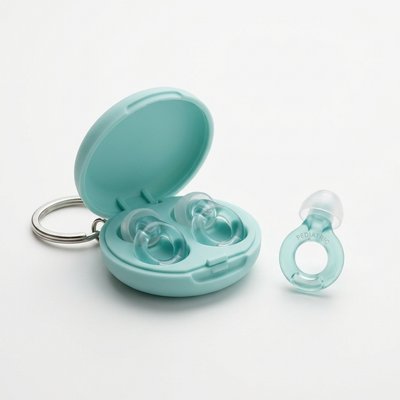
Loop Engage Kids 2 Acoustic Filtering Earplugs
Best Classroom Acoustic Filtering Earplugs
Engineered specifically for kids ages 6–12 with sensory hypersensitivity. Provides 16 dB of flat noise attenuation while keeping speech crisp and natural. Soft silicone tips designed for smaller ear canals.

Alpine Muffy Kids Noise Cancelling Earmuffs
Best High-Attenuation Over-Ear Protection
Lightweight, high-attenuation pediatric ear defenders designed with ultra-soft padded headbands that eliminate temporal bone clamping pressure. Certified 25 dB SNR noise reduction for schools and assemblies.
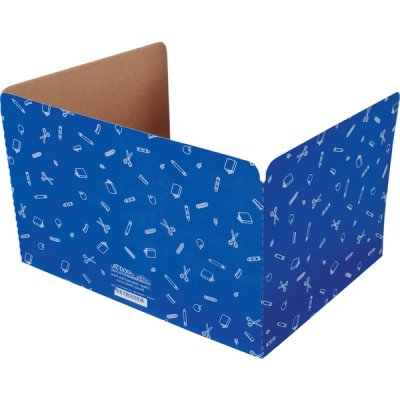
Really Good Stuff Trifold Desktop Privacy Shields (Set of 4)
Best Acoustic & Visual Desk Divider
Durable matte corrugated privacy partitions engineered to block peripheral acoustic and visual distractions on student desks. Folds completely flat for effortless cubby storage.
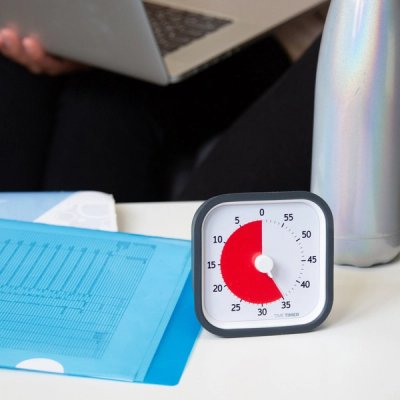
Time Timer MOD 60-Minute Visual Countdown Timer
Best Visual Pacing Tool for Auditory Tasks
The clinical standard for visual pacing. Completely silent quartz movement with zero audible ticking. Translates abstract time math into an intuitive vanishing colored disc that the student can monitor at a glance.
📚 Evidence-Based Sources & Citations
Peer-reviewed literature, clinical frameworks, and foundational neurodiversity resources referenced in this guide.
- American Speech-Language-Hearing Association (ASHA) - Central Auditory Processing Disorder (CAPD) Clinical Practice GuidelinesView Sourceopen_in_new
- American Academy of Audiology (AAA) - Clinical Practice Guidelines: Diagnosis, Treatment, and Management of Children and Adults with Central Auditory Processing DisorderView Sourceopen_in_new
- Educational Audiology Association (EAA) - Recommended Acoustic Standards for Classrooms and School Listening EnvironmentsView Sourceopen_in_new
- Journal of Speech, Language, and Hearing Research - "Classroom Acoustics and Speech Perception in Children with Auditory Processing Differences"View Sourceopen_in_new
- U.S. Department of Education Office for Civil Rights (OCR) - Protecting Students with Disabilities Under Section 504 of the Rehabilitation Act of 1973View Sourceopen_in_new
Join the Conversation
Get our monthly guide on sensory-aware parenting and neuro-inclusive home design delivered straight to your sanctuary.
Respecting your inbox and your peace of mind.
Leave a Reply
Your email address will not be published. Required fields are marked *