Grocery Shopping with Autistic Kids: Surviving Sensory Overload in Public
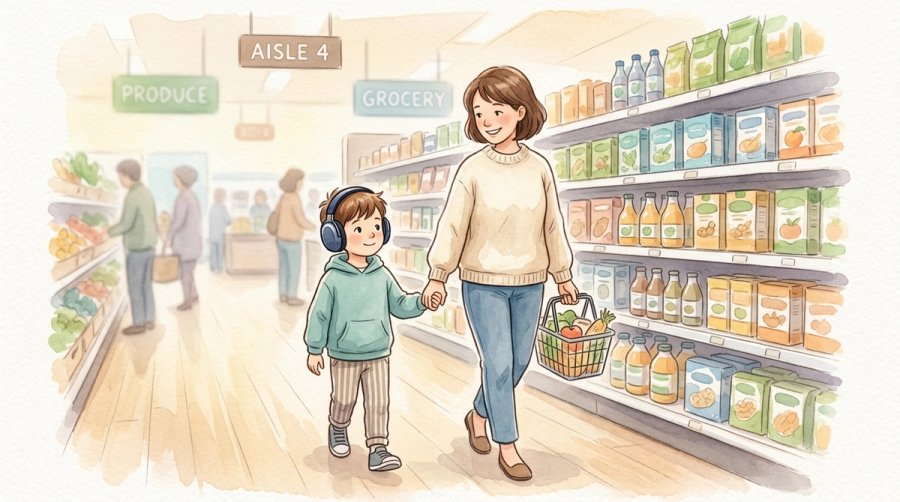
For many families, grocery shopping is a routine chore. But if you are raising an autistic child, you know that the grocery store is essentially a sensory minefield. The fluorescent lights humming, the chaotic colors of packaging, the unpredictable crowds, and the sudden announcements over the loudspeaker can instantly trigger sensory overload in public.
As a neurodivergent adult who still struggles with grocery store exhaustion, I completely understand why children have explosive meltdowns in Aisle 4. It is not bad behavior. It is a nervous system completely overwhelmed by incoming data.
But avoiding the store entirely isn't always an option. So, how do we support our kids through it?
Why Grocery Stores Trigger Sensory Overload
To an autistic brain, all sensory inputs can carry equal weight. While a neurotypical brain easily filters out the background noise of shopping carts rattling, an autistic child's brain might process that noise as loudly as someone shouting directly in their ear.
When that sensory cup overflows, the child's fight-or-flight response activates, resulting in what looks like a tantrum but is actually an involuntary sensory meltdown.
How to Survive Grocery Shopping with Autistic Kids
1. Pre-Teach with Visual Stories
Predictability lowers anxiety. Before you even leave the house, read a social story about what the grocery store looks like, sounds like, and what the plan is. Visual prep can drastically reduce the 'unknowns' that cause panic.
This is exactly why I designed our specialized visual guide to grocery shopping. It walks kids through the experience safely.
Explore 'Leo Goes to the Grocery Store' Visual Guide
2. Build a Sensory Toolkit
Never enter the store without sensory defense tools. Noise-canceling headphones are an absolute must to dampen the harsh environmental sounds.