Highly Sensitive Child (HSC) vs. Autism: Signs, Overlap & What Helps
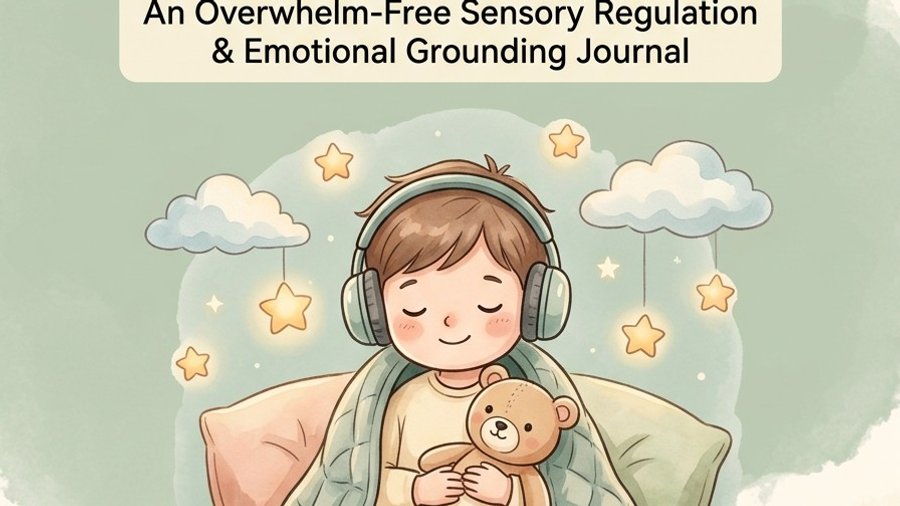
Is your child highly sensitive or autistic? Here is the clinical breakdown of Dr. Elaine Aron's DOES framework, the diagnostic overlaps, and why high-masking girls are mislabeled.
Editorial Disclosure & Medical Scope: Sensory Kids Books shares neurodiversity-affirming, lived-experience insights and sensory-informed tools for parents, caregivers, and educators. This publication is for educational purposes only and does not constitute formal medical diagnosis, psychiatric evaluation, or clinical occupational therapy advice. Always consult a qualified pediatrician or licensed clinician for individual medical care. As an Amazon Associate, we earn from qualifying purchases through our independent affiliate links at zero extra cost to you.
Your child cries at loud sirens. They notice subtle emotional shifts in a room before anyone speaks a word. They refuse to wear scratchy sweaters, get overwhelmed in crowded birthday parties, and seem to feel the emotions of the entire world inside their small chest.
You start searching online, and you find two very different communities. One tells you: 'Your child is a Highly Sensitive Child (HSC)—it is just a beautiful personality trait!' The other tells you: 'Your child is Autistic.'
Parents often find themselves paralyzed at this clinical crossroad. Is high sensitivity a distinct biological trait, or is it a socially palatable euphemism for late-diagnosed or high-masking Autism Spectrum Disorder?
As an autistic adult who was initially labeled 'just sensitive' for over twenty years, I know firsthand the relief—and the confusion—that comes with this question. In this comprehensive clinical guide, we will unpack Dr. Elaine Aron's Sensory Processing Sensitivity (SPS) framework, examine the clinical overlaps with Autism, and provide a clear diagnostic breakdown to help you get your child the exact accommodations they need.
What Is a Highly Sensitive Child (HSC)? The DOES Framework
In the late 1990s, research psychologist Dr. Elaine Aron identified **Sensory Processing Sensitivity (SPS)**—an innate temperament trait found in approximately 15% to 20% of the population. Dr. Aron summarized the trait using the **DOES** acronym:
- 🧠 D - Depth of Processing: A tendency to reflect deeply on everything before acting. High activity in the insular cortex and brain areas involved in deep cognitive integration.
- ⚡ O - Overstimulation: Because they absorb 5x more environmental detail than peers, their nervous system exhausts quickly in noisy, chaotic, or crowded settings.
- 💖 E - Emotional Reactivity & Empathy: Hyper-active mirror neuron system. They feel intense empathy, absorbing the joy, sadness, or anxiety of people around them like an emotional sponge.
- 🔍 S - Sensing Subtleties: Noticing the faintest background hum, a slight change in perfume, a minor shift in facial expression, or a micro-texture in food.
The Crucial Overlap: Why Autism and HSC Look Identical on the Surface
Both an autistic child and an HSC child will:
- • Cover their ears: when an emergency vehicle drives past.
- • Refuse scratchy socks: or stiff clothing tags due to tactile defensiveness.
- • Experience meltdowns: after a long, stimulating day at school.
- • Need quiet downtime: in a dim bedroom to reset their nervous system.
- • Exhibit deep sensitivity: to injustice, animal suffering, and cruelty.
Key Clinical Distinctions: Where HSC and Autism Diverge
While the sensory profiles can look identical, developmental pediatricians look for four key qualitative differences:
1. Social Communication Instincts
An HSC child typically has intuitive, innate understanding of neurotypical social nuances, non-verbal body language, and reciprocal conversation. They may be socially shy or observant, but they do not struggle to decode social subtext. An autistic child, even with high intelligence, processes social communication analytically and manually, frequently missing unspoken social codes unless explicitly taught.
2. Monotropic Focus & Special Interests
While an HSC child may have favorite hobbies, autistic children exhibit **monotropism**—an intense, hyper-focused cognitive tunnel where a single special interest (trains, astronomy, paleontology, coding) provides profound neurological joy and emotional regulation.
3. Repetitive Motor Movements (Stimming)
Both children get overwhelmed, but autistic children naturally utilize repetitive rhythmic motor stims (hand-flapping, rocking, vocal scripting, pacing) as a primary sensory regulation tool.
4. Need for Sameness & Cognitive Inflexibility
An HSC child can navigate unexpected change if emotionally supported. An autistic child often experiences visceral panic and distress over unexpected schedule alterations, requiring strict visual predictability.
The High-Masking Danger: When 'HSC' Delays Needed Autism Support
In young girls and academically gifted children, the label 'Highly Sensitive Child' is frequently applied by pediatricians who fail to recognize masked autism. Because these children maintain eye contact, smile politely, and suppress their distress until arriving home, their autism is overlooked.
Accepting an HSC label when a child is actually autistic can deprive them of vital school IEP accommodations, occupational therapy, and neurodiversity-affirming community validation.
Recommended Sensory Tools for Sensitive & Autistic Kids
Regardless of the diagnostic label, both nervous systems require deep sensory protection:
1. Seamless Bamboo Sensory Socks for Kids
Zero-seam, ultra-soft bamboo socks that eliminate morning sensory friction and clothing meltdowns completely.
shopping_cartCheck Price on Amazon: Seamless Sensory Socks for Kidsopen_in_new
2. Flare Calmer Kids Sound-Softening In-Ear Plugs
Innovative hollow silicone earplugs that eliminate distortion and acoustic resonance without blocking conversational speech.
shopping_cartCheck Price on Amazon: Flare Audio Calmer Kids Earplugsopen_in_new
3. Dual-Sided Soft Minky Weighted Throw Blanket
Provides soothing Deep Touch Pressure across the bed or sofa to downregulate an overwhelmed nervous system.
shopping_cartCheck Price on Amazon: Kids Weighted Blanket with Minky Coveropen_in_new
4. Dimmable Warm Amber Plug-In Nightlight
Gentle, non-blue light illumination that soothes bedtime anxiety and sensory ocular fatigue.
shopping_cartCheck Price on Amazon: Dimmable Amber Nightlight for Kidsopen_in_new
Explore The Highly Sensitive Child Activity & Calm Workbook
To help your child celebrate their intense empathy, understand their sensory thresholds, and build self-advocacy, explore our published resource:
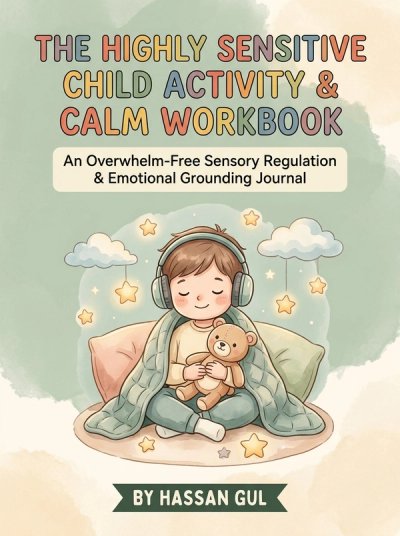
📖 The Highly Sensitive Child Activity & Calm Workbook by Hassan Gul. Complete sensory diet planners, emotion boundary shields, and confidence worksheets.
📥 Download our Free 5-Page Self-Regulation Starter Kit (PDF) for tactile calming mazes and feelings thermometers.
 Instant PDF
The Highly Sensitive Child Activity & Calm Workbook
A 3-Month (90-Day) Overwhelm-Free Sensory Regulation & Emotional Grounding Journal for Kids Ages 5–11
Quick Answers for Parents & Educators
Recommended Sensory Products
Carefully curated products for a sensory-friendly environment.
Seamless Bamboo Sensory Socks for Kids
Zero-Seam Comfort
Ultra-soft socks without toe seams that eliminate daily morning clothing battles for sensitive feet.
Flare Audio Calmer Kids Earplugs
Acoustic Smoothing
Hollow in-ear audio filters that reduce harsh frequencies without muffling classroom instruction.
Kids Weighted Blanket with Minky Cover
Deep Touch Soother
Calming sensory weight with raised tactile dots that helps sensitive nervous systems fall into deep sleep.
Dimmable Warm Amber Nightlight
Circadian Light Shield
Soft amber night light that eliminates harsh blue light and prevents nighttime sensory overstimulation.
📚 Evidence-Based Sources & Citations
Peer-reviewed literature, clinical frameworks, and foundational neurodiversity resources referenced in this guide.
- Occupational Therapy Practice Framework: Domain and Process (4th Edition) — American Occupational Therapy Association (AOTA)(2020)View Sourceopen_in_new
- The Polyvagal Theory: Neurophysiological Foundations of Emotions, Attachment, Communication, and Self-Regulation — Dr. Stephen W. Porges, PhD(2011)View Sourceopen_in_new
- Understanding Pathological Demand Avoidance (PDA): Identifying Needs & Low-Demand Approaches — PDA Society UK(2023)View Sourceopen_in_new
- Sensory Processing Issues Explained: Supporting Children with Sensory Sensitivities — Child Mind Institute(2024)View Sourceopen_in_new
Join the Conversation
Get our monthly guide on sensory-aware parenting and neuro-inclusive home design delivered straight to your sanctuary.
Respecting your inbox and your peace of mind.
Leave a Reply
Your email address will not be published. Required fields are marked *