How to Build a DIY Sensory Pathway at Home for Autism & ADHD

Turn your hallway into an occupational therapy circuit. Discover the 5-station DIY sensory pathway blueprint that channels chaotic energy into calm, focused regulation in under 5 minutes.
Editorial Disclosure & Medical Scope: Sensory Kids Books shares neurodiversity-affirming, lived-experience insights and sensory-informed tools for parents, caregivers, and educators. This publication is for educational purposes only and does not constitute formal medical diagnosis, psychiatric evaluation, or clinical occupational therapy advice. Always consult a qualified pediatrician or licensed clinician for individual medical care. As an Amazon Associate, we earn from qualifying purchases through our independent affiliate links at zero extra cost to you.
If you have an autistic or ADHD child, you know the dreaded 4:00 PM living room destruction derby. School has ended, their nervous system is bursting with sensory restraint collapse, and suddenly your hallway becomes a runway and your couch becomes a trampoline.
For years, parents are told to tell their kids: 'Stop running! Sit down! Use your indoor voice!' But as a neurodivergent adult and father, I can tell you that trying to force a sensory-seeking child to sit still is like putting a tight lid on a boiling pressure cooker. It doesn't make the energy disappear—it guarantees an explosive meltdown 20 minutes later.
Children with ADHD and sensory processing differences do not seek movement to be disruptive. They seek movement because their brains are starving for proprioceptive and vestibular input to organize their central nervous systems.
Instead of fighting your child's biological need for physical input, the most effective architectural solution is to direct that energy through a structured home circuit: a DIY Sensory Pathway. In this comprehensive guide, I will show you how to turn an ordinary hallway or living room rug into an occupational therapy-grade regulation circuit using inexpensive household items and proven sensory integration science.
The Neuroscience of Sensory Pathways: Why Movement Calms the Brain
The concept of sensory pathways originated in pediatric occupational therapy based on Dr. A. Jean Ayres' pioneering Sensory Integration Theory. When a child moves through a structured pathway, three distinct sensory networks are stimulated simultaneously:
- 🦴 The Proprioceptive System (Joints & Muscles): Proprioception provides the brain with an internal map of where the body is in space. Heavy joint compression (pushing against a wall, jumping, crawling) stimulates serotonin and dopamine release, actively dampening central nervous system arousal.
- 🌀 The Vestibular System (Inner Ear & Balance): Linear movement (hopping forward, walking along a taped line) stimulates fluid movement in the semicircular canals, which regulates muscle tone, spatial orientation, and visual tracking.
- 🧠 Bilateral Integration (Crossing the Midline): Activities that force the left hand to touch the right knee (like criss-cross bear walks) require neural communication across the corpus callosum—the bridge between the left and right hemispheres of the brain. This directly improves executive functioning, reading readiness, and impulse control.
When a child navigates a sensory pathway for just 3 to 5 minutes, their nervous system transitions from chaotic hyperactivity into organized focus. It is the ultimate natural reset button before homework, mealtime, or bedtime.
The 5 Essential Stations of an Effective Home Sensory Pathway
A random obstacle course is fun, but a sensory pathway has a deliberate neurobiological sequence. It must take a child from high motor arousal, channel that energy into heavy joint work, and systematically downregulate them into a calm resting state. Here is our 5-station blueprint:
Station 1: The Heavy Work Wall Push (Proprioceptive Ignition)
Start at a blank wall at the end of the hallway. Place two printed handprints or colorful tape targets at shoulder height.
- 🎯 The Activity: The child places their palms flat against the targets, plants their feet 2 feet back, and does 10 firm 'wall push-ups' or pushes with all their might for 10 seconds as if trying to push the wall into the next room.
- 🧠 The Brain Impact: Provides intense isometric joint compression into the wrists, elbows, and shoulders, resetting erratic muscle tone immediately.
Station 2: The Balance Tightrope (Vestibular Alignment)
Run a 10-foot strip of blue painter's tape or a zig-zag tape line down the center of the hallway.
- 🎯 The Activity: Have the child walk heel-to-toe along the line without stepping off. For an added challenge, have them hold a small object (like a stuffed animal) balanced on their head.
- 🧠 The Brain Impact: Activates the cerebellum and core stabilizer muscles, demanding focused concentration that silences ambient racing thoughts.
Station 3: Animal Walks & Midline Crossings (Bilateral Integration)
Designate an 8-foot section of floor with tape marks or floor decals for animal movement patterns:
- 🐻 The Bear Walk: Hands and feet on the ground with hips high in the air. Excellent for upper body proprioception.
- 🦀 The Crab Walk: Hands and feet flat with belly facing the ceiling. Stretches tight chest muscles and activates triceps.
- 🐸 The Frog Leap: Deep squat touching the floor, followed by an explosive controlled hop onto a taped circle.
Station 4: The Tactile Grounding Pad (Sensory Discrimination)
Place 3 to 4 textured floor mats or sensory stepping stones in a row. You can use textured silicone kitchen trivets, a faux-fur rug sample, or commercial stepping stones.
- 🎯 The Activity: The child steps barefoot onto each texture, pausing for 3 seconds on each pad to notice the tactile sensation under their arches.
- 🧠 The Brain Impact: Stimulates the plantar reflex and cutaneous mechanoreceptors in the soles of the feet, grounding the somatic nervous system.
Station 5: The Reset Breathing Anchor (Parasympathetic Landing)
The final station must bring the heart rate back to baseline. Place a printed Box Breathing card or tactile spiral on the floor or wall.
- 🎯 The Activity: The child places their hands on their belly, takes 3 deep balloon breaths (inhale 4 seconds, exhale 4 seconds like blowing out birthday candles).
- 🧠 The Brain Impact: Stimulates the vagus nerve, signaling the heart to lower its beats per minute and signaling the brain that the body is safe.
Recommended Equipment to Upgrade Your Sensory Pathway
While painter's tape is an amazing budget starting point, incorporating durable, specialized occupational therapy tools elevates the sensory experience:
1. Non-Slip Textured Sensory Stepping Stones
Durable balance stones with varied steepness and tactile grip patterns. Kids can jump, balance, and rearrange the stones to build custom obstacle courses.
shopping_cartCheck Price on Amazon: Sensory Stepping Stones for Kidsopen_in_new
2. Interactive Liquid Floor Sensory Tiles
High-impact liquid tiles filled with non-toxic cosmetic liquid that swirls and changes color with every footstep. Provides incredible visual and tactile feedback for sensory seekers.
shopping_cartCheck Price on Amazon: Liquid Floor Sensory Tilesopen_in_new
3. Adjustable Modular Kids Balance Beam
Low-to-the-ground connectable balance beams that can be configured into straight lines, zig-zags, or circles to practice vestibular equilibrium safely on carpet or hardwood.
shopping_cartCheck Price on Amazon: Kids Balance Beam Setopen_in_new
4. Sensory Movement & Hopscotch Floor Decals
Heavy-duty vinyl floor stickers designed for school hallways and home tiles. Includes animal walk tracks, numbered hopscotch grids, and spinning targets.
shopping_cartCheck Price on Amazon: Sensory Pathway Floor Decalsopen_in_new
How to Use a Sensory Pathway Throughout the Daily Routine
A sensory pathway should not just sit unused. Integrate it into your daily family transitions:
- 🌅 The Morning Wake-Up Circuit: Before breakfast, have your child complete 2 laps on the pathway to wake up sluggish vestibular receptors and prepare their brain for school.
- 🎒 The After-School Decompression: Immediately upon arriving home from school, before starting homework or opening backpacks, run 3 laps on the pathway to release school masking fatigue.
- 🛑 The Pre-Meltdown Circuit Breaker: When you notice restlessness or rising frustration, say: 'Let's take a 3-minute challenge on the sensory path.' Movement redirects adrenaline before an explosion occurs.
Recommended Workbook for Sensory Regulation at Home
If you want structured daily activities, animal walk cards, and sensory diet scheduling charts, explore our flagship publication:
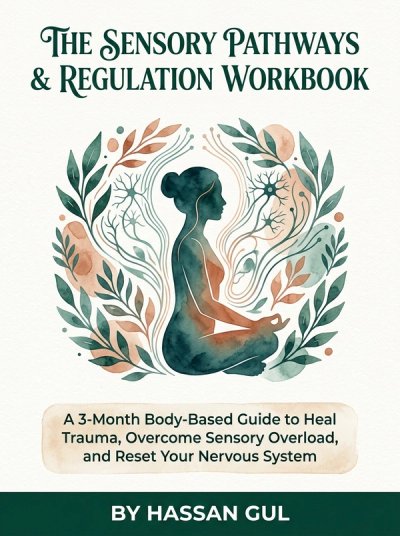
📖 The Sensory Pathways & Regulation Workbook by Hassan Gul. Features 40+ printable movement games, sensory diet trackers, and heavy work challenges for autistic and ADHD children.
📥 Also be sure to download our Free 5-Page Self-Regulation Starter Kit (PDF) for tactile box breathing cards and feelings thermometers you can mount at the end of your pathway.
 Instant PDF
The Sensory Pathways & Regulation Workbook
A 3-Month (90-Day) Body-Based Guide to Heal Trauma, Overcome Sensory Overload, and Reset Your Nervous System
Quick Answers for Parents & Educators
Recommended Sensory Products
Carefully curated products for a sensory-friendly environment.
Sensory Stepping Stones for Kids
Balance & Proprioception
Non-slip textured balance river stones that support gross motor coordination and active sensory play.
Liquid Floor Sensory Tiles
Visual Sensory Input
Durable floor tiles with mesmerizing swirling colors that respond dynamically to stepping pressure.
Modular Kids Balance Beam Set
Vestibular Integration
Interlocking balance beams that build core stability and vestibular focus safely at home.
Sensory Pathway Floor Decals
Visual Movement Guides
High-adhesion non-damaging vinyl floor stickers featuring animal walks, hopscotch, and wall push targets.
📚 Evidence-Based Sources & Citations
Peer-reviewed literature, clinical frameworks, and foundational neurodiversity resources referenced in this guide.
- Occupational Therapy Practice Framework: Domain and Process (4th Edition) — American Occupational Therapy Association (AOTA)(2020)View Sourceopen_in_new
- The Polyvagal Theory: Neurophysiological Foundations of Emotions, Attachment, Communication, and Self-Regulation — Dr. Stephen W. Porges, PhD(2011)View Sourceopen_in_new
- Understanding Pathological Demand Avoidance (PDA): Identifying Needs & Low-Demand Approaches — PDA Society UK(2023)View Sourceopen_in_new
- Sensory Processing Issues Explained: Supporting Children with Sensory Sensitivities — Child Mind Institute(2024)View Sourceopen_in_new
Join the Conversation
Get our monthly guide on sensory-aware parenting and neuro-inclusive home design delivered straight to your sanctuary.
Respecting your inbox and your peace of mind.
Leave a Reply
Your email address will not be published. Required fields are marked *