How Dogs for Down Syndrome and Autism Therapy Change Lives
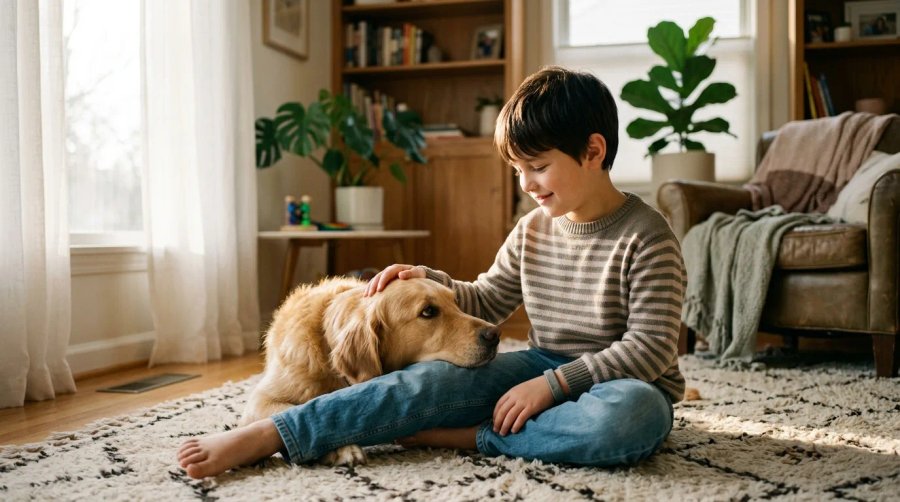
Therapy and service dogs provide deep pressure therapy, emotional co-regulation, tethering safety, and unconditional companionship for children with Down syndrome and Autism Spectrum Disorder.
Editorial Disclosure & Medical Scope: Sensory Kids Books shares neurodiversity-affirming, lived-experience insights and sensory-informed tools for parents, caregivers, and educators. This publication is for educational purposes only and does not constitute formal medical diagnosis, psychiatric evaluation, or clinical occupational therapy advice. Always consult a qualified pediatrician or licensed clinician for individual medical care. As an Amazon Associate, we earn from qualifying purchases through our independent affiliate links at zero extra cost to you.
Disclaimer: I am a parent and an architect, not a doctor or therapist. The information below is based on lived experience and community shared knowledge. Always consult with a qualified professional before making decisions about your child’s support systems.
If you are raising a child with autism or Down syndrome, you know that daily life can sometimes feel like navigating a minefield of sensory overload, communication barriers, and safety concerns. As parents, we exhaust ourselves trying to be the ultimate safe harbor for our kids. But sometimes, the most profound comfort doesn't come from a human at all. It comes with four paws and a wagging tail.
Bringing a service dog or therapy dog into your home is a massive decision. In this guide, we are going to strip away the clinical jargon and look at exactly howthese incredible animals support our children in real, daily life—from interrupting meltdowns in the grocery store to providing a sense of physical safety.
Service Dog vs. Therapy Dog: What's the Difference?
The terminology can get incredibly confusing, but understanding the difference is crucial for your family's expectations.
Therapy Dogs (Emotional Support & Comfort)
A therapy dog is essentially a highly-trained best friend. Their job is to provide psychological and emotional comfort. You might see them visiting schools, hospitals, or nursing homes. While they are incredibly regulating for a child experiencing anxiety, therapy dogs do not have public access rightsunder the ADA (Americans with Disabilities Act). You cannot legally take them into a restaurant or a grocery store.
Autism & Down Syndrome Service Dogs (Task-Trained)
A service dog is a working animal, not a pet. These dogs are individually trained to perform specific tasks that mitigate a person's disability. Because they are working dogs, they areprotected by the ADA and are allowed to accompany your child anywhere the public goes.
3 Ways a Service Dog Helps Autistic Children
What does a service dog actually doon a Tuesday afternoon? Here are the three most common tasks they are trained to perform for neurodivergent kids.
1. Preventing Elopement (Wandering) & Tethering
Elopement—when a child wanders or runs away from a safe environment—is one of the most terrifying realities for autism parents. Many autism service dogs are trained in "tethering." The child wears a comfortable safety harness that is tethered to the dog’s vest. If the child attempts to bolt toward a busy street, the dog is trained to instantly drop into a "down-stay" position. The dog acts as a physical anchor, preventing the child from running into danger until the parent can intervene.
2. Deep Pressure Therapy (DPT) for Meltdowns
When a child is experiencing a sensory meltdown, their nervous system is entirely overwhelmed. Service dogs are often trained to perform Deep Pressure Therapy (DPT). Upon a verbal command or hand signal from the parent (or recognizing the early signs of distress themselves), the dog will lay across the child's lap or chest. The firm, consistent weight of the dog acts like a living weighted blanket, instantly lowering the child's heart rate and helping them co-regulate.
3. Behavior Disruption (Interrupting Harmful Stims)
Stimming is natural and often helpful, but some self-stimulatory behaviors (like head-banging or intense scratching) can be harmful. A service dog can be trained to recognize these specific movements and gently interrupt them by nudging the child's hand with their nose or pawing at their leg, redirecting the child's focus to the animal.
*(If your child struggles with severe dysregulation at home, try building a low-cost safe space using our guide on creating a sensory corner.)*
How Dogs Support Children with Down Syndrome
While the needs may differ, children with Down syndrome also experience profound benefits from dog-assisted interventions.
Mobility and Physical Support
Children with Down syndrome often experience hypotonia (low muscle tone), which can impact their balance and stamina. A larger, sturdy service dog can be trained to provide physical bracing, helping a child stand up from the floor, navigate stairs, or walk long distances without fatiguing as quickly.
Acting as a "Social Catalyst"
It can sometimes be difficult for children with Down syndrome or autism to initiate social interactions with their peers. A well-trained, friendly dog acts as a natural "social catalyst." Other children are naturally drawn to the dog, bridging the gap and making it easier for your child to engage in parallel or interactive play.
The Reality Check: Are You Ready for a Service Dog?
This all sounds wonderful, but as a parent-to-parent reality check, bringing a service dog into your home is not a magic fix. It is an immense amount of work.
The Financial Cost
Fully trained service dogs can cost between $15,000 and $30,000. While some incredible non-profits provide them at low or no cost, the waitlists for those programs can be several years long. If you self-fund, you are looking at a massive financial investment.
The Caregiver Burden
This is the part nobody talks about. When you are out in public with a young child and a service dog, youare the dog handler. You are managing a disabled child anda working animal simultaneously. You have to feed the dog, groom the dog, and ensure the dog's training doesn't regress. For a parent who is already burned out, adding a high-level working dog to the mix can sometimes push them over the edge.
How to Get a Service Dog (Top Organizations)
If you have weighed the pros and cons and are ready to take the next step, do not buy a puppy off Craigslist and try to train it yourself. Work with established, accredited organizations. Two highly respected starting points are:
- 4 Paws for Ability:They specialize in placing task-trained service dogs with children with various developmental disabilities, including autism and Down syndrome.
- Canine Companions:They provide expertly trained service dogs to adults, children, and veterans with disabilities entirely free of charge.
*(Navigating the school system with your child's new accommodations? Use our free IEP SMART Goal Generatorto draft measurable goals for your next meeting.)*
A service dog won't cure the hard days, but they can bring an immeasurable amount of safety, independence, and unconditional love to a child who needs it most.
 Instant PDF
Emotion Monsters: Name & Tame Big Feelings
A Sensory-Friendly Book About Identifying and Coping with Big Feelings for Autistic Kids
Quick Answers for Parents & Educators
Recommended Sensory Products
Carefully curated products for a sensory-friendly environment.

Weighted Lap Pad
BEST FOR FOCUS
Providing 5lbs of gentle pressure to help children stay grounded during long reading sessions.

Dimmable Warm LED
SENSORY FRIENDLY
Flicker-free technology with adjustable color temperatures to prevent eye strain.
📚 Evidence-Based Sources & Citations
Peer-reviewed literature, clinical frameworks, and foundational neurodiversity resources referenced in this guide.
- Occupational Therapy Practice Framework: Domain and Process (4th Edition) — American Occupational Therapy Association (AOTA)(2020)View Sourceopen_in_new
- The Polyvagal Theory: Neurophysiological Foundations of Emotions, Attachment, Communication, and Self-Regulation — Dr. Stephen W. Porges, PhD(2011)View Sourceopen_in_new
- Understanding Pathological Demand Avoidance (PDA): Identifying Needs & Low-Demand Approaches — PDA Society UK(2023)View Sourceopen_in_new
- Sensory Processing Issues Explained: Supporting Children with Sensory Sensitivities — Child Mind Institute(2024)View Sourceopen_in_new
Join the Conversation
Get our monthly guide on sensory-aware parenting and neuro-inclusive home design delivered straight to your sanctuary.
Respecting your inbox and your peace of mind.
Leave a Reply
Your email address will not be published. Required fields are marked *