How to Build a Frictionless Morning Routine for Kids Who Hate Waking Up: The Visual Checklist System
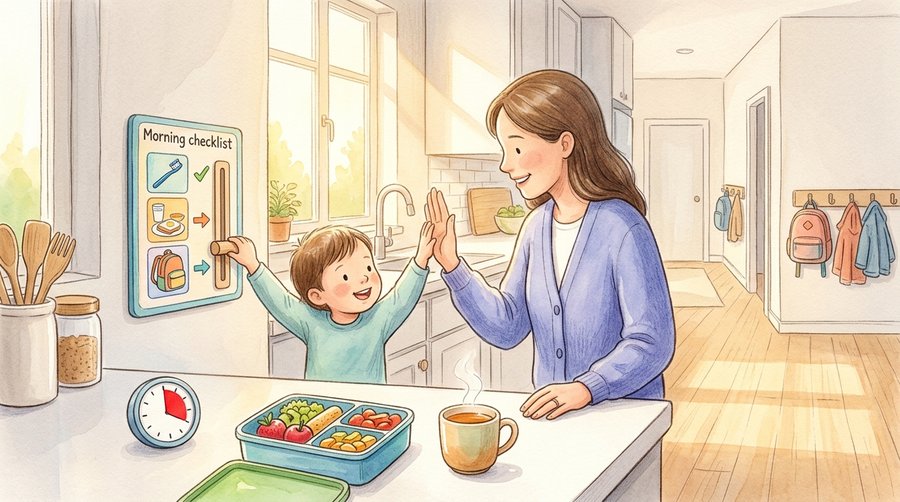
Stop morning nagging and start the day with peace. Discover the 6-step visual checklist system, the 15-minute gentle wake-up buffer, and the night-before launchpad hack.
Editorial Disclosure & Medical Scope: Sensory Kids Books shares neurodiversity-affirming, lived-experience insights and sensory-informed tools for parents, caregivers, and educators. This publication is for educational purposes only and does not constitute formal medical diagnosis, psychiatric evaluation, or clinical occupational therapy advice. Always consult a qualified pediatrician or licensed clinician for individual medical care. As an Amazon Associate, we earn from qualifying purchases through our independent affiliate links at zero extra cost to you.
⚡ Quick Takeaway & Summary for Parents: If school mornings in your house involve repeating "put on your shoes" fourteen times while your child stares into space or hides under the duvet, you are not alone—and your child isn't being willfully defiant. Sleep inertia causes a natural 15-to-20 minute lag in cognitive alertness, and verbal nagging quickly turns parents into adversaries. The secret to a peaceful morning is shifting the burden of management from verbal demands to an external visual system. By making an interactive visual checklist "the boss," building in a gentle 15-minute wake-up buffer, staging a night-before launchpad, and offering an earned morning free-time reward, you can transform chaotic school departures into a calm, self-directed daily rhythm.
It is 7:15 AM. You have asked your child to put on their socks four times. Their breakfast toast is growing cold, one shoe is missing, their backpack is unzipped on the kitchen floor, and the school bus arrives in eighteen minutes.
You feel your blood pressure rising. Your voice escalates from cheerful encouragement, to firm reminders, to exasperated pleading: "We are going to be late! Why are you still in your pajamas?!" Your child frowns, curls tighter into their blanket, or erupts into tears over a scratchy sock seam.
By the time everyone finally buckles into the car, you feel drained, guilty, and frustrated before your workday has even started. As an engineer and parent who loves building smooth systems, I discovered that trying to verbally micromanage a groggy child is an impossible design flaw. When you rely on spoken reminders, you become a human alarm clock—and kids naturally resist alarm clocks. The breakthrough happens when you replace verbal nagging with a tactile, visual architecture that lets kids direct themselves.
Why "Hurry Up!" Never Works: Understanding Sleep Inertia
When an alarm sounds, the human brain does not flip on like a light switch. Everyday sleep physiology shows that transitioning from deep restorative sleep to conscious task execution takes 15 to 30 minutes—a natural window known as sleep inertia.
During this transition, working memory and executive sequencing are running on low battery. When parents hit a sleepy child with a rapid-fire barrage of multi-step verbal demands ("Go pee, get dressed, brush your teeth, and grab your spelling folder"), their groggy brain experiences cognitive overload and freezes. It is not defiance; it is a temporary processing bottleneck.
Shift 1: Make the Visual Checklist the Boss (Not You)
The single most transformative habit shift you can make is removing yourself from the role of morning drill sergeant. When the routine lives on a colorful, physical visual board on the wall, the board becomes the authority.
The Verbal Redirect Script: Whenever your child stalls, wanders off, or asks "What do I do now?", resist the urge to give verbal instructions. Instead, gently point toward their routine board and say: "Let's check your morning mission! What tile is next on your board?"
This tiny shift changes everything: you are no longer the nagging opponent demanding chores; you are a supportive coach helping them complete their mission. Sliding a physical button from "To-Do" to "Done" delivers an immediate burst of accomplishment that motivates kids to tackle the next task.
⭐ Recommended Tool: Torlam Daily Visual Routine Schedule & Chore Chart (Best Interactive Morning Slider Chart)
A tactile, interactive daily routine board featuring smooth sliding buttons that kids love to toggle. Includes pre-printed routine cards for morning, after-school, and bedtime checklists. Wall-mountable or fridge-magnetic.
shopping_cart👉 Check Price on Amazon (paid link)open_in_new
Shift 2: The 15-Minute "Gentle Wake-Up Buffer"
If your child needs to be dressed by 7:30 AM, waking them up at 7:15 AM guarantees high stress. Kids who hate mornings require a 15-minute low-demand buffer where zero tasks are expected.
1. Replace Harsh Alarms with Warm Light: Abrupt beeping alarms and sudden bright overhead lights trigger an immediate fight-or-flight startle response. Use a color-changing "ready-to-rise" clock (like the LittleHippo Mella) that glows a gentle warm yellow 15 minutes before wake-up time, signaling to their brain that morning has arrived without noise.
2. Wake Up the Body with Gentle Movement: Before asking a child to stand up, help their nervous system activate with gentle proprioceptive input: give a warm hug, roll them snugly into their blanket like a "breakfast burrito," or encourage a slow morning stretch in bed.
3. Upbeat Morning Playlist: Play a consistent, joyful morning music playlist or an audiobook in the hallway. Familiar auditory cues signal wakefulness naturally without parents having to raise their voices.
⭐ Recommended Tool: LittleHippo Mella Ready-to-Rise Children's Trainer Clock (Best Color-Changing Morning Clock)
The award-winning children's clock that uses gentle facial expressions and soft color rings to teach sleep and wake-up routines. Glowing yellow signals 15-minute quiet wake-up time, and green signals out-of-bed time.
shopping_cart👉 Check Price on Amazon (paid link)open_in_new
Shift 3: The "Night-Before Launchpad" (Zero Decision Fatigue)
Decision fatigue is the enemy of a peaceful morning. A sleepy child cannot decide between blue pants and green pants, and an exhausted parent should not be hunting for a missing permission slip at 7:25 AM.
The 5-Minute Night-Before Checklist: Every evening before bed, stage the morning "launchpad" by the front entryway:
• Complete Clothes Staging: Lay out the complete outfit—shirt, pants, underwear, and socks—on a bedroom chair or low dresser. If your child is sensitive to clothing textures, let them choose their favorite soft clothes the night before.
• The Zipped Backpack: Homework, signed agendas, and water bottles are packed and placed by the front door.
• Bento Box Lunch Prep: Pack school lunches the night before using a leak-proof bento container (like Bentgo Kids). In the morning, you simply grab it from the fridge and slide it into the lunchbox in 5 seconds.
⭐ Recommended Tool: Bentgo Kids Leak-Proof Bento-Style Lunch Box (Best Night-Before Meal Prep Box)
Five practical portioned compartments designed for kid appetites. Drop-proof rubberized edges and child-friendly latches make night-before lunch packing effortless and morning grab-and-go seamless.
shopping_cart👉 Check Price on Amazon (paid link)open_in_new
The 6-Step Visual Morning Routine Flow
Keep your child's morning checklist concise and linear. A list with 14 micro-steps feels insurmountable to a sleepy child; six clear, predictable blocks provide the perfect rhythm:
📍 Routine Step 1: Gentle Wake-Up & Bathroom Check-in (7:00 – 7:10 AM)
Clock turns yellow/green. Child wakes up with gentle stretches, visits the bathroom, and washes hands.
📍 Routine Step 2: One-Touch Getting Dressed (7:10 – 7:15 AM)
Child puts on the complete outfit pre-staged on the chair. No searching through drawers or negotiating clothing choices.
📍 Routine Step 3: Fuel Up: The Predictable Breakfast (7:15 – 7:30 AM)
Serve simple, protein-rich, predictable breakfast favorites (oatmeal with berries, eggs on toast, or Greek yogurt). Keep weekday breakfast options consistent to eliminate morning debate.
📍 Routine Step 4: Grooming: Teeth & Hair (7:30 – 7:35 AM)
Brush teeth for 2 minutes and comb hair. Keep a fun timer or music track going in the bathroom.
📍 Routine Step 5: Launchpad Check: Shoes & Backpack (7:35 – 7:40 AM)
Head to the entryway launchpad. Slip on shoes, grab the packed lunch and water bottle, and zip the backpack.
📍 Routine Step 6: The Motivator: "Earned Morning Free Time" (7:40 – 7:55 AM)
The secret weapon of morning momentum! Any minutes remaining between finishing step 5 and departure time are 100% theirs for drawing, LEGO building, reading a picture book, or family high-fives.
Visual Pacing: Why Clocks Fail and Visual Timers Succeed
Telling a child "You have ten minutes left until we leave" sounds like abstract noise. Children under age 10 do not intuitively perceive temporal duration—they only experience the present moment.
A visual countdown timer (like the Time Timer MOD) translates abstract mathematical time into a concrete, physical shape. The bright red disc slowly shrinks as minutes tick down in complete silence. A child glance at the kitchen counter and immediately see how much "red time" remains for breakfast or getting dressed, creating self-awareness without a single raised voice.
⭐ Recommended Tool: Time Timer MOD 60-Minute Visual Countdown Timer (Best Silent Visual Pacing Timer)
The gold standard in visual time management. Completely silent quartz movement with zero ticking. Protective silicone cover and intuitive vanishing colored disc make time tangible and easy to pace.
shopping_cart👉 Check Price on Amazon (paid link)open_in_new
📋 Autism & ADHD Visual Daily Routine Pack (Printable Kit)
Want ready-to-print morning and evening checklist cards, chore sliders, and launchpad staging guides? Our complete 80+ card printable kit provides illustrated cards covering morning hygiene, meal prep, school departure, and bedtime calming.
👉 Download the Visual Daily Routine Pack ($7.99 / $14.99)
Create Your Custom Morning Schedule in Minutes
Every household has a unique morning schedule depending on school bell times, bus routes, and work commutes. Rather than trying to force a generic template, build a custom visual schedule tailored to your family.
Use our free interactive web tool: the Visual Daily Routine Schedule Generator to customize, reorder, and print your child's morning checklist with one click.
To balance your child's physical energy, movement needs, and quiet focus throughout the entire day, explore our free Sensory Diet Schedule Generator.
📋 The ADHD & PDA Anti-Planner: Visual Executive Function Workbook
For older kids and teens who freeze when facing traditional school agendas. Features low-demand morning checklists, dopamine-menu task organizers, and flexible daily pacing.
👉 Explore The ADHD Anti-Planner ($8.99)
Starting the Day with Connection, Not Conflict
How your family starts the morning sets the emotional tone for your child's entire school day. When a child arrives at school feeling rushed, criticized, and overwhelmed, they carry that stress into the classroom.
By putting a visual checklist in charge, building in a gentle wake-up buffer, and celebrating the finish line with earned free time, you replace frantic yelling with calm teamwork. You send your child out the front door feeling capable, confident, and loved—and that makes all the difference in the world.
 Instant PDF
The Bedtime Sensory Vacuum Toolkit
A Low-Demand Wind-Down Schedule, Worry Brain-Dump & Sensory Pressure Protocol for Autistic & ADHD Kids
Recommended Sensory Products
Carefully curated products for a sensory-friendly environment.
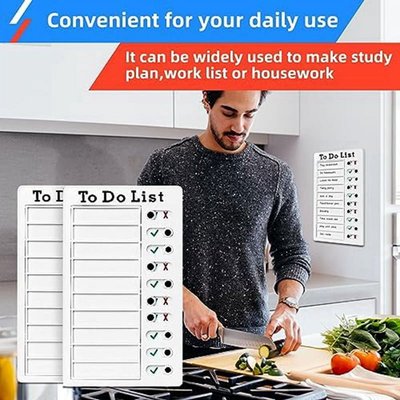
Torlam Daily Visual Routine Schedule & Chore Chart
Best Interactive Morning Slider Chart
A tactile, interactive daily routine board featuring smooth sliding buttons that kids love to toggle. Includes pre-printed routine cards for morning, after-school, and bedtime checklists. Wall-mountable or fridge-magnetic.
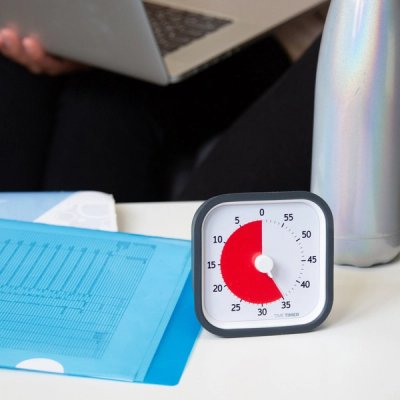
Time Timer MOD 60-Minute Visual Countdown Timer
Best Silent Visual Pacing Timer
The gold standard in visual time management. Completely silent quartz movement with zero ticking. Protective silicone cover and intuitive vanishing colored disc make time tangible and easy to pace.
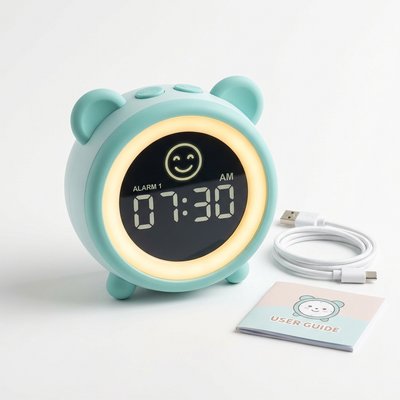
LittleHippo Mella Ready-to-Rise Children's Trainer Clock
Best Color-Changing Morning Clock
The award-winning children's clock that uses gentle facial expressions and soft color rings to teach sleep and wake-up routines. Glowing yellow signals 15-minute quiet wake-up time, and green signals out-of-bed time.

Bentgo Kids Leak-Proof Bento-Style Lunch Box
Best Night-Before Meal Prep Box
Five practical portioned compartments designed for kid appetites. Drop-proof rubberized edges and child-friendly latches make night-before lunch packing effortless and morning grab-and-go seamless.
📚 Evidence-Based Sources & Citations
Peer-reviewed literature, clinical frameworks, and foundational neurodiversity resources referenced in this guide.
- Occupational Therapy Practice Framework: Domain and Process (4th Edition) — American Occupational Therapy Association (AOTA)(2020)View Sourceopen_in_new
- The Polyvagal Theory: Neurophysiological Foundations of Emotions, Attachment, Communication, and Self-Regulation — Dr. Stephen W. Porges, PhD(2011)View Sourceopen_in_new
- Understanding Pathological Demand Avoidance (PDA): Identifying Needs & Low-Demand Approaches — PDA Society UK(2023)View Sourceopen_in_new
- Sensory Processing Issues Explained: Supporting Children with Sensory Sensitivities — Child Mind Institute(2024)View Sourceopen_in_new
Join the Conversation
Get our monthly guide on sensory-aware parenting and neuro-inclusive home design delivered straight to your sanctuary.
Respecting your inbox and your peace of mind.
Leave a Reply
Your email address will not be published. Required fields are marked *