Modern Manners for Neurodivergent Kids: Teaching Kindness Without Forcing Masking
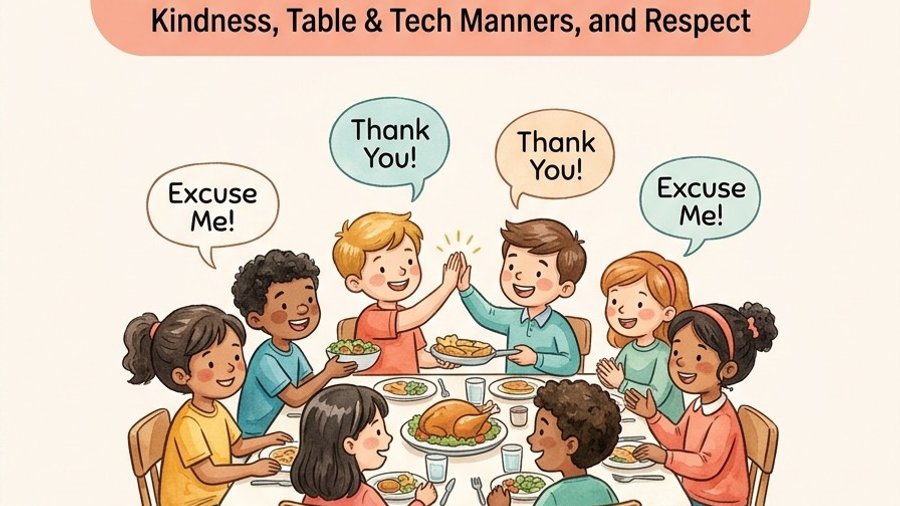
Forcing eye contact and hugs does not teach kindness—it forces traumatic masking. Here is how to teach modern manners that respect bodily autonomy and build authentic confidence.
Editorial Disclosure & Medical Scope: Sensory Kids Books shares neurodiversity-affirming, lived-experience insights and sensory-informed tools for parents, caregivers, and educators. This publication is for educational purposes only and does not constitute formal medical diagnosis, psychiatric evaluation, or clinical occupational therapy advice. Always consult a qualified pediatrician or licensed clinician for individual medical care. As an Amazon Associate, we earn from qualifying purchases through our independent affiliate links at zero extra cost to you.
'Look me in the eye when I'm speaking to you!'
'Go give your Uncle Bob a big hug and say thank you!'
'Stop fidgeting and sit with your hands folded in your lap!'
For generations, traditional etiquette books have defined 'good manners' as a rigid checklist of physical compliance: mandatory eye contact, forced physical affection, suppressing body movements, and delivering immediate verbal pleasantries. But to a child with Autism, ADHD, or sensory processing sensitivity, these traditional rules don't teach politeness—they enforce traumatic autistic masking and violate physical bodily autonomy.
Here is the neurological reality: fMRI neuroimaging reveals that direct eye contact activates the amygdala's fear center in autistic brains. Forcing eye contact does not increase comprehension; it physically scrambles their auditory processing buffer. When an autistic child looks down at the floor while listening, their auditory comprehension actually increases.
True etiquette is not about performing neurotypical compliance to make adults feel comfortable. True etiquette is about fostering genuine kindness, consideration, and mutual respect while honoring neurological boundaries. In this guide, we will unpack the neurobiology of etiquette, replace forced masking with consent-based manners, and give you modern scripts that teach kindness without trauma.
The 4 Traditional 'Manners' That Harm Neurodivergent Kids
Traditional etiquette frequently confuses neurotypical social conventions with basic human morality. Here are the four outdated rules we must retire:
1. Forced Eye Contact ('Look At Me')
Staring into someone's pupils requires intense cognitive processing. For neurodivergent minds, visual input competes with auditory input. Teach alternatives: looking at the speaker's forehead, looking at their hands, or giving a verbal confirmation: 'I'm looking down so I can focus on your words.'
2. Forced Physical Affection ('Give Grandma a Hug')
Forcing a tactile-sensitive child to hug relatives violates basic consent education. It teaches children that adult comfort overrides their physical boundaries. Replace forced hugs with the **Greeting Menu**: a fist bump, a wave, a high-five, or a polite verbal greeting.
3. 'Still Hands' (Suppressing Stimming)
Telling an ADHD or autistic child to 'stop tapping your foot' or 'sit on your hands' cuts off their brain's natural self-regulation mechanism. Stimming (flapping, tapping, rocking) releases excess adrenaline and maintains executive alertness. Manners should focus on non-disruptive fidgets (like a textured worry stone) rather than forced paralysis.
4. Forced Small Talk & Rapid Response
Many neurodivergent kids have delayed auditory processing speed (taking 5 to 10 seconds to translate spoken words into thoughts). Adults often mistake this delay for insolence. Respecting processing pauses is modern social grace.
⚠️ When Social Expectations Trigger Panic: If routine social expectations (like saying hello, answering questions on demand, or greeting visitors) trigger intense meltdowns, aggression, or shut down, your child may be experiencing Pathological Demand Avoidance rather than willful defiance. Review our 25-point PDA Checklist for Children to identify autonomic threat responses and learn gentle, declarative alternatives.
Modern Manners: The 4 Neuro-Affirming Principles
How do we raise kind, socially confident kids without forcing masking? Here is our framework:
- 🤝 1. Principle of Acknowledgment: You do not have to hug or smile, but acknowledging another human's presence is kindness. A nod, a wave, or typing 'Thank you' is valid social acknowledgment.
- 🛡️ 2. Respecting Personal Bubbles: Teach physical boundaries in both directions: respecting others' personal space and feeling empowered to say: 'I need a little space right now.'
- 🗣️ 3. Repairing Social Ruptures: Mistakes happen. Teach low-demand apology scripts that focus on impact rather than shame: 'I didn't realize that was loud. I'll turn it down.'
- 👂 4. Listening with the Whole Body: Recognize that listening looks different for every nervous system: drawing while listening, pacing, or using a fidget toy are all valid forms of active listening.
🏫 Classroom Advocacy & Sensory Safety: In conventional classrooms, neurodivergent students are often unfairly penalized or reprimanded for stimming, doodling, or looking away while listening. Protect your child's right to non-disruptive regulation with our 504 Plan Master Toolkit for ADHD & Neurodivergent Students, featuring attorney-reviewed social-emotional IEP goals, sensory safety clauses, and teacher communication scripts.
Recommended Social-Emotional Learning Tools for Kids
Equip your home with low-demand social learning tools:
1. Social Scenario Conversation Prompt Cards
A deck of 50 real-world scenario cards that turn modern etiquette into fun, low-stakes roleplay games at dinner.
shopping_cartCheck Price on Amazon: Social Skills Conversation Cards for Kidsopen_in_new
2. Social-Emotional Roll & Talk Foam Dice
Soft foam cubes that allow kids to practice conversational turn-taking and emotional sharing without pressure.
shopping_cartCheck Price on Amazon: Emotion Conversation Dice for Kidsopen_in_new
3. Discreet Quiet Fidget Sensory Stones
Smooth textured pocket stones that provide quiet tactile proprioception during classes, church, or family dinners.
shopping_cartCheck Price on Amazon: Sensory Worry Stones for Anxietyopen_in_new
4. Loop Engage Kids Noise-Softening Earplugs
Reduces loud family gathering clatter so children can participate in dinner conversations without sensory flooding.
shopping_cartCheck Price on Amazon: Loop Engage Kids Earplugsopen_in_new
Explore 52 Modern Manners for Kids & Tweens
To help your child master modern social confidence, unwritten rules, and real-world kindness without masking, explore our published resource:
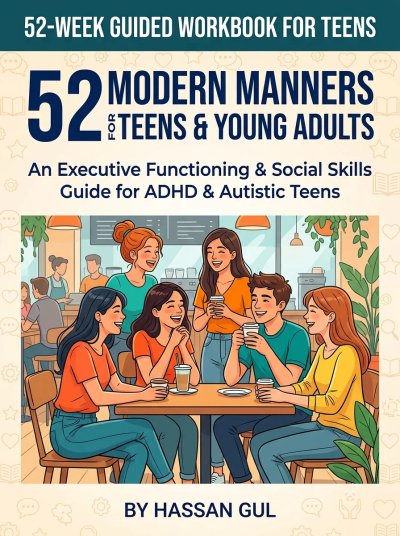
📖 52 Modern Manners for Kids & Tweens by Hassan Gul. Features 52 weekly bite-sized missions on texting etiquette, boundaries, restaurant manners, and self-advocacy.
📥 Download our Free 5-Page Self-Regulation Starter Kit (PDF) for tactile calming mazes and feelings thermometers.
 Instant PDF
52 Modern Manners for Teens & Young Adults (Original Checklist Edition - Version 1)
An Executive Functioning & Social Skills Guided Workbook to Build Independence, Digital Etiquette, and Confidence for ADHD, Autistic, & Neurodivergent Teens (Ages 13–18+)
Quick Answers for Parents & Educators
Recommended Sensory Products
Carefully curated products for a sensory-friendly environment.
Social Skills Conversation Cards for Kids
Unwritten Rules Decoder
Engaging real-life social dilemma prompt cards that teach perspective-taking and boundaries without masking.
Social Emotional Roll & Talk Foam Dice
Gamified Etiquette
Soft foam conversation cubes that make practicing turn-taking, greetings, and active listening playful.
Sensory Worry Stones for Anxiety
Silent Focus Tool
Natural carved thumb stones that allow children to stim discreetly during long social gatherings.
Loop Engage Kids Earplugs
Social Acoustic Comfort
Dampens loud restaurant and party background noise while keeping nearby speech clear and intelligible.
📚 Evidence-Based Sources & Citations
Peer-reviewed literature, clinical frameworks, and foundational neurodiversity resources referenced in this guide.
- Occupational Therapy Practice Framework: Domain and Process (4th Edition) — American Occupational Therapy Association (AOTA)(2020)View Sourceopen_in_new
- The Polyvagal Theory: Neurophysiological Foundations of Emotions, Attachment, Communication, and Self-Regulation — Dr. Stephen W. Porges, PhD(2011)View Sourceopen_in_new
- Understanding Pathological Demand Avoidance (PDA): Identifying Needs & Low-Demand Approaches — PDA Society UK(2023)View Sourceopen_in_new
- Sensory Processing Issues Explained: Supporting Children with Sensory Sensitivities — Child Mind Institute(2024)View Sourceopen_in_new
Join the Conversation
Get our monthly guide on sensory-aware parenting and neuro-inclusive home design delivered straight to your sanctuary.
Respecting your inbox and your peace of mind.
Leave a Reply
Your email address will not be published. Required fields are marked *