Sponsored Content Placement
Book Recommendations
The PDA Checklist for Children: Signs of Nervous System Demand Avoidance (Free PDF Download)
self_improvementTake A Moment
If you are a parent or educator watching a child experience an explosive meltdown over something seemingly simple—like putting on a pair of socks, eating their favorite snack, or walking to the car—you have likely been told that your child has Oppositional Defiant Disorder (ODD) or simply needs firmer boundaries.
I want to tell you right now, as both a neurodivergent parent and systems architect who evaluates human neurological patterns: that advice is fundamentally wrong.
What you are witnessing is not willful defiance, spite, or manipulation. You are observing Pathological Demand Avoidance (PDA)—increasingly recognized internationally as a Pervasive Drive for Autonomy within the autism spectrum. In PDA children, every single direct demand triggers an involuntary, autonomic fight-or-flight panic response in the amygdala.
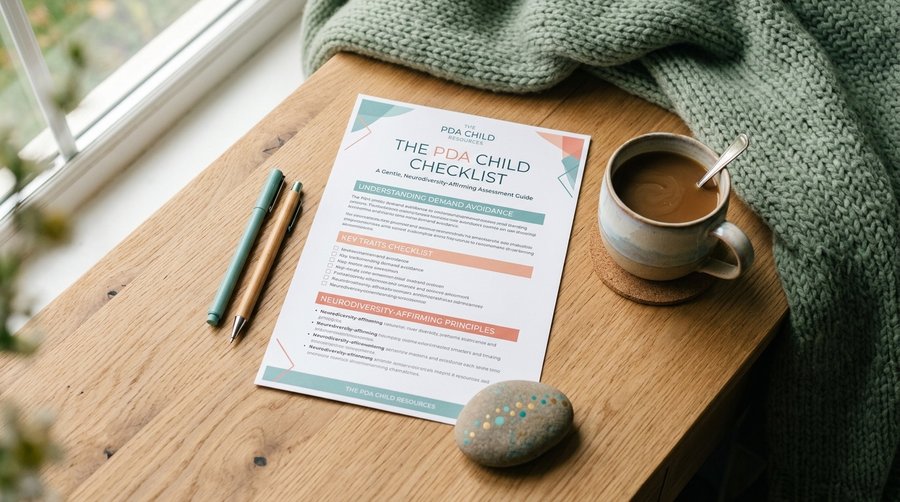
To help you evaluate whether your child's intense resistance is driven by autonomic panic rather than willful disobedience, I have created this comprehensive, neurodiversity-affirming 25-Point PDA Child Behavioral Checklist, backed by clinical research from Dr. Elizabeth Newson and Polyvagal Theory.
📥 Download the full 5-page printable version now: Get The PDA Child Behavior & Autonomy Checklist (Free PDF) — Includes the 25-point assessment, declarative language shift table, and daily co-regulation tracking sheet.
To understand why conventional parenting methods backfire so catastrophically with PDA children, we must understand the polyvagal hierarchy of the nervous system. In neurotypical and non-PDA neurodivergent children, a parent saying 'Please put your shoes on' is processed by the prefrontal cortex as a neutral request or social expectation.
In a PDA nervous system, that exact same command bypasses cognitive processing entirely and strikes the dorsal vagal and sympathetic circuits as an existential threat. Autonomy is not a luxury for a PDA child; it is their baseline prerequisite for felt physiological safety. When autonomy is threatened by an external demand, their nervous system perceives an imminent loss of survival control.
This neurological mechanism explains three baffling behaviors that confuse parents and clinicians:
1. Equalizing Behavior: The child must instantly feel equal to or higher in rank than the adult to restore safety. If you issue a command from a top-down authoritarian stance, they will correct you, boss you around, or mirror the demand back at you.
2. Avoiding Desired Demands: A PDA child will resist doing things they love. If they adore swimming, the mere statement 'It's time to put on your swimsuit for the pool' can trigger total physical collapse or hysterical tears because the demand stripped the action of autonomy.
3. Internal Demand Overload: Even involuntary physiological sensations—hunger, thirst, the urge to use the bathroom, or impending sleep—are internal demands that can trigger panic, agitation, or avoidance.
Observe your child across a 2- to 4-week window when they are in their natural home environment. Note whether these traits occur rarely (0), sometimes (1), or frequently (2):
Unlike children with oppositional defiance who often refuse bluntly, PDA children possess sophisticated social camouflage and intuitive distraction tactics:
• 1. Social Distraction: When a request is made, the child immediately begins showering you with compliments, asking fascinating philosophical questions, or changing the subject to their special interest.
• 2. Elaborate Excuses: They invent creative, biologically impossible justifications ('My arms have run out of battery', 'The carpet is eating my toes', 'I can only eat when the clock strikes three').
• 3. Feigned Incompetence or Fatigue: The child abruptly acts as though they have completely forgotten how to pull up pants or hold a fork, or they instantly claim extreme exhaustion.
• 4. Tactical Blame Shifting: Blaming inanimate objects for task failures ('The pencil won't write math', 'The door hates me').
• 5. Character & Fantasy Role-Play: Slipping into the persona of an animal, fictional hero, or teacher to avoid communicating as themselves.
The child requires complete parity with caregivers and peers to feel safe:
• 6. Dictating Rules of Play: In games or family routines, the child must create the rules, assign everyone's roles, and modify parameters on the fly.
• 7. Intense Panic from Direct Commands: Simple direct statements ('Come here', 'Sit down') produce visceral anxiety or explosive outbursts.
• 8. Compulsion to Have the Final Word: Must deliver the last sentence or gesture in any conversation to restore emotional equilibrium.
• 9. Resistance to Unsolicited Help: Refusing adult assistance even while crying from struggle, because accepting help registers as surrender.
• 10. Sabotaging Praised Work: If an adult enthusiastically praises a drawing or building ('Wow, look what you made!'), the child may rip it up or refuse to touch it again due to performance pressure.
When social strategies fail to deflect the demand, the nervous system initiates physical shutdown:
• 11. Sudden Somatic Illness: Mysterious, intense stomach aches, nausea, or limb weakness that materialize only during transition moments.
• 12. Physical Melting / Going Limp: Dropping flat on the floor, sliding under tables, or becoming unable to stand or walk.
• 13. Temporary Loss of Speech / Selective Mutism: Inability to access expressive language when emotionally cornered.
• 14. Basic Care Resistance: Extreme dysregulation around hygiene, tooth brushing, hair brushing, or showering unless initiated on their own terms.
• 15. Severe Sensory Sensitivity Under Pressure: Clothing seams, background noise, or light become excruciatingly painful when the daily demand load is elevated.
When demands are enforced with traditional authoritarian authority, the nervous system enters acute survival state:
• 16. Zero-to-Sixty Meltdowns: Instant escalation from quiet play to catastrophic panic without visible warning signs.
• 17. Bolting & Hiding: Running away in parking lots, sprinting into closets, or barricading bedroom doors to achieve safety.
• 18. Physical Aggression as Self-Defense: Biting, kicking, or scratching driven entirely by fight-or-flight terror.
• 19. Profound Post-Meltdown Remorse: Sobbing, apologizing profusely, or expressing self-hatred ('I'm the worst kid ever') once adrenaline subsides.
• 20. Extreme Pathological Perfectionism: Fear of making a mistake is so terrifying that the child refuses to start schoolwork.
PDA can present covertly, especially in neurodivergent girls and quiet internalizers:
• 21. Post-Restraint Collapse: Model behavior and compliance at school, followed by hours of violent dysregulation or weeping upon stepping into the home.
• 22. Self-Imposed Demand Paralysis: Inability to engage in chosen passions because the anticipation creates internal demand pressure.
• 23. Special Interests Centered on People: Obsessive focus on friendships, fictional characters, or analyzing human psychology.
• 24. Demand Intolerance Fluctuations: What was effortless on Tuesday causes a massive crisis on Wednesday due to nervous system spoon depletion.
• 25. Extended Decompression Requirement: Requiring hours in a dark, quiet, zero-demand cocoon before their nervous system can tolerate social engagement.
Almost every parent of a PDA child begins with traditional behavioral advice: sticker charts, token economies, time-outs, and loss of privileges. In our experience, these interventions do not just fail—they actively destabilize the child's mental health.
Here is the neurological reason: Sticker charts and rewards are contingent demands. They communicate to the child: 'Your safety, acceptance, and comfort depend on compliance.' For an autonomic nervous system already terrified of losing control, this contingent pressure pushes the child deeper into survival fight-or-flight.
When you punish a PDA child by taking away their iPad or sending them to their room, you are punishing an involuntary panic reaction. This destroys attachment trust, increases baseline anxiety, and guarantees that future demands will be met with even greater panic.
The single most powerful intervention for PDA is shifting from imperative language (commands) to declarative language (observations). Declarative language shares information without demanding an immediate behavioral response, allowing the child's nervous system to maintain autonomy.
Compare these real-world transformations:
• Imperative Demand: 'Put your shoes on right now; we have to leave.'
Declarative Shift: 'Your sneakers are right by the front door for whenever you're ready to head outside.'
• Imperative Demand: 'Eat your dinner before it gets cold.'
Declarative Shift: 'I put chicken and strawberries on the counter in case your body is feeling hungry.'
• Imperative Demand: 'Pick up all these toys off the floor.'
Declarative Shift: 'I'm putting away these wooden blocks so we don't trip on them while playing later.'
• Imperative Demand: 'Turn off YouTube; screen time is over.'
Declarative Shift: 'I noticed your show is almost over. When this episode ends, I'll be in the kitchen making hot chocolate.'
• Imperative Demand: 'Look at me when I'm speaking to you.'
Declarative Shift: 'I'm right here listening, and there's no rush to respond until your words are ready.'
To help you track your child's patterns, document observations for pediatricians or school IEP teams, and implement low-demand strategies immediately, I have compiled this complete framework into a free vector printable PDF.
👉 Click Here to Download The PDA Child Behavior & Autonomy Checklist (PDF)Download the Free 5-Page PDA Child Checklist PDF — 100% Free instant download. Includes the full 25-point screening tool, declarative script guide, and daily autonomy tracking log.
When a PDA child's nervous system is primed for fight-or-flight, physical tools that provide autonomic down-regulation without verbal demands are invaluable:
1. Flare Audio Calmer Kids Sound Dampeners: Reduces harsh frequencies that trigger acoustic startle alarms without muffling parental voices.
2. Harkla Weighted Compression Vest: Delivers continuous deep-touch pressure input to activate the parasympathetic vagal brake.
3. National Geographic Magnetic Liquid Motion Bubbler: Non-demanding visual focus tool that naturally de-escalates amygdala panic.
4. Time Timer MOD Visual Countdown Timer: Displays the passage of time visually without spoken countdown demands.
If you want comprehensive scripts, visual routines, and step-by-step guides to creating a low-demand household, explore our official workbooks:
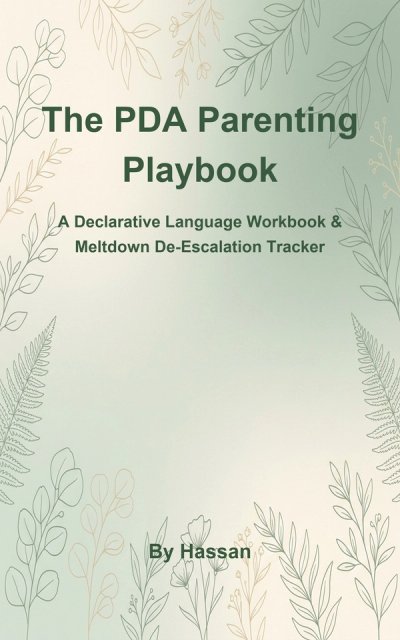
• The PDA Parenting Playbook: A complete clinical and lived-experience guide to co-regulation, declarative communication, and reducing meltdowns.
• The PDA & Low-Demand Parenting Workbook for Kids: Over 40 interactive, autonomy-affirming worksheets for children and parents to build peace together.
 Instant PDF
A Low-Demand, Sensory-Friendly Workbook for Navigating Pathological Demand Avoidance
Carefully curated products for a sensory-friendly environment.
Medical-grade silicone in-ear buds that eliminate acoustic distortion and reduce auditory sensory demand spikes.
Provides soothing proprioceptive input and deep touch pressure to settle the autonomic fight-or-flight response.
Get our monthly guide on sensory-aware parenting and neuro-inclusive home design delivered straight to your sanctuary.
Respecting your inbox and your peace of mind.
No comments yet. Be the first to share your thoughts!
Your email address will not be published. Required fields are marked *
Fascinating visual calming tool that offers non-demanding sensory grounding during overwhelming transitions.
Helps PDA children anticipate transitions visually without verbal time pressure or abrupt interruptions.