5 Creative Ways to Organize Kids' Art Supplies and Craft Bins on a Budget
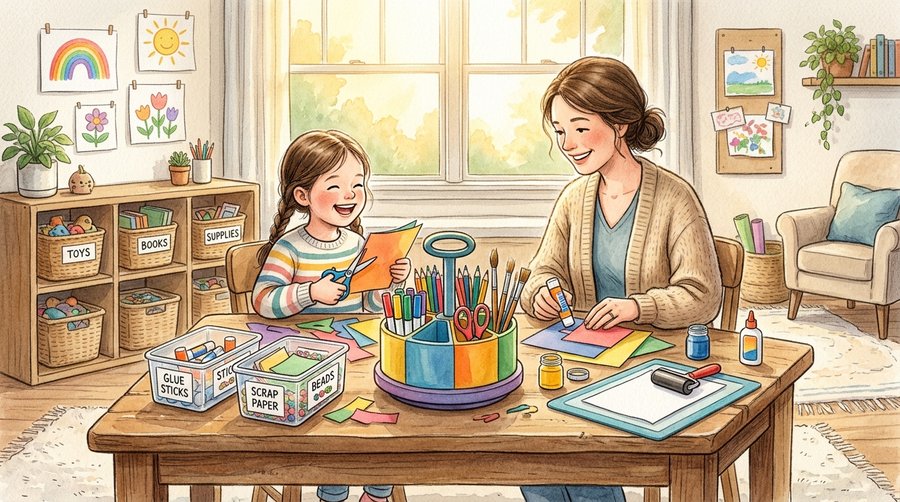
Say goodbye to dried-out markers and glitter chaos. Discover 5 budget-friendly hacks to organize kids' craft bins, the 360-degree rotating caddy rule, and visual picture labels that make clean-up intuitive.
Editorial Disclosure & Medical Scope: Sensory Kids Books shares neurodiversity-affirming, lived-experience insights and sensory-informed tools for parents, caregivers, and educators. This publication is for educational purposes only and does not constitute formal medical diagnosis, psychiatric evaluation, or clinical occupational therapy advice. Always consult a qualified pediatrician or licensed clinician for individual medical care. As an Amazon Associate, we earn from qualifying purchases through our independent affiliate links at zero extra cost to you.
⚡ Quick Takeaway & Summary for Parents: If your dining table is perpetually buried under headless markers, half-glued craft sticks, and rogue sequins, the problem isn't your children's creative passion—it is the storage system. When art supplies live inside opaque cardboard boxes or deep cluttered drawers, kids cannot see what they have, get overwhelmed during craft sessions, and completely abandon clean-up. By applying 5 simple, budget-friendly organization hacks—the 360-degree rotating caddy rule, clear stackable bins with visual picture labels, vertical over-the-door pocket storage, roll-out washable silicone craft mats, and a 3-bin rotation schedule—you can create an inspiring, self-contained art station that kids can set up and clean up 100% on their own without breaking the bank.
It starts with pure, innocent joy: "Mom, Dad, can we do some painting and make a greeting card?!" You smile, pull down the heavy craft tub from the top of the pantry, and set it on the kitchen table. Fast forward forty-five minutes later, and the scene looks like a craft store exploded in your dining room.
There are eighteen uncapped markers drying out on the tablecloth. A puddle of blue tempera paint is slowly creeping toward your laptop. Two glue sticks have vanished under the radiator, and glittering plastic sequins are permanently embedded in the rug. When you announce it is time for dinner, your kids take one look at the mountain of supplies, announce "It's too hard!", and run away.
As a parent and software architect, I look at household disorganization as a broken user interface. When we hand young children deep, opaque storage containers with complex lids and micro-categories, the cognitive friction of putting items away is simply too high. If an art station requires fifteen minutes of sorting to clean up, kids will resist it every single time. The secret to sustainable kids' craft storage on a budget is building high-visibility, low-friction systems that make grabbing a marker effortless and returning it intuitive.
The 3 Big Flaws of Traditional Craft Storage
Before buying expensive matching craft carts or tiny compartmentalized sorting drawers, it helps to understand why standard adult organizational systems fail young children:
1. Out of Sight is Truly Out of Mind: Children are intensely visual. If pipe cleaners, stamps, and watercolor pans are tucked away in solid plastic boxes or opaque fabric drawers, kids forget they exist. They will repeatedly pull out the same dried-up marker box because it is the only item visible.
2. The "Dump-and-Dig" Phenomenon: When art supplies are stored in one large "catch-all" bin, finding a single pair of safety scissors requires dumping the entire tub onto the floor. Once everything is dumped, the visual chaos paralyzes the child's ability to tidy up.
3. Color-Sorting Fatigue: Adult organizers often love arranging colored pencils by rainbow spectrum. For a 6-year-old in the middle of a drawing flow, sorting 48 pencils back into precise color slots is unrealistic. Organization must be categorized by medium, not by shade.
Way 1: The Lazy Susan Rotating Caddy (The "One-Spin" Accessibility Rule)
The single most impactful tool you can add to your children's creative workspace is a tabletop rotating turntable or lazy susan caddy. Instead of laying out 6 different cardboard boxes that take up all the tabletop real estate, a rotating carousel holds daily essentials upright in the center of the table.
🎨 Creative Organization Way #1: The Center-Tabletop Lazy Susan Caddy (Under $15–$20)
Keeps markers, pencils, scissors, and glue sticks upright, visible, and accessible from any chair with a gentle spin. Removable cups let siblings take their tools directly to their seat and return them in one motion.
When children can see all their tools standing upright, they no longer rummage or tip containers over. Look for rotating caddies with removable cup compartments (like the Learning Resources Create-a-Space Carousel). If one child needs scissors and glue sticks across the table, they can lift out that specific cup without dragging the whole organizer across the table.
⭐ Recommended Tool: Learning Resources Create-a-Space Storage Center Carousel (Best Rotating Desktop Art Caddy)
A heavy-duty 360-degree rotating turntable featuring 8 removable colorful plastic bins and an easy-grip circular base. Keeps markers, colored pencils, safety scissors, and glue sticks upright and organized in one compact desktop footprint.
shopping_cart👉 Check Price on Amazon (paid link)open_in_new
Way 2: Clear Shoebox Bins with Visual Picture Labels
Forget expensive acrylic display cases. Dollar stores and hardware centers sell clear 6-quart plastic shoebox containers with latching lids for under $2.00 each. These clear bins are the undisputed champions of budget-friendly toy and craft organization.
🎨 Creative Organization Way #2: Clear Shoebox Bins with Illustrated Visual Labels (Under $2–$3 per bin)
Transparent plastic lets children see contents immediately from across the room. Pairing each bin with a simple picture-and-word visual icon eliminates guessing and makes independent clean-up fun.
How to Categorize Like a Pro: Instead of mixing everything together, assign one clear shoebox container per medium:
• Bin A: Play Dough & Cutters: Cans of dough, rolling pins, and plastic cookie cutters.
• Bin B: Collage & Textures: Pompoms, felt scraps, craft sticks, and googly eyes.
• Bin C: Paint & Sponge Tools: Washable paint pots, roller sponges, and foam brushes.
• Bin D: Stamps & Stickers: Ink pads, wooden stamps, and sticker sheets.
The magic key is the label: tape a printed picture of scissors and glue sticks on the outside. Even non-readers can instantly identify where each medium belongs, turning clean-up into an interactive matching game.
⭐ Recommended Tool: Clear Stackable Latching Craft Storage Organizers (3-Pack) (Best Clear Stackable Craft Bins)
Durable, BPA-free transparent storage containers with snap-lock latches, adjustable interior compartments, and top carrying handles. Crystal-clear walls let kids spot craft supplies instantly without opening lids.
shopping_cart👉 Check Price on Amazon (paid link)open_in_new
Way 3: The Over-the-Door Clear Pocket Organizer (Zero Floor Footprint)
If you have limited floor space or no room for extra shelving in your kids' bedroom or playroom, look at the back of your doors. An inexpensive over-the-door clear vinyl shoe organizer is one of the most versatile craft storage hacks on the planet.
🎨 Creative Organization Way #3: Over-the-Door Hanging Craft Wall (Under $12–$15)
Features 24 deep, clear pockets that hang vertically on the back of any door. Zero floor space required, fully visible supplies at kid height, and out-of-reach top pockets for parent-managed items.
Hang the organizer on the inside of a closet door or playroom door. Assign the lower 12 pockets (accessible at your child's eye level) to safe, independent materials: coloring books, rolls of painter's tape, stamp pads, and watercolor pencils. Reserve the top 12 pockets (out of little hands' reach) for items that require adult supervision, such as permanent markers, liquid paint bottles, hot glue guns, and glitter jars.
⭐ Recommended Tool: Heavy-Duty Over-the-Door Clear Pocket Hanging Organizer (Best Vertical Space Saver)
24 crystal-clear deep PVC pockets mounted on heavy-duty non-woven fabric with metal door hanging hooks. Perfect for turning unused vertical door space into a tidy, high-visibility kids craft station.
shopping_cart👉 Check Price on Amazon (paid link)open_in_new
Way 4: The Roll-Out Washable Silicone Craft Mat Station
The number one reason parents avoid doing art projects with their kids isn't the crafting itself—it is the dread of scrubbing dried glue, clay residue, and water rings off the kitchen table afterward.
🎨 Creative Organization Way #4: The Roll-Out Silicone Craft Mat (Under $12–$16)
A heat-resistant, non-stick, waterproof silicone mat that instantly defines the child's workspace. Catches all spills, paint drips, and glue drippings, and rinses clean in 10 seconds under warm running water.
Modern food-grade silicone art mats feature raised lip edges that contain accidental liquid spills, built-in silicone paint wells for blending colors without messy plastic plates, and brush grooves that prevent rolling brushes. When the craft project is done, simply peel dried glue right off the non-stick surface, or pick up the entire mat and rinse it in the kitchen sink. Roll it up, secure it with a rubber band, and slip it into your craft bin in seconds.
⭐ Recommended Tool: Large Washable Silicone Craft Mat with Paint Wells & Brush Rest (Best Tabletop Mess Protector)
Non-stick, heat-resistant, food-grade silicone art mat with raised spill-proof edges, 14 built-in pigment wells, and brush cleaning cup. Protects dining tables and desks from glue, paint, and glitter; wipes clean in 10 seconds or rinses in the sink.
shopping_cart👉 Check Price on Amazon (paid link)open_in_new
Way 5: The "Three-Bin Rotation System" (Combatting Craft Fatigue)
Have you ever noticed that the more art supplies kids have out in the room, the less creative they actually become? When children are surrounded by 400 markers, 15 paint sets, and 30 tubs of glitter, sensory and visual overload sets in. They bounce rapidly between materials without deeply exploring any of them.
🎨 Creative Organization Way #5: The 3-Bin Bi-Weekly Craft Rotation ($0.00 (Pure Habit Hack))
Divide all your family craft supplies into three distinct storage tubs (Bin 1, Bin 2, Bin 3). Keep only ONE bin in the active art station, and store the other two in a high closet. Rotate bins every two weeks.
Why Craft Rotation Feels Like Magic: When Bin 2 comes down from the closet two weeks later, the watercolor set and origami paper feel brand-new all over again! This simple rotation hack triples the novelty of your existing craft inventory, saves hundreds of dollars on replacing "boring" supplies, and keeps your everyday craft zone 70% smaller and easier to tidy up.
The 3-Minute "Art Gallery Reset": Making Clean-Up Playful
Children naturally push back against the phrase "clean up your mess" because "mess" sounds like a chore or a moral accusation. Instead, reframe the end of every craft session into an exciting ritual: The 3-Minute Art Gallery Reset.
1. Start the Visual Countdown: Give a gentle 5-minute warning using a silent visual timer. Say: "When the red disc reaches the star, we are opening the family art gallery!"
2. Curate the Artwork: Before tidying the tools, let your child choose their favorite creation from the session and clip it to a wooden drying rack or tape it to the refrigerator "gallery wall."
3. The 3-Minute Song Challenge: Put on an upbeat, high-energy 3-minute favorite song. Challenge your child: "Can we get all the markers into the carousel and snap the lids on our bins before the song ends?" Making it a cooperative race against the clock turns clean-up into an exhilarating team win.
📋 Autism & ADHD Visual Daily Routine Pack (Printable Kit)
Looking for ready-to-print visual labels for your kids' craft bins, toy organizers, and morning chores? Our printable kit includes over 80+ illustrated visual tiles, chore sliders, and organizing cards designed to foster independent habits.
👉 Download the Visual Daily Routine Pack ($7.99 / $14.99)
Build a Smooth Daily Creative Schedule for Free
Balancing open creative play, school homework, and quiet downtime keeps family life peaceful and predictable. Use our free web tools to craft the ideal daily rhythm for your home:
Generate a customized, printable daily schedule using our free interactive web tool: the Visual Daily Routine Schedule Generator.
To build calming tactile crafts, movement breaks, and quiet creative stations into your child's week, explore our free Sensory Diet Schedule Generator.
📋 The ADHD & PDA Anti-Planner: Visual Executive Function Workbook
For older kids, tweens, and creative minds who struggle with task initiation, messy desks, and project overwhelm. Features low-demand visual pacing sheets, dopamine-menu task organizers, and tactile project planners.
👉 Explore The ADHD Anti-Planner ($8.99)
Nurturing Childhood Creativity Without the Clutter Headache
Creative exploration—drawing, painting, sculpting, cutting, and building—is one of the most rewarding ways children learn to express emotions, develop fine motor dexterity, and build confidence. You don't need an expensive custom craft studio or expensive storage units to foster that magic.
By giving your child clear, transparent bins, a rotating desktop caddy, and a protective silicone mat, you create an inviting workspace that respects both their imagination and your family's shared living space. When kids have an intuitive system they can master on their own, creativity flourishes—and your kitchen table stays sparkling clean.
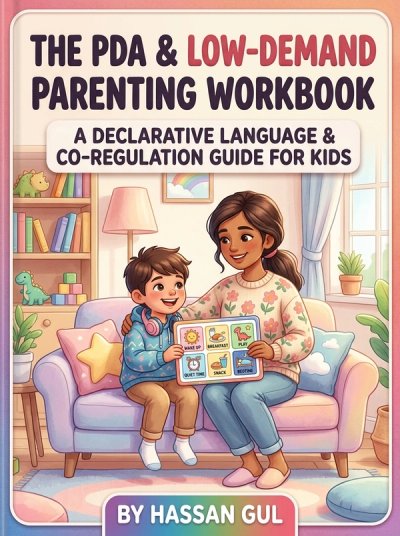 Instant PDF
The PDA & Low-Demand Parenting Workbook for Kids
A Declarative Language & Co-Regulation Guide to Reduce Meltdowns, Build Autonomy, and Navigate Daily Routines with Pathological Demand Avoidance
Recommended Sensory Products
Carefully curated products for a sensory-friendly environment.
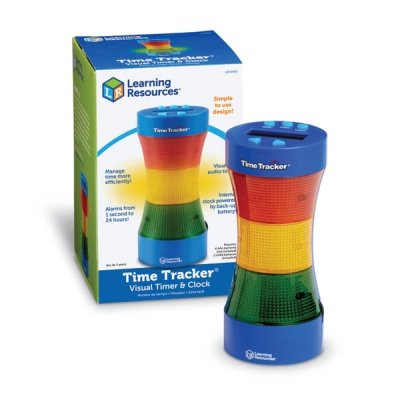
Learning Resources Create-a-Space Storage Center Carousel
Best Rotating Desktop Art Caddy
A 360-degree rotating desktop carousel with 8 removable colorful plastic bins and an easy-grip circular base. Keeps markers, colored pencils, safety scissors, and glue sticks upright, visible, and instantly accessible without desktop clutter.
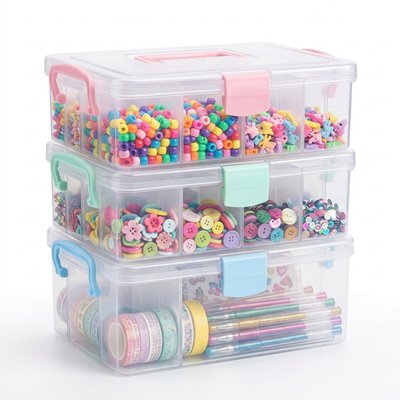
Clear Stackable Latching Craft Storage Organizers (3-Pack)
Best Clear Stackable Craft Bins
Durable, BPA-free transparent storage containers with snap-lock latches, adjustable interior compartments, and top carrying handles. Crystal-clear walls let kids spot craft supplies instantly without opening lids.
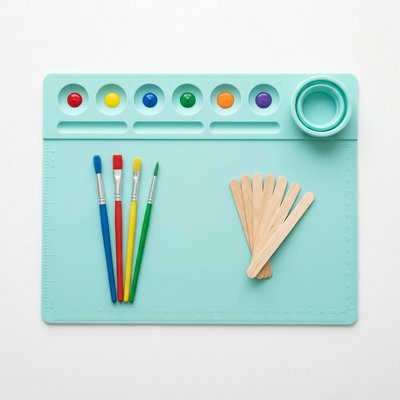
Large Washable Silicone Craft Mat with Paint Wells & Brush Rest
Best Tabletop Mess Protector
Non-stick, heat-resistant, food-grade silicone art mat with raised spill-proof edges, 14 built-in pigment wells, and brush cleaning cup. Protects dining tables and desks from glue, paint, and glitter; wipes clean in 10 seconds or rinses in the sink.
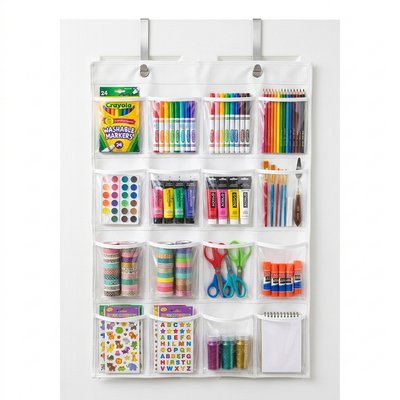
Heavy-Duty Over-the-Door Clear Pocket Hanging Organizer
Best Vertical Space Saver
24 crystal-clear deep PVC pockets mounted on heavy-duty non-woven fabric with metal door hanging hooks. Perfect for turning unused vertical door space into a tidy, high-visibility kids craft station.
📚 Evidence-Based Sources & Citations
Peer-reviewed literature, clinical frameworks, and foundational neurodiversity resources referenced in this guide.
- Occupational Therapy Practice Framework: Domain and Process (4th Edition) — American Occupational Therapy Association (AOTA)(2020)View Sourceopen_in_new
- The Polyvagal Theory: Neurophysiological Foundations of Emotions, Attachment, Communication, and Self-Regulation — Dr. Stephen W. Porges, PhD(2011)View Sourceopen_in_new
- Understanding Pathological Demand Avoidance (PDA): Identifying Needs & Low-Demand Approaches — PDA Society UK(2023)View Sourceopen_in_new
- Sensory Processing Issues Explained: Supporting Children with Sensory Sensitivities — Child Mind Institute(2024)View Sourceopen_in_new
Join the Conversation
Get our monthly guide on sensory-aware parenting and neuro-inclusive home design delivered straight to your sanctuary.
Respecting your inbox and your peace of mind.
Leave a Reply
Your email address will not be published. Required fields are marked *