Sensory Diet for Kids: The Complete Parent's Guide (+ Daily Schedules & 45+ Activities)

A sensory diet is a planned daily schedule of sensory activities designed to keep your child's nervous system regulated. This complete guide covers 45+ activities, four plug-and-play daily schedules, zero-dollar household hacks, and classroom accommodations — written by a parent who has lived it.
I remember the exact moment I understood what a sensory diet really means.
My daughter had just dismantled her third pair of headphones in a week. Not out of malice — she was compulsively pulling the ear cushions apart, twisting the headband, pressing the foam into her cheeks. Every adult in the room called it "destructive behavior." But I had been reading about proprioceptive input, and something clicked: she was not destroying equipment. She was feeding her nervous system the deep-pressure input it was screaming for, with whatever object was within arm's reach.
That afternoon, I replaced the headphones with a silicone chew necklace and a lycra body sock. The headphone demolition stopped overnight. That was my first accidental sensory diet intervention — and it changed everything about how I parent.
If your child is bouncing off walls one hour and collapsing in tears the next, this guide will show you exactly how to build a structured sensory diet that works in the real world — not the sterile clinic version, but the messy-kitchen, school-bus, homework-battle version.
What is a Sensory Diet? (And Why It Has Nothing to Do with Food)
Let me be direct: a sensory diet has absolutely nothing to do with eating. The term was coined by occupational therapist Patricia Wilbarger in 1995, and it refers to a carefully planned daily schedule of sensory activities designed to keep a child's nervous system regulated throughout the day.
Think of it like a nutritional diet, but for the brain's sensory intake. Just as a nutritionist balances protein, carbohydrates, and hydration across meals, a sensory diet balances proprioceptive, vestibular, tactile, and other sensory inputs across the child's waking hours.
The Nervous System as an Engine: Understanding Arousal Levels
Every human nervous system operates on a spectrum of arousal — from dangerously under-stimulated (lethargic, foggy, withdrawn) to dangerously over-stimulated (hyperactive, aggressive, or in full meltdown). The sweet spot in the middle is called the "optimal alertness zone," and it is where learning, social connection, and emotional regulation happen.
Children with sensory processing differences — whether from autism, ADHD, SPD (Sensory Processing Disorder), or PDA (Pathological Demand Avoidance) — have nervous systems that swing wildly outside this zone. A sensory diet is the deliberate, structured intervention that nudges them back into their window of regulation.
Sensory Seeking vs. Sensory Avoiding vs. Low Registration
Before you design a single activity, you need to identify your child's sensory profile. Most children fall into one (or a chaotic blend) of three patterns:
Sensory Seekers crave intense input. They crash into furniture, spin endlessly, chew everything in sight, and seem to have no "off" switch. Their nervous system is chronically under-aroused and needs amplification.
Sensory Avoiders recoil from sensory input. Tags on clothing feel like razor blades, fluorescent lights cause physical pain, and crowded spaces trigger fight-or-flight shutdown. Their nervous system is chronically over-aroused and needs dampening.
Low Registrators seem to miss sensory signals entirely. They don't notice food on their face, walk into door frames, or fail to register temperature changes. Their nervous system is sluggish and needs activation — but gently.
Most neurodivergent children are a volatile cocktail of all three profiles depending on the time of day, sleep quality, and cumulative sensory load. Your sensory diet needs to account for this shifting landscape.
The 8 Sensory Systems Explained (Beyond the Traditional Five)
Forget the five senses you learned in elementary school. The human body actually processes eight distinct sensory channels, and the three "hidden" ones are arguably the most important for neurodivergent regulation:
1. Proprioception (The Body Awareness Sense & Heavy Work Superpower)
Proprioception is the sense that tells your brain where your body parts are in space without looking. It comes from receptors in muscles, joints, and tendons. When a child pushes against heavy objects ("heavy work"), their proprioceptive system floods the brain with calming, organizing input. This is why your sensory-seeking child instinctively crashes into couch cushions — they are self-medicating with proprioceptive input.
2. Vestibular (Balance, Motion & Spatial Equilibrium)
Located in the inner ear, the vestibular system detects head position, acceleration, and gravitational pull. Swinging, spinning, rocking, and hanging upside down all stimulate the vestibular system. For under-responsive children, controlled vestibular input is literally the neurological equivalent of turning on the lights in a dark room. For over-responsive children, uncontrolled vestibular input (like being pushed on a swing unexpectedly) can trigger immediate nausea and panic.
3. Interoception (The Hidden Sense: Hunger, Pain & Emotional Heartbeats)
Interoception is the sense that monitors internal body signals: hunger, thirst, bladder fullness, heart rate, temperature, and even emotional states. Many neurodivergent children have significantly impaired interoception — which is why your child can go 8 hours without eating, or have a full bladder and insist they don't need the bathroom, or feel anxious without understanding why they feel terrible inside. For a deep dive, read our guide on Interoception: Why Neurodivergent Kids Ignore Hunger, Thirst & Bathroom Signals.
4. Tactile, Auditory, Visual, Gustatory & Olfactory
These are the five traditional senses you already know. In sensory diet planning, pay special attention to tactile (touch textures, clothing seams, messy play tolerance), auditory (background noise, sudden sounds, volume sensitivity), and visual (fluorescent lighting, screen glare, visual clutter). Gustatory (taste) and olfactory (smell) sensitivities directly impact eating behaviors and ARFID-related food avoidance.
Calming vs. Alerting Sensory Input: The Golden Rule of Timing
This is the single most important concept in sensory diet design: not all sensory input is created equal. Some activities wake up a sluggish system (alerting), while others calm down an overloaded system (calming). Using the wrong type at the wrong time makes things dramatically worse.
When to Use Alerting Activities
Use alerting input when your child is sluggish, foggy, or struggling to engage — typically first thing in the morning, after a nap, or during low-energy homework slumps. Alerting activities include: jumping on a mini trampoline, crunching on raw carrots or ice chips, clapping games, cold water splashes on the face, upbeat music with a strong beat, and bright natural light exposure.
When to Use Calming Activities
Use calming input when your child is escalating toward sensory overload, transitioning between activities, or winding down before bed. Calming activities include: deep-pressure hugs or weighted blankets, slow rhythmic rocking, dim lighting, white noise or soft instrumental music, warm baths, oral-motor chewing (silicone chew necklaces), and proprioceptive heavy work (carrying groceries, pushing a laundry basket).
45+ Actionable Sensory Diet Activities for Kids (Grouped by Need)
Proprioceptive & "Heavy Work" Activities (Home & Classroom)
Heavy work is the single most universally effective sensory strategy, and most activities cost absolutely nothing:
• Wall push-ups (10-15 reps against the wall before homework)
• Carrying grocery bags from the car
• Pushing a loaded laundry basket across the room
• Pulling a wagon loaded with books or toys
• Crawling through a tunnel or under couch cushions
• Bear walks and crab walks across the living room
• Climbing playground equipment or indoor rock walls
• Kneading bread dough or therapy putty
• Digging in sand, soil, or a sensory bin
• "Sandwich press" — squishing between couch cushions with gentle pressure
• Wheelbarrow walking (you hold their ankles, they walk on hands)
For 10 more research-backed heavy work ideas, read our complete guide: 10 Simple "Heavy Work" Activities to Regulate Your Child at Home.
Vestibular Activities (Safe Movement, Swinging & Inversion)
• Indoor sensory swing (the single most impactful investment you can make)
• Spinning in an office chair (start with 5 seconds, build slowly)
• Rocking in a rocking chair or hammock
• Somersaults on a crash mat
• Hanging upside down from monkey bars (supervised)
• Jumping on a mini trampoline with a handle bar
• Sliding down slides at varying speeds
• Yoga inversions: downward dog, forward fold, legs-up-the-wall
Tactile & Deep Pressure Strategies (Calming the Fight-or-Flight Center)
• Weighted lap pad during seated activities (homework, meals, car rides)
• Compression clothing or lycra body socks
• Messy play: shaving cream, slime, kinetic sand, water beads (for seekers)
• Firm back rubs or "steamroller" with a therapy ball across the back
• Warm blanket wraps out of the dryer
• Textured fidgets: spiky balls, velvet fabric strips, smooth river stones
• Brushing protocol (Wilbarger deep-pressure brushing, with OT guidance)
Oral-Motor & Chewing Tools (Grounding Focus & Anxiety Relief)
• Silicone chew necklaces (ARK Therapeutic makes medical-grade options)
• Crunchy snacks: raw carrots, pretzels, apple slices, ice chips
• Thick smoothies through a narrow straw (resistance sucking = calming)
• Blowing bubbles, whistles, or pinwheels
• Vibrating toothbrush on cheeks and jaw (with child's consent)
Zero-Dollar Household Sensory Hacks (No Expensive Equipment Required)
You do not need a \$500 therapy room to build an effective sensory diet. These cost literally nothing:
• Stack heavy books in a backpack and let your child wear it around the house for 10 minutes
• Fill a pillowcase with dry rice — instant weighted lap pad
• Frozen wet washcloth — oral-motor chewing input that also hydrates
• Couch cushion "burrito" — roll your child snugly between two cushions
• Fill a large plastic bin with dried beans and hide small toys inside — instant sensory excavation dig
• Let your child push the full shopping cart at the grocery store — free heavy work in public
• Hang from a doorway pull-up bar (with supervision) — vestibular + proprioceptive combo
Step-by-Step: How to Build a Custom Sensory Diet in 4 Stages
Stage 1: The 7-Day Sensory Trigger Tracking Method
Before designing anything, you need data. For seven days, jot down the answers to three questions every time your child has a meltdown, shutdown, or period of extreme dysregulation:
1. What happened in the 30 minutes BEFORE the episode? (Was it a transition? Loud environment? Long period of sitting still?)
2. What sensory input was the child seeking or avoiding DURING the episode? (Covering ears? Crashing into things? Going completely rigid?)
3. What ultimately helped them recover? (Deep pressure hug? Being left alone in a dark room? Physical movement?)
After seven days, clear patterns will emerge. You will see that 70% of meltdowns cluster around the same 2-3 triggers and the same 2-3 recovery strategies. That pattern IS your child's sensory diet blueprint.
Stage 2: Matching Sensory Inputs to Daily Pain Points
Map your child's worst daily friction points (morning wake-up chaos, homework resistance, bedtime battles) to specific sensory inputs that address the root cause. If morning transitions are the battlefield, your child likely needs alerting proprioceptive input before leaving the house. If homework triggers tears, they probably need calming deep pressure before sitting down.
Stage 3: Embedding Sensory "Micro-Doses" into Existing Routines
The biggest mistake parents make is treating sensory activities as a separate "therapy session." A sensory diet should be invisible — woven seamlessly into the routines your family already has. Instead of "Now it is sensory time!" (which will trigger instant refusal in any PDA child), just silently hand them a weighted lap pad before dinner, or move their homework station next to a wobble cushion without announcement.
Stage 4: Testing, Observing & Refining Without Forcing
A sensory diet is a living document, not a rigid prescription. What works on Monday may backfire on Thursday because your child slept poorly, skipped lunch, or had a socially draining day at school. Stay flexible. Rotate activities every 2-3 weeks to prevent habituation. And never, ever force a sensory activity — the instant it becomes a demand, it loses its regulatory power (especially for PDA children).
Ready-to-Use Daily Sensory Diet Schedules (Plug-and-Play Timetables)
Below are four real-world schedules I personally use and refine. Adapt the times to your family's rhythm.
Morning Alerting Routine (Easing the 7:00 AM Rush & Meltdowns)
⏰ 6:45 AM — Open curtains for natural light exposure (visual alerting)
⏰ 6:50 AM — 2 minutes of jumping jacks or trampoline bouncing (vestibular + proprioceptive alerting)
⏰ 7:00 AM — Crunchy breakfast: granola, raw carrot sticks, or toast with nut butter (oral-motor alerting)
⏰ 7:10 AM — Wear a loaded backpack for 5 minutes while getting dressed (proprioceptive grounding)
⏰ 7:15 AM — Play upbeat music during teeth brushing (auditory alerting)
Homework & Focus Routine (Conquering Task Paralysis & Fidgeting)
📚 3:30 PM — 15 minutes of outdoor free play or trampoline (vestibular decompression BEFORE sitting)
📚 3:45 PM — Offer a crunchy snack + water (oral-motor grounding)
📚 3:50 PM — Place weighted lap pad on thighs + wobble cushion on chair (deep pressure calming)
📚 3:55 PM — Hand them a fidget or chew necklace silently (tactile anchoring)
📚 4:00 PM — Work in 10-minute sprints with 3-minute movement breaks (heavy work micro-doses)
After-School Decompression Routine (Beating Restraint Collapse)
This is the most critical window. If your child masks all day at school, they arrive home with a depleted nervous system that will explode at the first micro-demand. (For the science behind this, read After-School Restraint Collapse.)
🏠 3:15 PM — Zero verbal demands for 20 minutes (no questions, no instructions)
🏠 3:20 PM — Offer a "crash landing" zone: beanbag, crash pad, or couch cushion pile
🏠 3:25 PM — Dim the lights, lower the TV volume, reduce visual clutter
🏠 3:35 PM — Offer (do not insist) a warm snack + deep pressure blanket
🏠 3:50 PM — Only after visible nervous system reset, gently transition to the next activity
Bedtime Grounding Routine (Smoothing the Sleep Transition)
🌙 7:00 PM — Warm bath with Epsom salts (deep pressure + thermal calming)
🌙 7:15 PM — Firm body lotion massage with slow, rhythmic pressure (proprioceptive calming)
🌙 7:25 PM — Compression pajamas or weighted blanket on the bed
🌙 7:30 PM — Dim amber lighting (blue light elimination)
🌙 7:35 PM — Audiobook or white noise machine at low volume (auditory grounding)
🌙 7:45 PM — "Steamroller" — gently roll a therapy ball over their back and legs with firm pressure
Tailoring the Sensory Diet: Autism, ADHD, and PDA Specifics
Sensory Diets for Autistic Kids: Meltdown Prevention & Stimming Acceptance
Autistic children often experience the world at maximum sensory volume. Their sensory diet should prioritize predictability, sameness, and environmental control. Use visual schedules to preview every sensory activity before it happens. Never surprise an autistic child with unexpected vestibular input. Honor stimming as self-regulation — if your child flaps, rocks, or hums, that IS their body's natural sensory diet. Your job is to provide safe outlets, not to suppress the behavior.
Sensory Diets for ADHD Kids: Dopamine Seeking, Motor Energy & Focus
ADHD brains are chronically under-aroused and seek high-intensity sensory input to manufacture the dopamine their prefrontal cortex lacks. Their sensory diet should emphasize dynamic, novel, high-resistance activities: climbing walls, resistance bands on chair legs, heavy lifting, and fast-paced proprioceptive games. For more on this dopamine-driven approach, explore our ADHD Dopamine Menu.
Low-Demand Sensory Adaptations for PDA (Preventing Fight-or-Flight Triggers)
Children with PDA (Pathological Demand Avoidance) will reject ANY activity that feels like an instruction — even if it is genuinely enjoyable. The sensory diet must be offered obliquely, never demanded. Instead of "Time for your sensory break!", try leaving a wobble cushion on their chair without comment, or casually mentioning "I'm going to jump on the trampoline, you can join me if you want." Read our complete guide on PDA & Low-Demand Parenting for more declarative language scripts.
Classroom & School Sensory Accommodations (IEP & 504 Plan Guide)
Exact Sensory Diet Accommodation Wording for Teachers
If your child has an IEP or 504 Plan, request these specific accommodations in writing:
• "Student will be permitted to use a wobble cushion, resistance band, or fidget tool during seated instruction without being asked to put it away."
• "Student will receive a minimum 5-minute sensory movement break every 45 minutes of sustained seated work."
• "Student will be seated away from HVAC vents, hallway doors, and fluorescent light ballast hum."
• "Student will receive visual or written instructions alongside all verbal directions."
• "Student will be permitted to wear noise-reducing ear defenders or loop earplugs during assemblies, cafeteria, and transitions."
Subtle Classroom Sensory Tools That Don't Distract Other Students
• Resistance bands looped around front chair legs (silent proprioceptive foot pressing)
• Textured adhesive strips stuck under the desk edge (discreet tactile input)
• A small "fidget wallet" with silent tools: putty, smooth stones, velcro strip
• Chewelry worn as a necklace (looks like jewelry, functions as oral-motor regulation)
• A weighted pencil grip for handwriting stabilization
Recommended Sensory Tools & Equipment (Vetted Buying Guide)
I have personally tested every single product below with my own children. These are the items that survived daily abuse and actually made a measurable difference in regulation:
Compression & Deep Pressure
• Weighted Lap Pad (3-5 lbs) — Place on thighs during homework, meals, or car rides. The consistent deep pressure activates the parasympathetic nervous system within 2-3 minutes.
• Lycra Body Sock — A full-body compression envelope that provides proprioceptive input from every angle. My daughter calls it her "cocoon" and voluntarily climbs in after school.
Movement & Balance
• Indoor Sensory Swing (Bolted to ceiling joist) — The single highest-ROI sensory investment. Linear (back-and-forth) swinging calms; rotational (spinning) swinging alerts. Fifteen minutes daily cut our after-school meltdowns by roughly 70%.
• Wobble Cushion — Inflatable textured disc for chairs. Provides constant micro-vestibular input during seated tasks, dramatically improving sustained attention.
Oral & Tactile Fidgets
• ARK Therapeutic Chewelry — Medical-grade silicone chew necklaces in three resistance levels (soft, standard, extra-tough for aggressive chewers). Replaces shirt-collar chewing and pencil destruction.
• Crazy Aaron's Thinking Putty — Silent, non-messy, infinitely moldable. Provides both proprioceptive hand input and tactile sensory engagement without classroom disruption.
👉 shopping_cartBrowse our full curated collection of sensory tools on Amazonopen_in_new (affiliate link — helps support our free content).
Frequently Asked Questions
Q: Can I do a sensory diet at home without an occupational therapist?
Absolutely. While a formal OT evaluation is ideal, many sensory diet activities are completely safe to implement at home. Start with heavy work (wall push-ups, carrying groceries, couch cushion squishes) and observe. If your child visibly calms or focuses better, you are on the right track. Consult an OT if you notice increased distress, nausea from vestibular input, or persistent sensory avoidance that limits daily functioning.
Q: How often should my child do sensory activities throughout the day?
Think in terms of "micro-doses" rather than one big therapy session. Ideally, embed 5-10 minute sensory inputs every 60-90 minutes throughout the day: a movement break before homework, a weighted lap pad during dinner, a compression hug before a transition. The goal is prevention, not rescue.
Q: What if my child refuses sensory activities? (PDA/Demand Avoidance)
Never force it. The moment a sensory activity becomes a demand, it loses its regulatory benefit and triggers fight-or-flight resistance. Instead, make sensory tools passively available: leave the wobble cushion on their chair without comment, hang the swing in a common area, model the activity yourself and invite them casually. For PDA-specific strategies, declarative language is key ("The trampoline is free if you feel like it" vs. "Go jump on the trampoline").
Q: Will a sensory diet reduce autism meltdowns and ADHD hyperactivity?
Research consistently shows that structured sensory input significantly reduces the frequency, duration, and intensity of sensory meltdowns in autistic children and hyperactivity-impulsivity in children with ADHD. A 2019 systematic review published in the Journal of Autism and Developmental Disorders found that sensory-based interventions led to measurable improvements in self-regulation, attention, and adaptive behavior. However, a sensory diet is not a cure — it is a nervous system support structure that must be consistently maintained.
Q: What should I do if a sensory activity triggers a meltdown?
Stop immediately and do not try to push through. The activity may be the wrong type for your child's current arousal state (e.g., alerting input when they are already overstimulated), or the intensity may be too high. Switch to deep pressure calming input: a firm hug, a weighted blanket, dim lights, and silence. Document the trigger in your 7-day tracking log so you can avoid repeating it.
Your Next Step: Download a Complete Sensory Diet Toolkit
If you want a structured, printable toolkit that walks you through every sensory system, provides visual daily schedules, and includes tracking worksheets your OT will be impressed by, our Sensory Pathways & Regulation Workbook was designed specifically for parents managing sensory processing challenges at home and in the classroom.
For ADHD-specific dopamine-driven regulation strategies and executive function visual tools, grab The ADHD Dopamine Menu & Executive Function Toolkit.
And if you need free interactive tools right now, try our Sensory Diet Generator, PDA-Friendly Language Translator, and IEP Goal Generator — all free, no signup required.
You are not failing your child by needing a sensory diet. You are succeeding — because you noticed something most adults miss, and you are choosing to meet your child's nervous system exactly where it is.
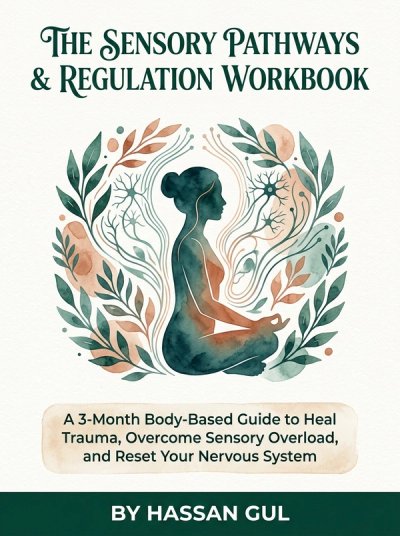 Instant PDF
The Sensory Pathways & Regulation Workbook
A 3-Month (90-Day) Body-Based Guide to Heal Trauma, Overcome Sensory Overload, and Reset Your Nervous System
Quick Answers for Parents & Educators
Recommended Sensory Products
Carefully curated products for a sensory-friendly environment.
Weighted Lap Pad for Kids (3-5 lbs)
BEST FOR CALMING
A 3-5 lb weighted lap pad that provides consistent deep-pressure proprioceptive input during homework, meals, and car rides. Activates the parasympathetic nervous system within 2-3 minutes.
Indoor Sensory Swing for Kids
HIGHEST ROI
Ceiling-mounted sensory swing providing vestibular + proprioceptive input. Linear swinging calms, rotational swinging alerts. Our single most impactful sensory investment.
ARK Therapeutic Chew Necklace
BEST FOR ORAL SEEKERS
Medical-grade silicone chew necklace in 3 resistance levels. Replaces shirt-collar chewing and pencil destruction with safe, regulated oral-motor input.
Wobble Cushion Balance Disc
BEST FOR FOCUS
Inflatable textured disc for chairs providing constant micro-vestibular stimulation during seated tasks. Dramatically improves sustained attention for ADHD and sensory-seeking kids.
Lycra Body Sock Sensory Sack
BEST FOR DECOMPRESSION
Full-body compression envelope providing proprioceptive input from every angle. Perfect for after-school decompression. Kids call it their "cocoon."
Join the Conversation
Get our monthly guide on sensory-aware parenting and neuro-inclusive home design delivered straight to your sanctuary.
Respecting your inbox and your peace of mind.
Discussion (0)
No comments yet. Be the first to share your thoughts!
Leave a Reply
Your email address will not be published. Required fields are marked *