The Free Sensory Diet Template: How to Build a Low-Demand Daily Schedule for Home and School
Editorial Disclosure & Medical Scope: Sensory Kids Books shares neurodiversity-affirming, lived-experience insights and sensory-informed tools for parents, caregivers, and educators. This publication is for educational purposes only and does not constitute formal medical diagnosis, psychiatric evaluation, or clinical occupational therapy advice. Always consult a qualified pediatrician or licensed clinician for individual medical care. As an Amazon Associate, we earn from qualifying purchases through our independent affiliate links at zero extra cost to you.
⚡ Quick Takeaway & Summary for Parents:
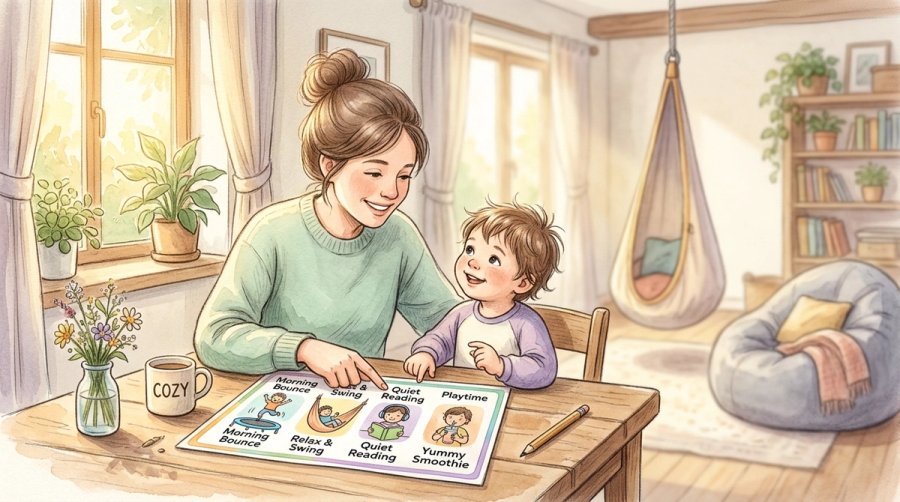
A sensory diet is not a menu of food—it is a planned, proactive schedule of movement and sensory-motor breaks designed to keep a child’s nervous system inside their "just right" band of focus. Waiting until your child is melting down to offer sensory input is reactive and often too late. By organizing activities into 3 clear categories—Alerting, Organizing, and Calming—and embedding predictable 3-to-5 minute sensory micro-breaks across the day (morning launch, classroom/desk focus, after-school decompression, and bedtime wind-down), you can prevent dysregulation before it starts. Download our free 1-page printable sensory diet schedule template below to customize your child's routine.
The "Engine" Principle: Why Proactive Beats Reactive
Think of your child’s nervous system like a high-performance computer CPU or a vehicle engine. Some mornings, the engine runs sluggish and under-clocked—your child struggles to wake up, moves in slow motion, and appears checked out. Other afternoons, the engine is revving in the redline—bouncing off walls, screaming, fidgeting uncontrollably, and on the verge of overheating.
In traditional parenting, we tend to react only when the engine smokes. When a child screams or throws a tantrum at 4:30 PM, we scramble to offer deep pressure or turn off lights. But by the time a full meltdown hits, the child’s prefrontal cortex is offline. The amygdala is in full fight-or-flight.
The purpose of a structured sensory diet template is to move from reactive crisis management to proactive maintenance. Just like an athlete hydrates before running a marathon rather than waiting until dehydration strikes, a sensory diet delivers gentle, scheduled sensory inputs at key intervals throughout the day to keep the engine humming smoothly inside the regulated green zone.
The 3-Column Sensory Diet Menu
Every child’s sensory profile is unique. A child who seeks intense vestibular spinning might be overwhelmed by loud noises, while an under-responsive child might need heavy resistance to register where their limbs are in space. Before filling in a daily timetable, organize your household tools into three distinct functional menus:
🎯 Sensory Diet Menu Category #1: Alerting Inputs (To Wake Up a Sluggish Engine) (Under-Arousal & Low Registration)
Activities that deliver quick, varied, and irregular sensory feedback to stimulate alertness. Use these during groggy mornings, sluggish transitions, or mid-day lethargy. Examples: jumping on a mini-trampoline, cold water sips, crunchy sour apples, rapid linear swinging, or upbeat rhythmic music.
Alerting activities should be monitored carefully. If an under-responsive child suddenly shifts from sleepy to manic hyperactivity, transition immediately to an organizing heavy work activity to ground the energy.
🎯 Sensory Diet Menu Category #2: Organizing & Heavy Work Inputs (To Center a Scattered Engine) (Proprioception & Focus Regulation)
Activities that involve pushing, pulling, lifting, and deep muscle resistance. Proprioceptive input is universally regulating—it calms over-aroused nervous systems while focusing scattered, under-aroused bodies. Examples: carrying heavy book stacks, wall pushes, crawling through fabric tunnels, animal walks (bear walks, crab walks), and sitting on an active balance disc.

⭐ Recommended Tool: Inflatable Wobble Cushion & Active Seating Balance Disc (Best for Desk Focus & Seated Heavy Work)
Delivers continuous, subtle micro-movement and core engagement while seated at school or the homework table. Prevents squirming, anchors focus, and channels restless energy quietly.
shopping_cart👉 Check Price on Amazon (paid link)open_in_new
🎯 Sensory Diet Menu Category #3: Calming Inputs (To Cool Down an Overheating Engine) (Over-Arousal, Anxiety & Sensory Fatigue)
Rhythmic, predictable, and slow inputs that activate the parasympathetic nervous system (rest-and-digest). Use these during after-school restraint collapse, high-stress homework sessions, or before sleep. Examples: slow linear swinging, weighted lap pads, dim warm lighting, noise-reducing ear protection, deep joint squeezes, and sensory pod retreats.

⭐ Recommended Tool: Harkla Indoor Sensory Pod Compression Swing for Kids (Best for Vestibular Calming & Indoor Decompression)
Provides comforting 360-degree cocoon compression and soothing linear vestibular motion. Essential for de-escalating post-school overwhelm and soothing an overstimulated nervous system.
shopping_cart👉 Check Price on Amazon (paid link)open_in_new
📋 Free Download: The 1-Page Fillable Sensory Diet Template & Menu Grid (PDF)
Download our blank, printable daily sensory timetable grid. Features categorized checklists for Alerting, Organizing, and Calming activities with customizable time slots for morning, school, transition, and bedtime.
👉 Download the Free Sensory Diet Template PDF
The 4-Part Daily Sensory Diet Schedule Template
Here is a sample, real-world schedule template designed for neurodivergent kids and sensory-sensitive routines. Adapt the specific activities to match your child’s preferences:
⏰ 7:00 AM – 7:30 AM — The Morning Launch Routine [Alerting + Heavy Work]
• Cold water splash or washcloth to face
• 10 bounces on a mini-trampoline or 5 big bear crawls down the hallway
• Crunchy breakfast: toast with crunchy peanut butter or a thick smoothie sipped through a narrow straw (oral-motor resistance)
• Carrying a backpack packed with favorite books to the car
Starting the day with oral-motor resistance (thick smoothies or crunchy food) provides deep jaw compression that signals the brain to wake up and focus without triggering cortisol spikes.
⏰ 10:30 AM – 1:30 PM — Classroom & Focus Micro-Breaks [Organizing & Proprioception]
• Seated on an inflatable wobble cushion or foot resistance band on chair legs
• 30-second desk chair push-ups between worksheet transitions
• Heavy work errand for the teacher: delivering book bins or carrying a weighted clipboard
• Discreet pocket sensory putty or silent fidget roller during listening circles
⏰ 3:45 PM – 4:30 PM — The Post-School Decompression Reset [Calming & Sensory Deprivation]
• 15 minutes of zero-demand quiet: shoes off, low lighting, no immediate questions about school
• Low-demand crunchy snack from the after-school snack station
• 10 minutes in an indoor compression pod swing or under a heavy beanbag
• Gentle tactile reset: kinetic sand tray or water play before starting homework
Children expend enormous cognitive energy masking and holding their composure during a 6-hour school day. The 4:00 PM decompression window is non-negotiable—skipping straight to homework or chores almost guarantees a late-afternoon meltdown.
⏰ 7:30 PM – 8:30 PM — The Bedtime Grounding Sequence [Deep Touch Pressure & Parasympathetic Wind-Down]
• Warm bath with lavender or Epsom salts (magnesium absorption)
• Firm towel wrap and "burrito roll" in a soft blanket
• Weighted lap pad on thighs while reading a bedtime storybook
• Low auditory white noise or pink noise running continuously in bedroom
Connecting Daily Sensory Systems to Home Order
A sensory diet works best when the surrounding physical environment supports low-stress regulation. Combine your daily schedule with these practical home systems:
• For a deep dive into all 45 sensory activities across 8 sensory systems, read: Sensory Diet for Kids: The Complete Parent Guide (+ Daily Schedules & 45+ Activities).
• Eliminate clutter overwhelm and prevent toy dumping using: The Low-Overwhelm Toy Rotation System: How a 4-Bin Cycle Ends Clutter Paralysis.
• Prevent post-school energy crashes and hunger meltdowns with: The Calm After-School Snack Station: How a Low-Demand Food Basket Prevents the 4 PM Meltdown.
Supportive Workbooks & Visual Tools from Our Library
At Sensory Kids Books, we create neurodiversity-affirming workbooks, visual schedule toolkits, and low-demand planners designed to help families thrive:
📖 The ADHD & PDA Anti-Planner: Visual Systems for Overcoming Task Paralysis — A low-demand visual guide packed with dopamine menus, flexible routine charts, and clutter-free executive function trackers.
📖 My Calm Down Corner Workbook & Visual Toolkit — Over 50 pages of visual calming strategies, emotion thermometers, and sensory space printables.
📖 52 Modern Manners for Teens & Young Adults [Free PDF Sample] — Practical social-emotional flashcards and real-world independence scripts for neurodivergent teens.
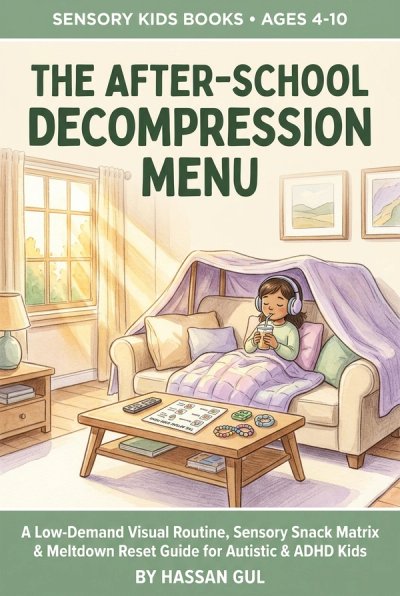 Instant PDF
The After-School Decompression Menu
A Low-Demand Visual Routine, Sensory Snack Pairing Matrix & Meltdown Reset Guide for Autistic & ADHD Kids
Recommended Sensory Products
Carefully curated products for a sensory-friendly environment.

Weighted Lap Pad
BEST FOR FOCUS
Providing 5lbs of gentle pressure to help children stay grounded during long reading sessions.

Dimmable Warm LED
SENSORY FRIENDLY
Flicker-free technology with adjustable color temperatures to prevent eye strain.
📚 Evidence-Based Sources & Citations
Peer-reviewed literature, clinical frameworks, and foundational neurodiversity resources referenced in this guide.
- Occupational Therapy Practice Framework: Domain and Process (4th Edition) — American Occupational Therapy Association (AOTA)(2020)View Sourceopen_in_new
- The Polyvagal Theory: Neurophysiological Foundations of Emotions, Attachment, Communication, and Self-Regulation — Dr. Stephen W. Porges, PhD(2011)View Sourceopen_in_new
- Understanding Pathological Demand Avoidance (PDA): Identifying Needs & Low-Demand Approaches — PDA Society UK(2023)View Sourceopen_in_new
- Sensory Processing Issues Explained: Supporting Children with Sensory Sensitivities — Child Mind Institute(2024)View Sourceopen_in_new
Join the Conversation
Get our monthly guide on sensory-aware parenting and neuro-inclusive home design delivered straight to your sanctuary.
Respecting your inbox and your peace of mind.
Leave a Reply
Your email address will not be published. Required fields are marked *