The Low-Overwhelm Toy Rotation System: How a 4-Bin Cycle Ends Clutter Paralysis and Resets Play
Editorial Disclosure & Medical Scope: Sensory Kids Books shares neurodiversity-affirming, lived-experience insights and sensory-informed tools for parents, caregivers, and educators. This publication is for educational purposes only and does not constitute formal medical diagnosis, psychiatric evaluation, or clinical occupational therapy advice. Always consult a qualified pediatrician or licensed clinician for individual medical care. As an Amazon Associate, we earn from qualifying purchases through our independent affiliate links at zero extra cost to you.
⚡ Quick Takeaway & Summary for Parents:
When a playroom is overflowing with dozens of accessible toys, children do not play deeper—they experience choice paralysis, visual fatigue, and executive dysfunction. The common reaction is dumping entire toy bins onto the carpet without engaging with anything. By implementing a low-overwhelm 4-bin toy rotation system—storing 80% of inventory out of sight in a closet and displaying only 4 curated categories on an open low shelf—you dramatically reduce sensory overload, spark longer independent play, and make cleanup painless for both you and your child.
The Paradox of the "Toy Mountain": Why More Toys Create Less Play
If your child has an entire bedroom or playroom full of toys, yet you routinely hear the words "I am bored!" or watch them dump three massive plastic containers onto the rug and walk away after 45 seconds, you are not alone.
To an adult, an abundance of play options looks like generosity and endless entertainment. But to a child with ADHD, autism, or sensory processing sensitivities, an open toy box filled with 70 mismatched items is visual noise. In software engineering, when a memory buffer is flooded with unindexed data packets, the operating system locks up and drops processes. In a child’s brain, an over-stimulating environment triggers executive function paralysis: the sensory cortex is so bombarded by competing colors, shapes, and textures that the child cannot initiate play.
Developmental research and pediatric occupational insights consistently demonstrate the "fewer toys, higher focus" principle: when children are presented with only 4 to 6 deliberate play options at eye level, their play sessions become significantly longer, their imaginative exploration deepens, and their nervous system remains regulated.
What Is a Toy Rotation System?
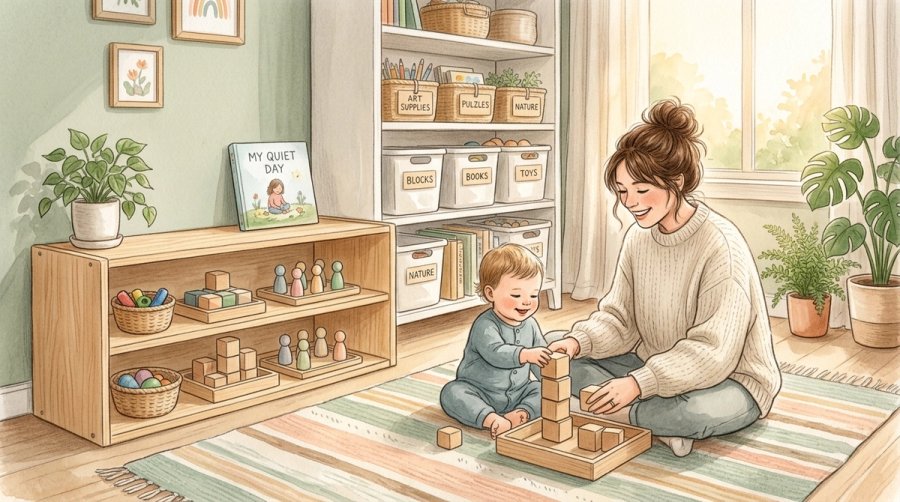
A toy rotation system is an intentional home organization routine where the majority of your child’s toys are stored away out of sight (in a closet, garage, or opaque storage tubs), while a small, curated selection of 4 to 8 items is displayed on open, accessible low shelves.
Every week or two, you simply swap out the active toys for a few boxed items from storage. Because toys disappear from daily view, when they reappear two weeks later, they feel brand new. You stop spending money on cheap plastic novelty, eliminate the 30-minute evening cleanup battle, and create a tranquil, low-demand play space.
The 4-Category Toy Rotation Framework for Sensory Overwhelm
Many parents fail at toy rotation because they try to create overly rigid, Pinterest-perfect themes that require hours of categorization every weekend. When a system is complicated, parents burn out by day ten.
Instead, our neurodiversity-affirming framework relies on 4 simple functional categories based on how the body and brain need to regulate throughout the day:
📦 Category Bin #1: Movement & Heavy Work Toys (Proprioceptive & Vestibular Grounding)
Items that burn off physical restlessness, provide deep joint compression, and satisfy the urge to jump, push, or balance. Includes wobble cushions, stepping stones, indoor resistance bands, and soft weighted plush.
Children who are under-responsive or seeking sensory input frequently crash into couches or pace around the room because their muscles crave feedback. Having one dedicated heavy work item easily accessible on the lower shelf lets them self-regulate before frustration builds.
📦 Category Bin #2: Deep Focus & Fine Motor Builders (Visual-Spatial Planning)
Open-ended constructive sets that encourage quiet concentration and problem-solving without batteries or flashing lights. Includes wooden stacking blocks, magnetic tiles, interlocking gears, and simple pegboards.
Instead of leaving out a 200-piece mega set that scatters across the entire floor, put out a small tray with 25-30 magnetic tiles or wooden blocks. Limiting the quantity forces creative spatial thinking and prevents the intimidation of cleaning up hundreds of loose pieces.

⭐ Recommended Tool: Stackable Clear Storage Bins with Secure Latching Lids (6-Pack) (Best for Closet Toy Storage & Reserve Inventory)
Opaque or clear heavy-duty modular bins engineered for closet rotation systems. Stackable design keeps reserve toys dust-free, organized by category, and completely out of sight until rotation day.
shopping_cart👉 Check Price on Amazon (paid link)open_in_new
📦 Category Bin #3: Tactile & Sensory Exploration Trays (Calming Nervous System Reset)
Materials that offer soothing, non-directed tactile satisfaction. Includes kinetic sand trays, mess-free squish pads, water bead sensory bottles, textured silicone mats, or dry colored pasta.
Tactile play works as an immediate emotional reset button during difficult transitions, like after school or before dinner. Keep sensory materials contained inside a dedicated shallow tray with raised lip borders so spills stay manageable.

⭐ Recommended Tool: Deep Rim Sensory Play Tray with Compartment Dividers (Best for Contained Low-Mess Sensory Play)
Sturdy, non-toxic sensory activity tray with raised spill guards. Perfect for containing kinetic sand, water beads, puzzle pieces, or craft activities on open rotation shelves.
shopping_cart👉 Check Price on Amazon (paid link)open_in_new
📦 Category Bin #4: Quiet Imaginary Play & Storytelling (Social-Emotional Narrative)
Figures, animal figurines, soft dress-up accessories, or 2 to 3 engaging children’s books with sensory themes. Allows children to process feelings, role-play social scenarios, and unwind quietly.
Select 3 standalone picture books and stand them forward-facing so the cover art is visible, rather than packed spine-out on a crowded bookshelf. When books are displayed like artwork on an open shelf, kids reach for them independently.
📋 Free Download: The 4-Category Toy Rotation Cheat Sheet & Label Kit
Ready to organize your play space this weekend? Download our free 1-page visual category breakdown, including printable storage tub labels and a frictionless bi-weekly swap schedule to tape inside your storage closet.
👉 Download Free Toy Rotation Printable Kit
Step-by-Step: How to Set Up Your Toy Rotation in One Afternoon
You do not need an entire weekend or custom carpentry to launch your toy rotation system. Follow this straightforward 4-step process:
Step 1: The Harsh Out-of-Sight Purge. Take every toy in the room and sort them into piles. Throw away broken items and donate toys your child has outgrown. Take 75% to 80% of what remains and pack them into 3 or 4 large storage tubs labeled "Reserve Rotation." Store these tubs out of sight in a top closet, garage, or under a guest bed. If kids can see the tubs, they will demand you open all of them.
Step 2: Set Up an Eye-Level Low Display Shelf. Use a 2-shelf open wooden bookcase or low cubby unit. Place only 4 to 6 items across the shelves, leaving generous empty space around each item. Visual breathing room on the shelf is what invites calm, focused curiosity.
Step 3: Establish a Low-Pressure Swap Schedule. Do not attempt a complete 100% overhaul every Sunday night—that creates parent exhaustion. Instead, do "micro-rotations." Every other Sunday or every two weeks, simply swap 2 or 3 items from your reserve closet for 2 or 3 items on the shelf. If your child is currently deeply obsessed with their magnetic tiles, leave the tiles in place and only swap the sensory tray and puzzle.
Step 4: Keep Favorite Comfort Items Out of the Rotation. Special attachment items—such as a beloved teddy bear, security blanket, or daily quiet fidget—should NEVER be put away in rotation tubs. Rotations are for play toys, not emotional regulation anchors.
Connecting Play Spaces to Predictable Family Systems
A low-overwhelm play space is just one component of a predictable, sensory-friendly home. When daily transitions, evening preparation, and snack routines are dialed in, children experience far fewer meltdowns throughout the day.
• Pair your play space with our stress-free evening framework: The Sunday Evening Launchpad: 4 Stress-Free Family Systems to Prep for School.
• Prevent post-school energy crashes and meltdowns with: The Calm After-School Snack Station: How a Low-Demand Food Basket Prevents the 4 PM Meltdown.
• For hygiene and grooming without tears, read: The Sensory-Friendly Haircut Guide: 5 Gentle Home Habits to Prevent Tears and Sensory Overload.
Supportive Workbooks & Visual Tools from Our Library
At Sensory Kids Books, our mission is to provide children and parents with actionable, beautifully illustrated tools that make daily routines, emotional regulation, and neurodiversity-affirming life practical and joyful.
📖 The ADHD & PDA Anti-Planner: Visual Systems for Overcoming Task Paralysis — A low-demand, visual guide filled with flexible daily routines, dopamine menus, and clutter-free organization checklists for kids and teens.
📖 52 Modern Manners for Teens & Young Adults [Free PDF Sample] — Bite-sized, social-emotional cards and real-world executive functioning habits for growing independence.
📖 My Calm Down Corner Workbook & Visual Toolkit — Practical visual breathing cards, emotion thermometers, and sensory space printables to support calm regulation at home.
⏰ Coordinate Play Spaces with Daily Sensory Schedules:
Pair your organized low-stimulus rotation shelves with planned movement breaks. Explore our complete timetable guide in The Free Sensory Diet Template.
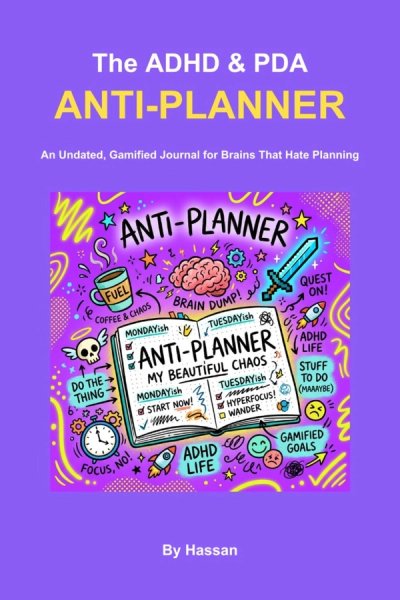 Instant PDF
The ADHD & PDA Anti-Planner
An Undated, Low-Demand Gamified Planner & Focus Journal for Neurodivergent Minds
Recommended Sensory Products
Carefully curated products for a sensory-friendly environment.

Weighted Lap Pad
BEST FOR FOCUS
Providing 5lbs of gentle pressure to help children stay grounded during long reading sessions.

Dimmable Warm LED
SENSORY FRIENDLY
Flicker-free technology with adjustable color temperatures to prevent eye strain.
📚 Evidence-Based Sources & Citations
Peer-reviewed literature, clinical frameworks, and foundational neurodiversity resources referenced in this guide.
- Occupational Therapy Practice Framework: Domain and Process (4th Edition) — American Occupational Therapy Association (AOTA)(2020)View Sourceopen_in_new
- The Polyvagal Theory: Neurophysiological Foundations of Emotions, Attachment, Communication, and Self-Regulation — Dr. Stephen W. Porges, PhD(2011)View Sourceopen_in_new
- Understanding Pathological Demand Avoidance (PDA): Identifying Needs & Low-Demand Approaches — PDA Society UK(2023)View Sourceopen_in_new
- Sensory Processing Issues Explained: Supporting Children with Sensory Sensitivities — Child Mind Institute(2024)View Sourceopen_in_new
Join the Conversation
Get our monthly guide on sensory-aware parenting and neuro-inclusive home design delivered straight to your sanctuary.
Respecting your inbox and your peace of mind.
Leave a Reply
Your email address will not be published. Required fields are marked *