The Sensory-Friendly Haircut Guide: 5 Gentle Home Habits to Prevent Tears, Sensory Overload, and Trimmer Fears
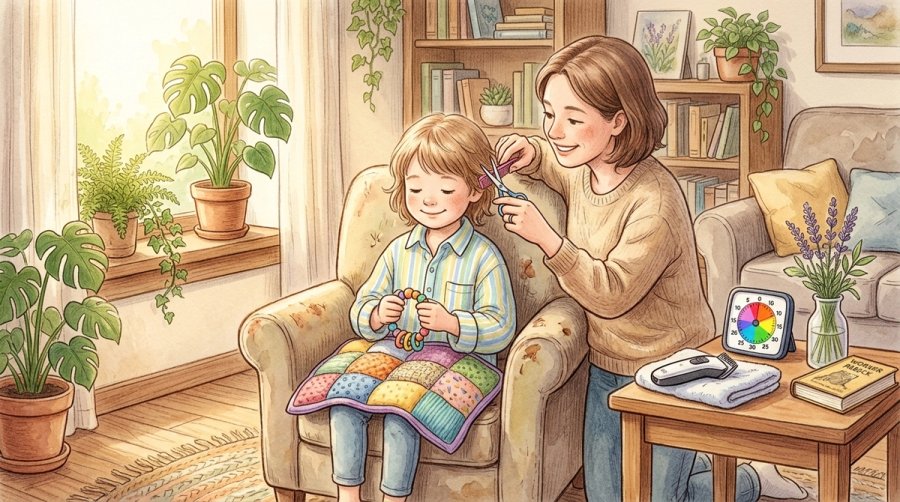
Haircut meltdowns are a common response to severe sensory overload. Learn 5 practical, low-demand home habits—from vibration desensitization to soft shirt capes and weighted lap pads—to make haircuts gentle and tear-free.
Editorial Disclosure & Medical Scope: Sensory Kids Books shares neurodiversity-affirming, lived-experience insights and sensory-informed tools for parents, caregivers, and educators. This publication is for educational purposes only and does not constitute formal medical diagnosis, psychiatric evaluation, or clinical occupational therapy advice. Always consult a qualified pediatrician or licensed clinician for individual medical care. As an Amazon Associate, we earn from qualifying purchases through our independent affiliate links at zero extra cost to you.
⚡ Quick Takeaway & Summary for Parents:
Haircut meltdowns are rarely about defiant behavior—they are the predictable result of extreme sensory overload. When cold metal blades, loud motor vibrations against skull bones, suffocating scratchy nylon capes, and tiny prickly falling hairs attack a sensitive child simultaneously, their nervous system enters full fight-or-flight. By shifting haircuts to the safety of home and using 5 gentle habits—vibration desensitization through play, soft cotton shirt capes, weighted lap pads, sound-damping ear protection, and visual chunking—you can eliminate tears and transform haircut day into a calm, cooperative routine.
Why Haircuts Trigger the Flight-or-Fight Response
To an adult, a haircut is a routine 20-minute grooming task. But if you analyze a traditional salon haircut through the senses of a child with tactile, auditory, or vestibular sensitivities, it reads like an assault course.
Think about what is happening all at once: unfamiliar fluorescent salon lighting, chemical smells from hair dyes, loud chatter, a slippery plastic cape tightly cinched around the neck, and an unfamiliar adult standing over them wielding sharp metal instruments near their eyes and ears. Then comes the trimmer—a loud, high-pitched mechanical motor pressed directly against the mastoid bone behind the ear, vibrating straight into the auditory canal.
As a software architect and a parent of neurodivergent children, I view household resistance as a system boundary crash. In software, if a process receives conflicting, overwhelming inputs on multiple ports simultaneously without a buffer, the entire thread locks up. When your child screams, flails, or dodges scissors, their nervous system is doing exactly what it was designed to do: defending itself against what it perceives as danger.
The good news is that home haircuts can be completely re-engineered. By controlling the sensory environment, pacing the cuts, and substituting harsh salon tools with gentle alternatives, you can make haircut day peaceful and tear-free.
The 5 Gentle Habits for Tear-Free Home Haircuts
You do not need professional barber training to give your child a clean, comfortable haircut. What you need is sensory predictability and low-demand pacing. Here are the 5 practical home habits that changed everything for our family.
✂️ Haircut Habit #1: Desensitize the Trimmer Buzz Days Before the Cut (Vibration Familiarization)
Springing a buzzing, vibrating electric clipper directly onto a sensitive scalp causes instant panic. Introducing the trimmer days in advance through playful touch builds comfort and eliminates fear of the unknown.
Children fear what they cannot predict. If the first time your child hears an electric razor is when it is already behind their ears, their adrenaline spikes instantly.
Three days before haircut day, take out the clippers while watching a movie or playing. Turn the motor on across the room so the sound becomes ambient background noise. Slowly let your child hold the clippers, feeling the gentle hum in their palm. Next, gently touch the back (the flat, smooth plastic casing—never the blade) to their elbow, collarbone, and cheeks like a playful "tickle machine." When they realize the vibration does not hurt, the clipper loses its scary monster status.
⭐ Recommended Tool: Ultra-Quiet Low-Vibration Kids Hair Clippers with Ceramic Blades (Best for Clipper Sound Sensitivity)
Engineered with an ultra-silent motor (<50dB) and rounded R-shaped ceramic teeth that protect sensitive skin. Cordless, waterproof, and gentle on sensory-sensitive scalps.
shopping_cart👉 Check Price on Amazon (paid link)open_in_new
✂️ Haircut Habit #2: Ditch the Scratchy Nylon Cape (The Soft Shirt Swap) (Tactile Barrier Redesign)
Traditional salon capes are made of slippery, suffocating polyester that creates static, traps body heat, and allows prickly cut hairs to slide straight down the collar into sensitive skin. Swapping to a soft cotton button-down shirt eliminates the itching nightmare.
For children with tactile defensiveness, tiny hair slivers pricking their neck and spine feel like needles. A standard nylon cape rustles loudly against their ears and creates a hot, sweaty greenhouse around their neck that intensifies the itch.
Instead, take an oversized adult 100% soft flannel or cotton button-down shirt and put it on your child backward, buttoning just one or two buttons at the nape of the neck. Cotton naturally breathes and grips the falling hair so it does not slide down their back. Around the collar line, wrap a soft microfiber towel or apply a light dusting of talc-free powder to create a hair-tight seal.
⭐ Recommended Tool: Soft Barber Neck Duster Brush & Neck Strips (Best for Post-Cut Itch Relief)
Super-soft wool bristles sweep away stray itchy hairs immediately without scratching delicate skin. Pair with flexible paper neck strips for an itch-free collar barrier.
shopping_cart👉 Check Price on Amazon (paid link)open_in_new
✂️ Haircut Habit #3: Ground the Nervous System with a Weighted Lap Pad (Proprioceptive Body Anchoring)
Sitting still without tactile feedback causes intense vestibular restlessness. Placing a 3-5 lb weighted lap pad across their thighs provides deep touch pressure that calms the central nervous system and minimizes squirming.
When you ask a sensory-sensitive child to "sit perfectly still and don't move your head," you are demanding massive executive control that their body cannot sustain. Without sensory input, their brain craves movement.
Before turning on any scissors or clippers, seat your child in a supportive chair where their feet can firmly touch a footstool or floor. Drape a soothing weighted lap pad across their lap. Deep pressure triggers the parasympathetic nervous system, lowering heart rate and releasing dopamine, which naturally reduces involuntary flinching.

⭐ Recommended Tool: Fun and Function Sensory Weighted Lap Pad for Kids (Best for Seated Proprioceptive Grounding)
Evenly distributed weighted micro-beads deliver comforting deep touch pressure while seated. Features a soft, wipeable plush cover that keeps kids grounded and still during haircuts.
shopping_cart👉 Check Price on Amazon (paid link)open_in_new
📋 Autism & ADHD Visual Daily Routine Pack ($7.99 / $14.99)
Need visual haircut transition cards, first-then boards, and grooming schedules? Our printable routine toolkit includes over 120 visual icon prompt cards to prepare children visually before hygiene routines begin.
👉 Get the Visual Daily Routine Pack on Sensory Kids Books
✂️ Haircut Habit #4: Protect Sensitive Ears & Occupy Restless Hands (Auditory Damping & Fidget Redirection)
The sound of scissors snipping inches away from the ear canal can feel physically sharp. Giving your child sound-damping earplugs and a silent fidget toy keeps their ears protected and their hands safely away from the blades.
Children reflexively raise their hands to swat away scissors or clippers when they feel startled. This reflex is dangerous when sharp shears are in motion. Telling them "keep your hands down" often fails because it goes against their survival instinct.
Give their hands a designated, satisfying job. Place a silent tactile fidget—like a textured ONO roller, silicone marble maze, or pop-it—directly in their hands under the weighted pad. If the hum of clippers causes auditory distress, insert flexible sound-reducing earplugs like Loop Engage, which attenuate loud mechanical noise while still allowing them to hear your reassuring voice.

⭐ Recommended Tool: Loop Engage Kids Sound-Reducing Earplugs (Best for Auditory Overload Protection)
Certified hearing protection that takes the harsh edge off clipper motors and snip noises without muffling speech. Soft silicone tips provide all-day comfort for sensitive ears.
shopping_cart👉 Check Price on Amazon (paid link)open_in_new

⭐ Recommended Tool: ONO Roller Junior Silent Hand Fidget (Best for Silent Lap Fidgeting)
A smooth, completely silent aluminum sensory fidget that rotates effortlessly in small hands. Keeps restless fingers engaged in their lap so they never reach toward haircut tools.
shopping_cart👉 Check Price on Amazon (paid link)open_in_new
✂️ Haircut Habit #5: Chunk the Haircut into 4 Visual Zones with Mandatory Wiggle Breaks (Predictable Time Boundaries)
An open-ended haircut feels like an endless ordeal. Dividing the haircut into 4 numbered steps with a visual timer and a scheduled 2-minute movement break prevents sensory depletion.
When kids don’t know when an uncomfortable experience will end, their endurance evaporates. By introducing visual milestones, you turn an intimidating ordeal into a predictable, manageable challenge.
Map out the haircut in 4 simple stages: 1) Bangs & Front, 2) Left Side, 3) Right Side, 4) Back of the Neck. Set a visual timer for 6 minutes per chunk. After finishing stage 2, pause completely. Unclip the shirt, let them stand up, shake their limbs out, drink some cold water, or jump on a sensory cushion for two minutes. Giving them back control of their body resets their endurance battery for the final half.

⭐ Recommended Tool: Time Timer MOD 60-Minute Visual Countdown Timer (Best for Visual Time Awareness)
The classic disappearing colored disk that shows time passing without a ticking noise. Allows your child to visually monitor how many minutes remain in each haircut segment.
shopping_cart👉 Check Price on Amazon (paid link)open_in_new
📋 The ADHD & PDA Anti-Planner ($8.99)
Designed for neurodivergent kids and teens who resist rigid tasks. Features low-demand visual pacing menus, emotional check-in trackers, and flexible self-care routines.
👉 Explore The Anti-Planner in Our Shop
The Immediate Post-Cut Reset: Warm Shower & Fresh Clothes
Even with the best cape alternatives, a few microscopic hair fragments will inevitably land on skin. Do not let your child sit on the sofa or play in their cut clothes.
The instant the haircut ends, celebrate with praise and move straight into a warm, gentle rinse in the shower or bath. Wash away all stray hairs with a soothing body wash. Put on freshly laundered, tagless pajamas or cozy loungewear. When your child associates the end of a haircut with an immediate, comfortable warm shower and cozy clothing, the overall memory of the haircut shifts from traumatic to pleasant.
Free Interactive Tools on Sensory Kids Books
Support your grooming and daily self-care routines with our free interactive web tools:
• Build a customized, printable step-by-step grooming card sequence with our free Visual Daily Routine Schedule Generator to help children anticipate every stage of grooming.
• Schedule calming proprioceptive heavy work and calming inputs before haircuts using our interactive Sensory Diet Schedule Generator tailored to sensitive nervous systems.
Final Thoughts: Prioritize the Connection Over the Cut
The single most important rule of sensory-friendly haircuts is simple: the relationship is always more important than a perfect fade.
If your child reaches their limit after 10 minutes and you have only cut one side of their hair, stop. Take a breath, validate their effort, and finish the other side tomorrow. A slightly uneven haircut for 24 hours is an infinitely better outcome than forcing a child through panic and eroding their trust.
When your child discovers that you will listen to their "stop" signal, their fear diminishes. Over time, as trust and predictable sensory accommodations take root, haircuts will transform from a dreaded battleground into a calm, gentle home ritual.
 Instant PDF
The PDA & Low-Demand Parenting Workbook for Kids
A Declarative Language & Co-Regulation Guide to Reduce Meltdowns, Build Autonomy, and Navigate Daily Routines with Pathological Demand Avoidance
Recommended Sensory Products
Carefully curated products for a sensory-friendly environment.

Weighted Lap Pad
BEST FOR FOCUS
Providing 5lbs of gentle pressure to help children stay grounded during long reading sessions.

Dimmable Warm LED
SENSORY FRIENDLY
Flicker-free technology with adjustable color temperatures to prevent eye strain.
📚 Evidence-Based Sources & Citations
Peer-reviewed literature, clinical frameworks, and foundational neurodiversity resources referenced in this guide.
- Occupational Therapy Practice Framework: Domain and Process (4th Edition) — American Occupational Therapy Association (AOTA)(2020)View Sourceopen_in_new
- The Polyvagal Theory: Neurophysiological Foundations of Emotions, Attachment, Communication, and Self-Regulation — Dr. Stephen W. Porges, PhD(2011)View Sourceopen_in_new
- Understanding Pathological Demand Avoidance (PDA): Identifying Needs & Low-Demand Approaches — PDA Society UK(2023)View Sourceopen_in_new
- Sensory Processing Issues Explained: Supporting Children with Sensory Sensitivities — Child Mind Institute(2024)View Sourceopen_in_new
Join the Conversation
Get our monthly guide on sensory-aware parenting and neuro-inclusive home design delivered straight to your sanctuary.
Respecting your inbox and your peace of mind.
Leave a Reply
Your email address will not be published. Required fields are marked *