local_shipping Instant Digital Delivery Worldwidesupport_agent Sensory Support 24/7
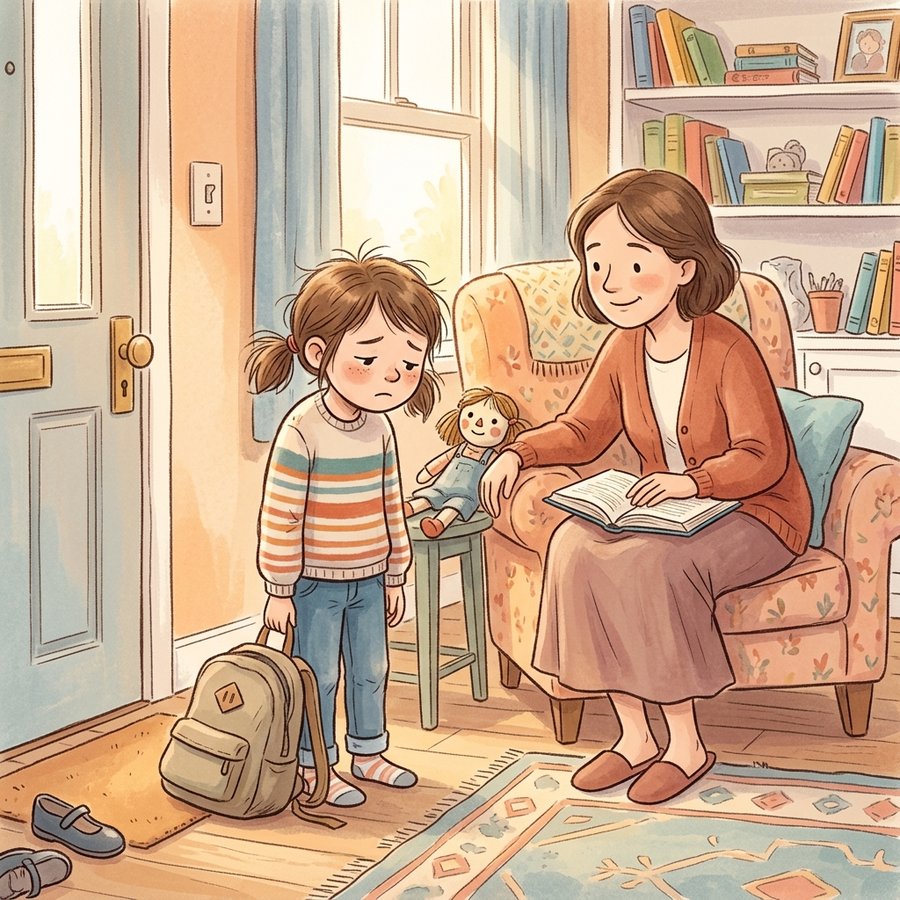
You pick them up from school. The teacher smiles and says, "They were an absolute angel today!" You feel a wave of relief. But the second the car door closes—or the moment they step through the front door—it happens. The screaming, the throwing, the absolute unraveling.
Welcome to after-school restraint collapse. If your child has a Pathological Demand Avoidance (PDA) profile or is autistic, this daily cycle is exhausting. But there is a way to break it: low-demand parentingand declarative language.
What is After-School Restraint Collapse?
For neurodivergent kids, school is a sensory and social minefield. They spend 7 hours "masking"—suppressing their natural sensory needs and forcing themselves to comply with endless demands. By 3:00 PM, their nervous system is entirely depleted.
When they finally reach their "safe space" (you and your home), the dam breaks. The meltdown isn't bad behavior; it is a physiological release of pent-up stress.
Why Traditional Parenting Fails PDA Kids
Traditional parenting tells us to immediately enforce routines: "Hang up your coat," "Wash your hands," "How was your day?"
For a child with a PDA profile, any perceived demand—even a well-meaning question—triggers a fight-or-flight threat response in the amygdala. To their exhausted brain, "How was your day?" feels like a massive demand to perform socially.
Strategy 1: The "Zero-Demand" Landing Zone
The first hour after school should be completely devoid of demands. This is the core of low-demand parenting.
- Embrace Silence: Do not ask questions when they get in the car. Just offer a smile and a quiet environment.
- Drop the Chores: Backpacks can stay on the floor. Shoes can be kicked off wherever. Right now, regulation is more important than tidiness.
- Sensory Snacks: Have their favorite safe snack ready. If they are sensory seekers, this is the perfect time for heavy work activitiesto ground their nervous system.
Strategy 2: The Magic of Declarative Language
When you do need to communicate, you must bypass the PDA threat response. We do this by switching from Imperative Language(direct commands/questions) to Declarative Language(statements of observation or shared reality).
What to Say vs. What NOT to Say (Script Examples)
- Instead of: "Go wash your hands for a snack!" (Imperative/Demand)
Try: "I noticed your hands have some marker on them. The snack is on the table when you're ready." (Declarative/Observation) - Instead of: "How was the playground today?" (Imperative/Demand to perform)
Try: "I saw it was really sunny at the playground today." (Declarative/Invites them to share if they want to) - Instead of: "Stop yelling at me!" (Imperative/Escalates conflict)
Try: "I can see you are having a really hard time right now. I am right here." (Declarative/Validates emotion)
By simply making an observation, you remove the demand. The child's nervous system doesn't feel trapped, which drastically reduces the likelihood of a meltdown.
Frequently Asked Questions (AEO/GEO Optimization)
What is an example of declarative language for PDA?
Declarative language involves stating facts or your own thoughts out loud without requiring the child to respond. For example, instead of "Put your shoes on," you say, "It’s time to leave in 5 minutes, and I see your shoes are still by the door." It invites cooperation rather than demanding compliance.
Is low demand parenting the same as permissive parenting?
No. Permissive parenting avoids boundaries. Low-demand parenting strategically removes *unnecessary* demands to preserve a child's limited nervous system capacity for the things that truly matter (like safety and core regulation).