Somatic Grounding: How to Stop Sensory Overload Without Using Words

When a neurodivergent child is in full sensory overload or trauma response, talking to them actually makes it worse. Learn how to use body-centered somatic grounding to bypass the overwhelmed brain and signal safety.
Editorial Disclosure & Medical Scope: Sensory Kids Books shares neurodiversity-affirming, lived-experience insights and sensory-informed tools for parents, caregivers, and educators. This publication is for educational purposes only and does not constitute formal medical diagnosis, psychiatric evaluation, or clinical occupational therapy advice. Always consult a qualified pediatrician or licensed clinician for individual medical care. As an Amazon Associate, we earn from qualifying purchases through our independent affiliate links at zero extra cost to you.
Have you ever tried to reason with your child during a massive sensory meltdown, only to watch them escalate even further? You are using perfectly logical, soothing words, but it’s like they literally cannot hear you.
That’s because they can’t.
Why Talking Doesn’t Work During Overload
When the neurodivergent brain gets hit with too much sensory input (or triggered by trauma), the amygdala—the brain’s fire alarm—takes over. It triggers a massive "fight, flight, or freeze" response. When this happens, the prefrontal cortex—the part of the brain responsible for logic, language, and reasoning—essentially goes offline.
You cannot logic your way out of nervous system dysregulation. Instead, you have to use a "bottom-up" approach. You have to speak directly to the body.
What is Somatic Grounding?
Somatic grounding techniques are physical, body-centered practices that bypass the language centers of the brain and send direct physical cues to the nervous system that you are safe.
- Proprioceptive Grounding: Stomping feet heavily on the ground, or pressing the back against a solid wall. This tells the brain exactly where the body is in physical space, which reduces the feeling of floating or dissociation.
- Deep Pressure Therapy: Using a shopping_cartCooling Weighted Blanketopen_in_new triggers the parasympathetic nervous system to lower heart rate and cortisol levels. (Check Price on Amazon)
- Vagus Nerve Stimulation: Humming a low tone, gargling water, or splashing cold water on the face instantly stimulates the vagus nerve to force a biological "reset."
Building a Somatic Toolbox
Just like managing OCD and intrusive thoughts, the trick is having tools ready BEFORE the meltdown hits. Have your child try out a shopping_cartSensory Body Sockopen_in_new during a calm moment so their body remembers the feeling of safety when they actually need it. (Check Price on Amazon)
Related Guide: How to Build an ADHD Dopamine Menu to Beat Task Paralysis
Related Guide: How to Build a Calm Down Corner (That Isn't a Punishment)
Related Guide: How to Build a DIY Sensory Pathway at Home for Autism & ADHD
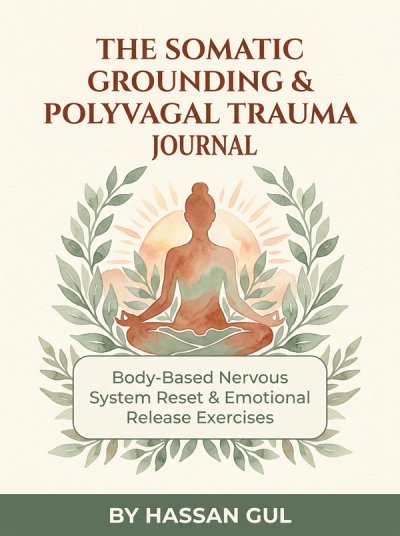 Instant PDF
The Somatic Grounding & Polyvagal Trauma Journal
A 3-Month (90-Day) Body-Based Nervous System Reset & Emotional Healing Guided Journal
Recommended Sensory Products
Carefully curated products for a sensory-friendly environment.
Provides full-body deep pressure proprioceptive input to instantly ground a dysregulated nervous system.
Helps activate the parasympathetic nervous system (rest and digest) to bring the body out of fight-or-flight.
📚 Evidence-Based Sources & Citations
Peer-reviewed literature, clinical frameworks, and foundational neurodiversity resources referenced in this guide.
- Occupational Therapy Practice Framework: Domain and Process (4th Edition) — American Occupational Therapy Association (AOTA)(2020)View Sourceopen_in_new
- The Polyvagal Theory: Neurophysiological Foundations of Emotions, Attachment, Communication, and Self-Regulation — Dr. Stephen W. Porges, PhD(2011)View Sourceopen_in_new
- Understanding Pathological Demand Avoidance (PDA): Identifying Needs & Low-Demand Approaches — PDA Society UK(2023)View Sourceopen_in_new
- Sensory Processing Issues Explained: Supporting Children with Sensory Sensitivities — Child Mind Institute(2024)View Sourceopen_in_new
Join the Conversation
Get our monthly guide on sensory-aware parenting and neuro-inclusive home design delivered straight to your sanctuary.
Respecting your inbox and your peace of mind.
Leave a Reply
Your email address will not be published. Required fields are marked *