Vocal Stimming in Autism & ADHD: What It Is, Why Kids Do It, and How to Support
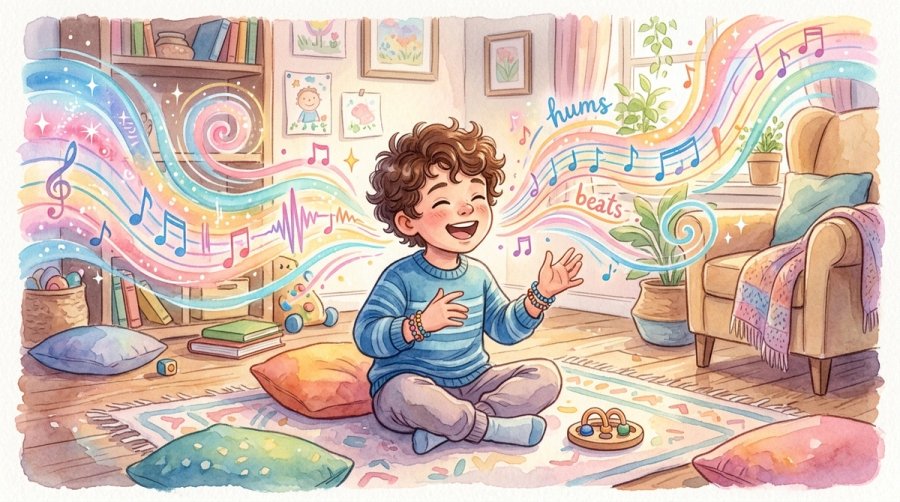
Discover practical, neuro-affirming guidance, sensory regulation strategies, and lived-experience insights on Vocal Stimming in Autism & ADHD: What It Is, Why Kids Do It, and How to Support.
Editorial Disclosure & Medical Scope: Sensory Kids Books shares neurodiversity-affirming, lived-experience insights and sensory-informed tools for parents, caregivers, and educators. This publication is for educational purposes only and does not constitute formal medical diagnosis, psychiatric evaluation, or clinical occupational therapy advice. Always consult a qualified pediatrician or licensed clinician for individual medical care. As an Amazon Associate, we earn from qualifying purchases through our independent affiliate links at zero extra cost to you.
If your child spends their afternoons humming high-pitched melodies, clicking their tongue at rapid-fire speed, repeating the exact audio line from their favorite animated movie fifty times in a row, or squealing when they enter a noisy grocery store, you have likely encountered vocal stimming.
As a parent navigating the sensory-intense world of neurodivergence, I know firsthand the instinctive reaction many caregivers experience early on: "Why are they making that noise? Are they distressed? Is something wrong? How do I get them to be quiet in public?"
For decades, traditional behavioral paradigms treated vocalizations as "disruptive behaviors" that needed to be extinguished, shushed, or redirected at all costs. But modern neurobiology and lived autistic experience reveal a profoundly different truth: vocal stimming is not random noise. It is an essential, highly sophisticated nervous system regulation tool.
In this comprehensive guide, we will break down the exact neurology behind vocal stimming in both Autism and ADHD, explore real-life examples (from echolalia to auditory proprioception), and provide practical, shame-free ways to support your child at home and in the classroom.
What is Vocal Stimming? (Auditory Stimming Explained)
Stimming—short for self-stimulatory behavior—refers to repetitive physical movements, sounds, or tactile actions that help a person regulate their sensory input, soothe anxiety, maintain focus, or express intense internal emotion.
While physical stimming often involves hand-flapping, rocking, pacing, or finger-flicking, vocal stimming (also known as auditory or oral-motor stimming) utilizes the vocal cords, diaphragm, tongue, throat, and mouth to create sound and internal resonance.
The Key Takeaway for Parents: Vocal stimming is not a defiance tactic or a bad habit. It is an involuntary or semi-voluntary adaptive response designed to maintain nervous system equilibrium in an overwhelming sensory world.
Common Examples of Vocal Stimming in Children & Adults
Vocal stims exist on a wide spectrum, ranging from subtle rhythmic clicks to explosive, joyful vocal bursts. Here are the most common patterns seen in neurodivergent households:
1. Non-Verbal Auditory & Throat Stims
- Continuous Rhythmic Humming: Often low-pitched and steady, especially during quiet tasks, reading, or falling asleep.
- Tongue Clicking & Lip Popping: Rapid, sharp percussion sounds produced inside the mouth cavity.
- Throat Clearing & Guttural Grunts: Repetitive clearing of the throat or rhythmic guttural noises.
- High-Pitched Squeals or Chirps: Fast, sharp vocal bursts triggered by excitement or sudden sensory transitions.
- Whistling or Blowing Air: Rhythmic exhalations through teeth or lips.
2. Verbal Stims & Echolalia (Scripting)
- Immediate Echolalia: Repeating words or phrases immediately after hearing someone say them.
- Delayed Echolalia (Scripting): Reciting full movie dialogues, YouTube intros, commercial jingles, or book passages with precise pitch and cadence.
- Palilalia: Repeating one's own words or syllables under one's breath (e.g., whispering the last two words of every sentence).
- Nonsense Words & Syllable Rhyming: Chanting made-up phonemes (e.g., 'baba-boop-boop') because the acoustic vibration feels grounding.
Why Do Autistic and ADHD Brains Vocally Stim? (The Biology)
To support our kids effectively, we have to look past the surface noise and understand the functional biological purpose of vocal stimming:
1. Internal Vibration & Vagus Nerve Grounding
When a child hums or sings, the acoustic vibration resonates through the chest cavity, skull, and middle ear bones. This stimulates the Vagus nerve (the master controller of the parasympathetic nervous system) and provides internal proprioceptive feedback, literally grounding their physical body when external sensory input feels chaotic.
2. Dopamine Seeking (ADHD Executive Function)
For children and adults with ADHD, an under-stimulated brain constantly seeks micro-doses of dopamine to sustain focus. Rhythmic vocalizations, beatboxing, or reciting funny movie scripts act as an auditory fidget toy, providing just enough background stimulation to keep the brain engaged during mundane tasks like homework or car rides.
3. The Fight-or-Flight Pressure Valve (Discharging Sensory Overload)
When entering a noisy mall, bright classroom, or unfamiliar environment, the neurodivergent brain can easily become hyper-aroused. Vocal stimming acts like a pressure release valve on an instant pot—it drowns out painful background noise and prevents an immediate sensory meltdown or shutdown.
4. Expressing Uncontainable Joy ('Happy Stimming')
Vocal stimming is not always about stress! When autistic children experience pure, unfiltered happiness, their nervous system overflows with energy. Squealing, singing, and rapid scripting are joyful physical celebrations of special interests and positive connection.
Why You Should NEVER Punish or Forcefully Stop Vocal Stimming
When well-meaning adults constantly demand that a child 'be quiet,' 'stop that noise,' or 'use your inside voice,' it sends a damaging message: your regulation mechanism is broken, and your comfort matters less than other people's quiet.
Forcing an autistic child to suppress their vocal stims often leads to severe internalized masking, chronic autistic burnout in teenage years, escalated fight-or-flight meltdowns, or substitution of harmful physical stims like skin picking and head banging.
5 Compassionate Ways to Support Vocal Stimming at Home & School
1. Create Dedicated 'Sensory-Safe Voice Zones': Designate spaces where your child has full permission to be as vocal as their body needs—such as their bedroom, the backyard, or a cozy sensory calm-down corner with sound-dampening pillows.
2. Use a Visual Low-Demand Volume Scale: Shouting 'Stop yelling!' only adds threatening auditory demands. Instead, place a simple 1-to-5 visual volume meter on the wall. Gently point to level 2 (whisper/hum) when entering quiet environments.
3. Provide Oral & Proprioceptive Outlets: Offer chewy necklaces, drinking thick smoothies through narrow straws, or blowing bubbles to stimulate the same oral-motor sensory pathways.
4. Rephrase Demands with Declarative Language: If anxiety triggers vocal stimming before transitions, swap commands like 'Put your shoes on right now' into low-demand statements like 'I noticed our shoes are waiting by the door.'
5. Advocate in the 504 Plan / IEP: Ensure your child's educational team understands that vocal stimming is an accommodation tool, providing noise-canceling headphones for peers or sensory break passes.
Helpful Sensory Resources for Your Family
Explore our complete digital library of printable routine planners, burnout trackers, and emotional regulation workbooks in the Sensory Kids Books Shopwith unlimited home printing rights.
📚 Also check out our latest resource: Autism Burnout in Children & Teens.
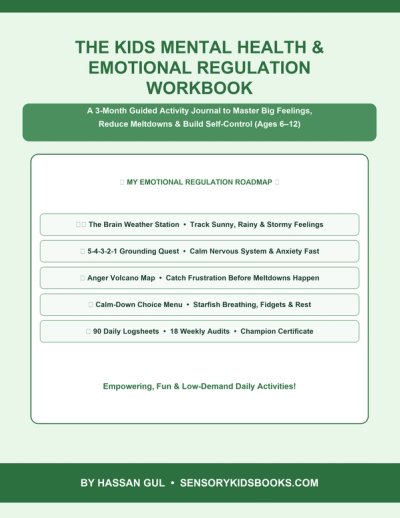 Instant PDF
The Kids Mental Health & Emotional Regulation Workbook
A 3-Month (90-Day) Activity Journal to Master Big Feelings, Reduce Meltdowns, and Build Self-Regulation (Ages 6–12)
Quick Answers for Parents & Educators
Recommended Sensory Products
Carefully curated products for a sensory-friendly environment.

Weighted Lap Pad
BEST FOR FOCUS
Providing 5lbs of gentle pressure to help children stay grounded during long reading sessions.

Dimmable Warm LED
SENSORY FRIENDLY
Flicker-free technology with adjustable color temperatures to prevent eye strain.
📚 Evidence-Based Sources & Citations
Peer-reviewed literature, clinical frameworks, and foundational neurodiversity resources referenced in this guide.
- Occupational Therapy Practice Framework: Domain and Process (4th Edition) — American Occupational Therapy Association (AOTA)(2020)View Sourceopen_in_new
- The Polyvagal Theory: Neurophysiological Foundations of Emotions, Attachment, Communication, and Self-Regulation — Dr. Stephen W. Porges, PhD(2011)View Sourceopen_in_new
- Understanding Pathological Demand Avoidance (PDA): Identifying Needs & Low-Demand Approaches — PDA Society UK(2023)View Sourceopen_in_new
- Sensory Processing Issues Explained: Supporting Children with Sensory Sensitivities — Child Mind Institute(2024)View Sourceopen_in_new
Join the Conversation
Get our monthly guide on sensory-aware parenting and neuro-inclusive home design delivered straight to your sanctuary.
Respecting your inbox and your peace of mind.
Leave a Reply
Your email address will not be published. Required fields are marked *