5 Daily Emotional Check-In Prompts to Stop Meltdowns Before They Explode
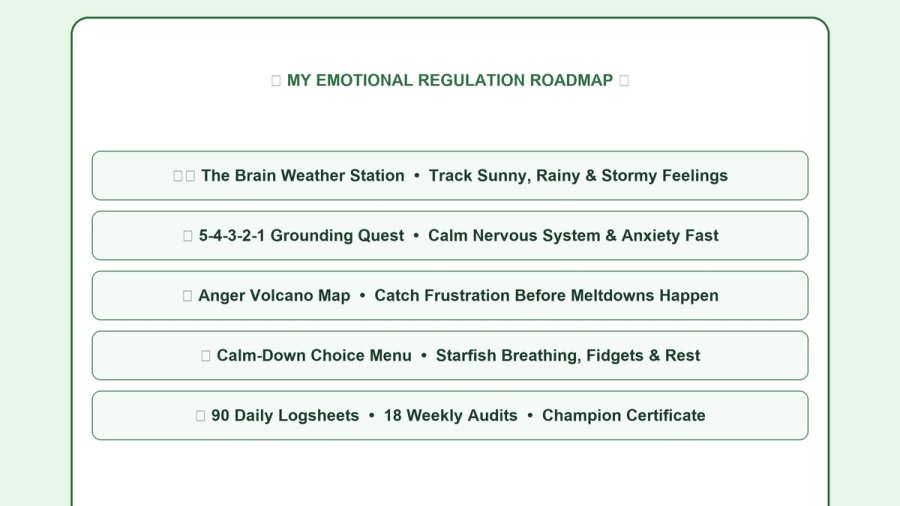
Asking "how are you feeling?" often triggers a scream. Here is the neuroscience of alexithymia—and 5 somatic, low-demand prompts that stop meltdowns before they explode.
Editorial Disclosure & Medical Scope: Sensory Kids Books shares neurodiversity-affirming, lived-experience insights and sensory-informed tools for parents, caregivers, and educators. This publication is for educational purposes only and does not constitute formal medical diagnosis, psychiatric evaluation, or clinical occupational therapy advice. Always consult a qualified pediatrician or licensed clinician for individual medical care. As an Amazon Associate, we earn from qualifying purchases through our independent affiliate links at zero extra cost to you.
Ask a neurodivergent child: 'How are you feeling right now?' and 90% of the time you will receive one of two answers: 'Fine' or an explosive 'LEAVE ME ALONE!'
To a parent trying to prevent the third meltdown of the day, this communication barrier is deeply frustrating. Why is it so hard for autistic and ADHD kids to express what is bothering them before their emotional pressure cooker detonates?
Here is the medical reason: Over 50% of autistic and ADHD individuals experience **Alexithymia**—a sub-clinical condition characterized by difficulty identifying, understanding, and describing internal emotional states. Combine alexithymia with poor interoception (body awareness), and emotions do not register as abstract feelings like 'anxious' or 'frustrated.' They register only as physical discomfort: a churning stomach, a tight jaw, a burning forehead, or itchy skin.
If you wait until a child is in the Red Zone to ask how they feel, it is already too late. In this clinical and practical guide, I will share the 5 somatic, low-demand check-in prompts we use to detect emotional turbulence early, bypass verbal resistance, and stop meltdowns before they detonate.
The Escalation Curve: Catching the Yellow Zone
In pediatric crisis prevention, emotional arousal follows a predictable 4-stage bell curve:
- 🟢 Baseline (Green Zone): Physiological equilibrium. Resting heart rate, relaxed breathing, open to social connection.
- 🟡 Trigger & Escalation (Yellow Zone): Sensory input accumulates. Physical signs emerge: fidgeting fingers, pacing, clenched teeth, higher vocal pitch, silly jokes. THIS IS THE CRITICAL WINDOW OF INTERVENTION!
- 🔴 Explosion / Crisis (Red Zone): Amygdala hijack. Neurological flooding. Reasoning is impossible. Demands must be zero.
- 🔵 De-escalation & Exhaustion (Blue Zone): Vagus nerve shutdown. Crying, fatigue, shame, sleepiness.
Traditional parenting ignores the Yellow Zone and only intervenes during the Red Zone crisis. Daily check-ins train your child's brain to notice the subtle Yellow Zone physical signals while their prefrontal cortex is still online.
The 5 Somatic Check-In Prompts (Low-Demand & Visual)
Throw away abstract questions like 'Why are you sad?' Instead, use these 5 body-centered, non-judgmental prompts:
Prompt 1: 'What Is the Weather Inside Your Body Right Now?'
Metaphors bypass linguistic anxiety by turning internal sensations into external imagery:
- ☀️ Sunny: Calm, warm, and ready to play.
- ⛅ Partly Cloudy: A little tired or distracted.
- 🌧️ Rainy: Heavy feelings, quiet, needing a hug or quiet space.
- ⚡ Thunderstorm: Lightning buzzing in fingers, boiling thunder in chest, ready to strike.
Keep a laminated weather chart on the fridge where your child can simply move a magnet to show their internal climate non-verbally.
Prompt 2: 'Where Is the Energy Living in Your Body?'
Kids with ADHD and sensory differences feel emotion as physical kinetic energy. Ask them to point to their body map:
- 🧠 Head: 'Is your brain buzzing like a swarm of bees?' (Sensory overload / Cognitive fatigue).
- 🫀 Chest: 'Is your heart fluttering like a bird trying to escape a cage?' (Anxiety / Fear).
- 🥊 Fists & Jaw: 'Are your hands balled up into tight rocks?' (Frustration / Anger).
- 🌪️ Tummy: 'Do you have fluttery butterflies or a heavy stone?' (Apprehension / Hunger).
Prompt 3: 'What Battery Percentage Are You Running On?'
Modern kids understand technology instantly. Ask: 'If you were a smartphone, what percentage is your battery at right now?'
- 🔋 80-100%: Full power. Ready for challenges, chores, and homework.
- 🪫 20-40%: Low power mode. Screen dimming. Need a quiet snack break before doing anything else.
- 🔴 Under 10%: Critical battery alert. Immediate sensory haven required. No talking.
Prompt 4: 'Do You Need Soft, Quiet, or Heavy Right Now?'
When kids are overwhelmed, asking 'What do you want?' produces decision paralysis. Instead, give them a simple 3-choice sensory triage:
- 🧸 Soft: A cozy minky blanket, a stuffed animal cuddle, or dim lighting.
- 🤫 Quiet: Noise-canceling headphones, a silent dark tent, or zero conversation.
- 🧱 Heavy: A 5-lb weighted lap pad, a firm bear hug, or 10 heavy wall push-ups.
Prompt 5: 'What Scale Number Is the Noise in Your Brain (1 to 5)?'
Quantifying internal chaos into a 1-to-5 scale gives children an objective language:
- 1 Whisper quiet. Peaceful and easy.: undefined
- 3 Radio static. Annoying and making it hard to concentrate.: undefined
- 5 Loud siren blaring in my skull. I need an adult anchor immediately.: undefined
Recommended Physical Tools to Support Daily Emotional Check-Ins
Pair these check-in prompts with tactile tools to make emotional literacy a daily habit:
1. Daily Feelings Flip Chart & Desktop Stand
A spiral-bound desktop flipbook featuring expressive emotion characters and somatic sensation checklists.
shopping_cartCheck Price on Amazon: Daily Feelings Flip Chart for Kidsopen_in_new
2. Sensory Emotion Stress Balls (Set of 4 Faces)
Tactile squishy therapy balls with distinct emotion faces and resistance levels that allow kids to express feelings through hand pressure.
shopping_cartCheck Price on Amazon: Emotion Stress Balls for Kidsopen_in_new
3. Social-Emotional Roll & Talk Emotion Dice
Soft foam cubes with feelings prompts that turn daily emotional check-ins into a playful dinner table game.
shopping_cartCheck Price on Amazon: Emotion Dice for Kids Social Emotional Learningopen_in_new
4. Calm Down Corner Breathing Activity Cards
Laminated visual cards featuring finger-tracing grounding exercises and animal breathing prompts.
shopping_cartCheck Price on Amazon: Calm Down Breathing Cards for Kidsopen_in_new
Explore 'Emotion Monsters' & Workbook 2
To help children build lifelong emotional intelligence and body awareness, explore our published resources:
📖 Emotion Monsters (Book 15) by Hassan Gul — A vibrant illustrated storybook that helps kids name and befriend their big feelings without shame.
📖 Also explore Workbook 2: Emotional Regulation for 50+ printable daily check-in charts and somatic reflection logs.
📥 Download our Free 5-Page Self-Regulation Starter Kit (Instant PDF) for instant printable feelings thermometers.
 Instant PDF
Emotion Monsters: Name & Tame Big Feelings
A Sensory-Friendly Book About Identifying and Coping with Big Feelings for Autistic Kids
Quick Answers for Parents & Educators
Recommended Sensory Products
Carefully curated products for a sensory-friendly environment.
Daily Feelings Flip Chart for Kids
Visual Emotion Check-In
Desktop spiral-bound flip chart with expressive characters and somatic sensation scales for daily communication.
Sensory Emotion Stress Balls (4-Pack)
Tactile Emotion Release
Resistant therapeutic squeeze balls that allow children to physically express emotional tension without words.
Social Emotional Roll & Talk Dice
Gamified Check-Ins
Soft foam conversation cubes that turn emotional check-ins into an engaging, low-demand family game.
Calm Down Breathing Cards for Kids
Somatic Grounding Tools
Laminated tactile breathing guides that pair physical finger tracing with autonomic nervous system resets.
📚 Evidence-Based Sources & Citations
Peer-reviewed literature, clinical frameworks, and foundational neurodiversity resources referenced in this guide.
- Occupational Therapy Practice Framework: Domain and Process (4th Edition) — American Occupational Therapy Association (AOTA)(2020)View Sourceopen_in_new
- The Polyvagal Theory: Neurophysiological Foundations of Emotions, Attachment, Communication, and Self-Regulation — Dr. Stephen W. Porges, PhD(2011)View Sourceopen_in_new
- Understanding Pathological Demand Avoidance (PDA): Identifying Needs & Low-Demand Approaches — PDA Society UK(2023)View Sourceopen_in_new
- Sensory Processing Issues Explained: Supporting Children with Sensory Sensitivities — Child Mind Institute(2024)View Sourceopen_in_new
Join the Conversation
Get our monthly guide on sensory-aware parenting and neuro-inclusive home design delivered straight to your sanctuary.
Respecting your inbox and your peace of mind.
Leave a Reply
Your email address will not be published. Required fields are marked *