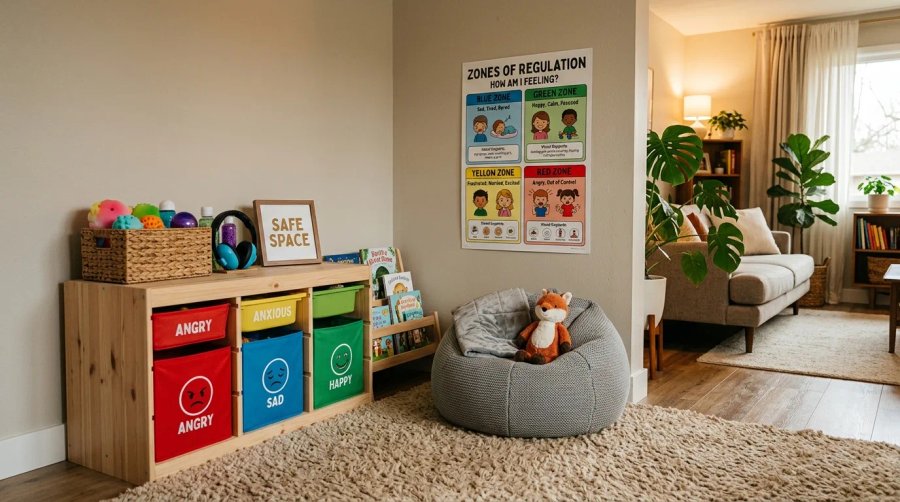
Zones of Regulation activities help children categorize emotional and energy states into four intuitive colors (Blue, Green, Yellow, Red) and practice body-based calming tools.
If you've spent any time Googling how to stop a toddler or neurodivergent child from having a massive meltdown in the middle of Target, you've probably stumbled across the phrase "Zones of Regulation." And if you’re anything like me, you probably read the clinical occupational therapy blogs and thought, "That’s great for a classroom, but how the hell do I actually use this at home when I'm exhausted and my kid is screaming?"
I’ve been there. As a parent of a neurodivergent child navigating Pathological Demand Avoidance (PDA) and intense emotional dysregulation, I quickly learned that clinical textbooks don't survive contact with reality.
The statistics are sobering: Studies estimate that up to 30.5% of children in psychiatric or behavioral care struggle with severe emotional dysregulation, and up to 20% of kids in the general population struggle to manage their big feelings. Yet, most of the resources out there are written for teachers managing 20 kids at recess.
Today, I’m sharing exactly how we adapted the Zones of Regulation framework for our home, stripped away the clinical jargon, and used it to build a low-demand, connected environment. I’ll walk you through 15 easy, actionable Zones of Regulation activities you can start using today.
What is the Zones of Regulation? (A Parent-to-Parent Definition)
Let's skip the textbook definitions. The Zones of Regulation (originally developed by Leah Kuypers, an occupational therapist) is simply a way to categorize feelings into four colors so kids can easily communicate how their brain and body feel.
When your child is having a meltdown, their prefrontal cortex (the logic center) goes offline. If you ask them, "Why are you crying?", they literally cannot answer you. The Zones bypass the need for complex vocabulary.
The 4 Emotion Zones Explained Simply:
🟦 The Blue Zone (Moving Slow): Your child is tired, sad, sick, or bored. Their body is running on low energy.
🟩 The Green Zone (Ready to Go): The sweet spot. They are calm, happy, focused, and feeling safe.
🟨 The Yellow Zone (Caution): The energy is ramping up. They might be getting overly silly, wiggly, anxious, or starting to get frustrated. This is the danger zone where you need to intervene before a meltdown.
🟥 The Red Zone (Stop): Full-blown meltdown. Extreme anger, terror, or elation. The nervous system is overloaded, and logic is entirely out the window.
15 Low-Demand Zones of Regulation Activities for Home
I’ve structured these activities to require minimal prep, because let’s face it, none of us have time to craft elaborate sensory stations every afternoon. These are the tools that actually work for our family.
1. The Morning Fridge Magnet Check-In
We put a simple shopping_cartfour-color chart on our refrigeratoropen_in_new. Every morning while getting breakfast, I simply touch the shopping_cartmagnetopen_in_newof the zone I am currently in. "Mommy is feeling a little Blue today, I didn't sleep well." I don't force my child to do it. By modeling it, they naturally start moving their own magnet to show me how they woke up, giving me critical intel on how much demand they can handle that day.
2. The "Inside Out" Movie Night
If you haven't watched Disney's shopping_cartInside Out and Inside Out 2open_in_new, you are missing the greatest emotional regulation cheat code of this decade. The characters perfectly align with the Zones. Sadness is Blue, Joy is Green, Fear/Disgust are Yellow, and Anger is Red. Watch it together and casually point out which zone the characters are in.
3. Sorting Everyday Toys by Feelings
Grab a pile of shopping_cartLEGOsopen_in_new, action figures, or stuffed animals. Grab shopping_cartfour colored binsopen_in_new(Blue, Green, Yellow, Red). Have your child sort the toys based on how the toy "looks." This externalizes the emotions, making it incredibly safe for PDA kids to engage with the concept without feeling like they are being analyzed.
Ask your child how their "engine" is running. Is it running too slow (Blue), just right (Green), or too fast (Yellow/Red)? This gives them a mechanical metaphor that is especially effective for autistic children who might struggle with abstract emotional concepts.
7. Playlist Regulation
Create specific Spotify playlists together. Have a "Blue Zone" playlist full of upbeat songs to give them energy, and a "Yellow Zone" playlist full of lo-fi or classical music to bring their heart rate down.
8. The "Breath Bubble" Wand
Keep cheap shopping_cartbottles of bubblesopen_in_newaround the house. When your child is escalating into the Yellow Zone, pull out the bubbles. You cannot blow a proper bubble without taking a deep, slow breath. It forces deep diaphragmatic breathing without you ever having to say, "Calm down and take a breath," which we all know just makes them angrier.
9. Emotion Charades
Write down different scenarios on slips of paper (e.g., "Your ice cream fell on the floor", "You got a new puppy"). Take turns acting out the scenario without talking, and have the other person guess which Zone you are in.
10. The Animal Walk
Assign animals to the zones. Blue Zone: Move like a slow turtle. Green Zone: Walk like a focused dog. Yellow Zone: Hop like a frantic bunny. Red Zone: Stomp like an angry dinosaur. This provides heavy work and proprioceptive input, which instantly calms the central nervous system.
11. Zone-Colored Snacks
When they come home from school completely overstimulated, offer a snack plate categorized by color. Green grapes, blueberries, yellow cheese, red strawberries. As they eat, ask them which "snack zone" is their favorite today.
12. The "What's in my Toolbox?" Craft
Draw a literal toolbox on a piece of paper. Have your child draw or write the "tools" they can use when they hit the Yellow or Red zones. A tool could be "hug my dog," "drink cold water," or "jump on the shopping_carttrampolineopen_in_new."
13. Declarative Language "Noticing"
Stop asking questions like, "Are you getting mad?" Instead, use declarative language. "I notice your fists are clenched. Your body looks like it might be in the Yellow Zone." This reduces the demand for a response and simply validates their physical reality.
14. Water Play Reset
Water is the ultimate reset button. If your child is in the Red Zone, get them in the bath, or simply have them wash their hands in cold water. The temperature change shocks the mammalian dive reflex and slows their heart rate.
15. The Parent Apology (Modeling Repair)
The most important activity you can do. When you hit the Red Zone and yell at your kids (because we all do it), apologize using the framework. "I am so sorry I yelled. Mommy was in the Red Zone and I lost control of my engine. Next time, I will use my deep breathing tool before I talk."
What to Do When the Strategies Just Aren't Working
I want to be brutally honest with you. Some days, none of this will work. If your child has Pathological Demand Avoidance, the very act of you pointing out that they are in the Yellow Zone might trigger a Red Zone meltdown.
When that happens, throw the charts away. Your only job is to be a calm, quiet anchor in their storm. Do not talk. Do not teach. Just sit near them, keep them safe, and wait for the storm to pass. Progress is not linear. You are not failing as a parent if your child still has massive meltdowns. You are simply learning their unique nervous system.
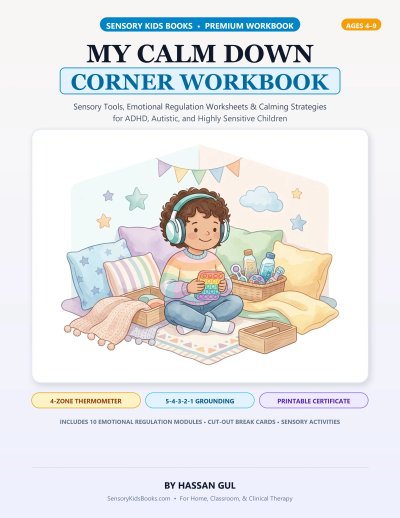
Stop trying to adapt classroom printables for your living room. I have created a Free Zones of Regulation Printable Toolkit designed specifically for parents. It includes aesthetic fridge magnet templates, "My Safe Space" visual cards, and a Cheat Sheet for declarative language phrases.
If you are currently in the trenches of emotional dysregulation, I see you. It is exhausting. But by shifting our perspective from "managing bad behavior" to "co-regulating a stressed nervous system," we change everything.
The Zones of Regulation isn't about forcing your child to be happy and "Green" all the time. It’s about teaching them that all zones—even the Red one—are valid human experiences, and that you will safely guide them through every single one.
The Zones are Blue (low energy/sad/tired), Green (calm/focused/ready), Yellow (heightened energy/anxious/frustrated), and Red (out of control/furious/meltdown).
No! All Zones are natural and acceptable human emotional states. The goal is self-awareness and learning which regulatory tools help navigate each zone safely.
Try visual emotion thermometers, sensory heavy work (wall pushes), deep breathing bubble games, and matching daily check-ins on a visual color wheel.
Recommended Sensory Products
Carefully curated products for a sensory-friendly environment.
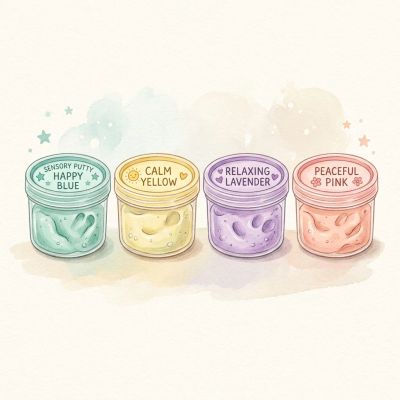
Therapy Putty for Sensory Regulation
YELLOW ZONE RESCUE
The ultimate heavy-work sensory tool to bring an escalating nervous system back to baseline.