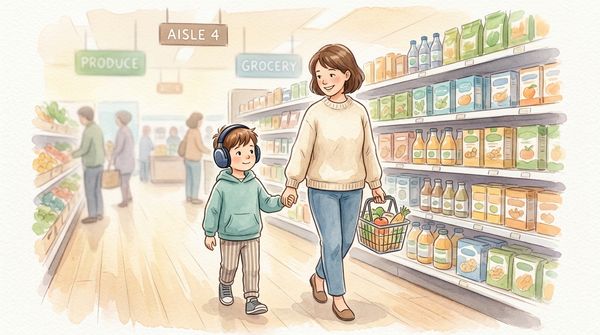
Why Does My Child Cover Their Ears? A Guide to Auditory Sensory Overload
A parent's guide to understanding why autistic children cover their ears. Explore auditory hypersensitivity, sensory overload, and the best ways to provide low-demand support.
Resources and insights to help you and your child navigate the beautiful world of sensory learning.

A parent's guide to understanding why autistic children cover their ears. Explore auditory hypersensitivity, sensory overload, and the best ways to provide low-demand support.

A parent's guide to understanding the difference between Picky Eating and Pediatric ARFID. Learn the 3 subtypes of ARFID, sensory food aversion signs, and a 5-step low-demand food exploration ladder.

A parent guide to understanding autistic scripting, delayed echolalia, and Gestalt Language Processing (GLP). Discover why kids recite movie lines and how to decode their meaning.

A comprehensive guide to understanding autism burnout in children and teens. Discover why skill regression occurs, how burnout differs from depression, and a 4-step low-demand recovery protocol.

A parent-tested review of the top 7 noise-canceling headphones and ear defenders for autism and auditory sensory processing disorder. Compare Puro Sound Labs, Loop, 3M Peltor, and Sony.

Learn the crucial differences between autistic shutdowns vs meltdowns. Discover why shutdowns are not defiance, how to recognize the freeze state, and 5 low-demand recovery steps.

Explore 10 budget-friendly sensory room ideas for home. Learn how to build an effective calm-down corner for under $50 using DIY crash pads, string lights, and sensory bins.

Discover practical, neuro-affirming guidance, sensory regulation strategies, and lived-experience insights on Vocal Stimming in Autism & ADHD: What It Is, Why Kids Do It, and How to Support.

While cats cannot be clinically diagnosed with human autism, felines frequently display remarkable sensory sensitivities, routine dependency, and repetitive self-soothing behaviors that mirror human neurodivergence.

Therapy and service dogs provide deep pressure therapy, emotional co-regulation, tethering safety, and unconditional companionship for children with Down syndrome and Autism Spectrum Disorder.

Understanding autistic traits in 4-year-olds involves recognizing sensory sensitivities, parallel play preferences, intense special interests, emotional regulation needs, and communication styles.

Gestalt Language Processing (GLP) is a natural style of language acquisition where children learn speech in whole phrases ('gestalts' or scripts) before breaking them down into individual words.

Non-toxic fidget toys provide safe tactile, proprioceptive, and oral-motor sensory input for neurodivergent kids, helping them filter distracting stimuli and improve executive attention.

Early newborn and infant signs of autism often center on sensory processing differences, subtle eye contact variation, unusual responsiveness to sounds, and distinct motor reflexes during the first 12 months.

Sensory board books provide tactile, low-demand interactive reading for autistic toddlers, combining textured touch-and-feel patches, high-contrast visual cues, and durable wipe-clean thick pages.

Discover practical, neuro-affirming guidance, sensory regulation strategies, and lived-experience insights on 10 Best Calming Activity Books for 5-Year-Olds (For Sensory Overload).

Wipe-clean workbooks remove the fear of making permanent mistakes for ADHD and autistic children, allowing low-pressure re-attempts that build executive function, pencil grip, and confidence.

A 504 Plan provides legally binding accommodations—such as sensory breaks, visual schedules, and quiet testing environments—for ADHD and autistic students in public schools.

Rejection Sensitive Dysphoria (RSD) is an intense, overwhelming emotional pain triggered by perceived rejection, criticism, or failure in children and adults with ADHD and autism.

A 504 Plan provides legally binding accommodations—such as sensory breaks, visual schedules, and quiet testing environments—for ADHD and autistic students in public schools.